

Category Archives: For Buyers

Auto Added by WPeMatico

Home Is Where the Heart Is More than Ever This Year

Home Is Where the Heart Is More than Ever This Year | Simplifying The Market

There’s no denying the financial benefits of homeownership, but what’s often overlooked are the feelings of gratitude, security, pride, and comfort we get from owning a home. This year, those emotions are stronger than ever. We’ve lived through a time that has truly changed our needs and who we are, and as a result, homeownership has a whole new meaning for many of us.

According to the 2021 State of the American Homeowner report by Unison:

“Last year, staying home became a necessity and that caused many homeowners to have renewed gratitude for the roof over their head.”

As a nation, we continue to work through the challenges of a pandemic that’s pushed us all to new limits. Over the past year and a half, we’ve spent more time than ever at home: working, eating, schooling, exercising, and more. The world around us changed almost overnight, and our homes were redefined. Our needs shifted, and our shelters became a place that protected us on a whole new level. The same study from Unison notes:

  • 91% of homeowners say they feel secure, stable, or successful owning a home
  • 64% of American homeowners say living through a pandemic has made their home more important to them than ever
  • 83% of homeowners say their home has kept them safe during the COVID-19 pandemic

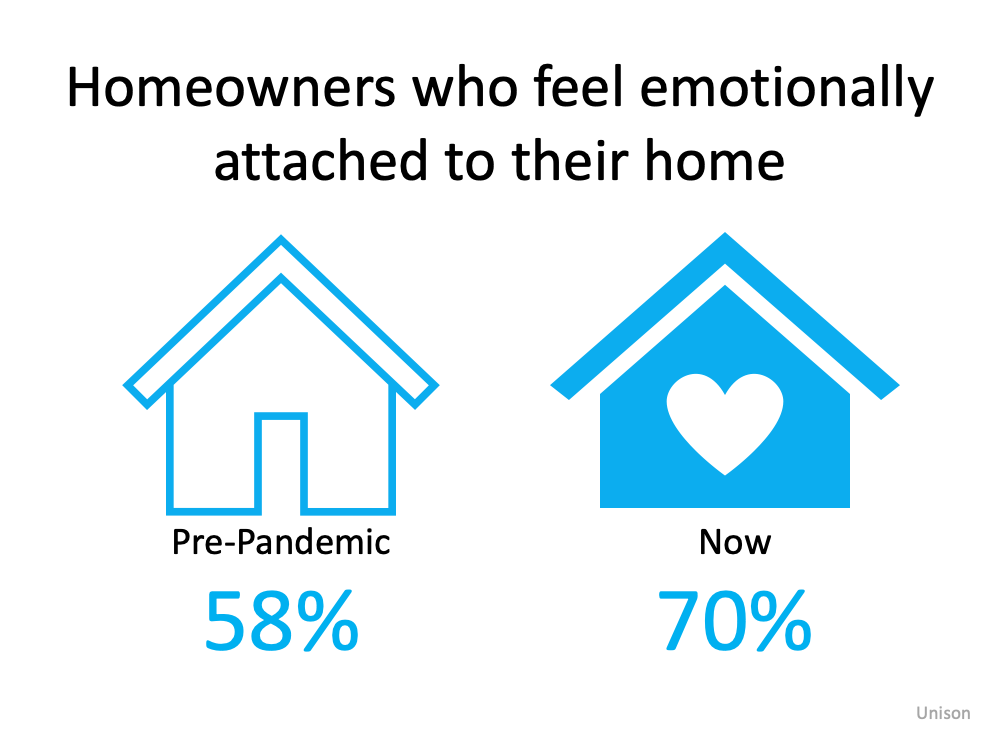
It’s no surprise this study also reveals that homeowners are now more emotionally attached to their homes as well:Home Is Where the Heart Is More than Ever This Year | Simplifying The MarketAs we’ve learned throughout this health crisis, homeownership can provide the safety and security we crave in a time of uncertainty. That sense of connection and emotional stability genuinely reaches beyond just the financial aspect of owning a home. As JD Esajian, President of CT Homes, LLC, says:

“Aside from the financial factors, there are several social benefits of homeownership and stable housing to consider. It has long been thought that buying a home contributes to a sense of accomplishment. Still, most individuals fail to realize that homeownership can benefit your mental health and the community around you.”

Whether you’re thinking of buying your first home, moving up to your dream home, or downsizing to something that better fits your changing lifestyle, take a moment to reflect on what Mark Fleming, Chief Economist at First American, notes:

“Buying a home is not just a financial decision. It’s also a lifestyle decision.”

Bottom Line

If you’re considering buying a home, it’s not entirely about the dollars and cents. Don’t forget to weigh the non-financial benefits that may truly change your life when you need them most.

Content previously posted on Keeping Current Matters

How Smart Buyers Are Approaching Rising Mortgage Rates

How Smart Buyers Are Approaching Rising Mortgage Rates | Simplifying The Market

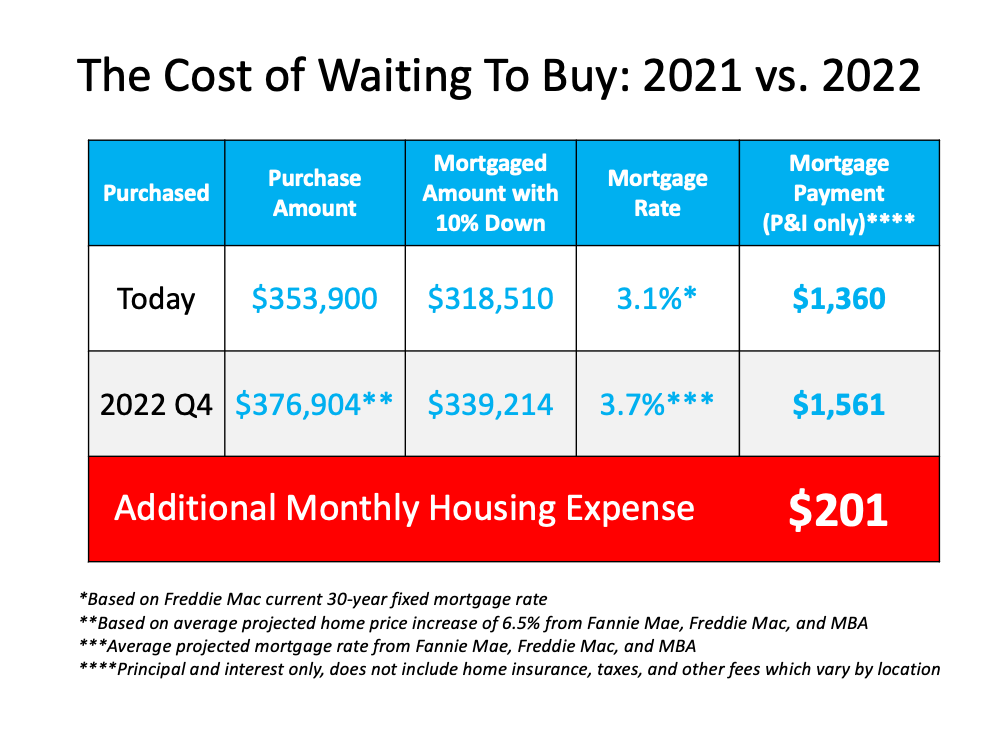
Last week, the average 30-year fixed mortgage rate from Freddie Mac inched up to 3.1%, and experts project rates will continue rising through 2022:

“The 30-year fixed-rate mortgage was 2.9% in the third quarter of 2021. We forecast mortgage rates to increase slightly through the remainder of the year and reach 3.0%, rising to 3.5% for full year 2022.”

If you’re thinking of buying a home, here are a few things to keep in mind so you can succeed even as mortgage rates rise.

Taking Time Off Can Be Costly

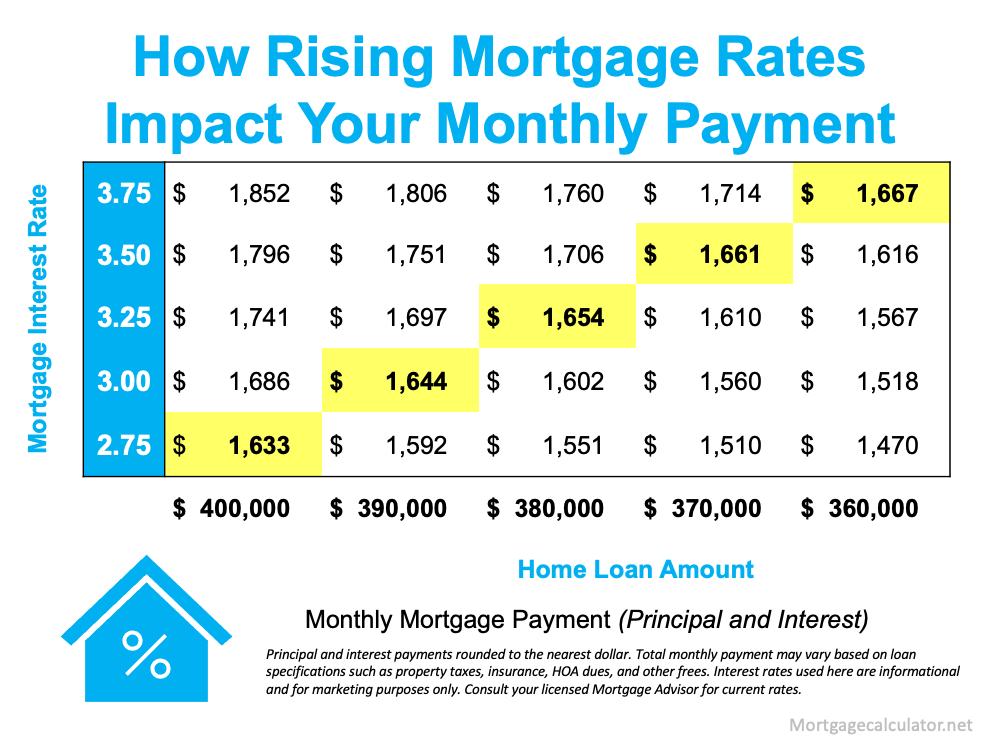
Mortgage rates play a significant role in your home search. As rates go up, your monthly mortgage payment increases if you’re buying a home, directly affecting how much you can afford. And even the smallest increase can have a large impact on your monthly payment (see chart below):How Smart Buyers Are Approaching Rising Mortgage Rates | Simplifying The MarketWith mortgage rates on the rise, you’ve likely seen your purchasing power impacted already. Instead of waiting and hoping rates will fall, today’s rates should motivate you to purchase now before rates increase more.

Smart Buyers Can Succeed by Planning Ahead

You can use your newfound motivation to energize your search and plan your next steps accordingly so you’re prepared to act no matter what happens with mortgage rates. One way to do that: take rising rates into consideration as part of your budget.

Danielle Hale, Chief Economist at realtor.com, puts it best, saying:

“Smart buyers should consider calculating a monthly payment not only at today’s rates, but also at rates that are a bit higher so that they won’t be derailed by a sudden upward move. . . .”

You should also be ready to act when you find the home that meets your needs. That means getting pre-approved with a lender so there won’t be any delays when the time arrives.

The best way to prepare is to work with a trusted real estate advisor now. An agent can connect you with a lender, help you adjust your search based on your budget, and be ready to act quickly when it’s time to make an offer.

Bottom Line

Serious buyers should approach rising rates as a motivating factor to buy sooner, not a reason to wait. Waiting will cost you more in the long run. Let’s connect today so you can better understand your budget and be prepared to buy your home even before rates climb higher.

Content previously posted on Keeping Current Matters

Don’t Believe Everything You Read: The Truth Many Headlines Overlook

Don't Believe Everything You Read: The Truth Many Headlines Overlook | Simplifying The Market

There are a lot of questions right now regarding the real estate market as we head into 2022. The forbearance program is coming to an end and mortgage rates are beginning to rise.

With all of this uncertainty, anyone with a megaphone – from the mainstream media to a lone blogger – has realized that bad news sells. Unfortunately, we’ll continue to see a rash of troublesome headlines over the next few months. To make sure you aren’t paralyzed by a headline, turn to reliable resources for a look at what to expect from the housing market next year.

There are already alarmist headlines starting to appear. Here are two recent topics you may have seen in the news.

1. Foreclosures Are Spiking Today

There are a number of headlines circulating that call out the rising foreclosures in today’s real estate market. Those stories focus on an overly narrow view on that topic: the current volume of foreclosures compared to 2020. They emphasize that we’re seeing far more foreclosures this year compared to last.

That seems rather daunting. However, though it’s true foreclosures have been up over the 2020 numbers, it’s important to realize that there were virtually no foreclosures last year because of the forbearance plan. If we compare this September to September of 2019 (the last normal year), foreclosures were down 70% according to ATTOM.

Even Rick Sharga, an Executive Vice President of the firm that issued the report referenced in the above article, says:

“As expected, now that the moratorium has been over for three months, foreclosure activity continues to increase. But it’s increasing at a slower rate, and it appears that most of the activity is primarily on vacant and abandoned properties, or loans in foreclosure prior to the pandemic.”

Homeowners who have been impacted by the pandemic are not generally the ones being burdened right now. That’s because the forbearance program has worked. Ali Haralson, President of Auction.com, explains that the program has done a remarkable job:

“The tsunami of foreclosures many feared in the early days of the pandemic has not materialized thanks in large part to the swift and decisive foreclosure protections put in place by government policymakers and the mortgage servicing industry.”

And the government is still making sure homeowners have every opportunity to stay in their homes. Rohit Chopra, the Director of the Consumer Financial Protection Bureau (CFPB), issued this statement just last week:

“Failures by mortgage servicers and regulators worsened the impact of the economic crisis a decade ago. Regulators have learned their lesson, and we will be scrutinizing servicers to ensure they are doing all they can to help homeowners and follow the law.”

2. Rising Mortgage Rates Will Slow the Housing Market

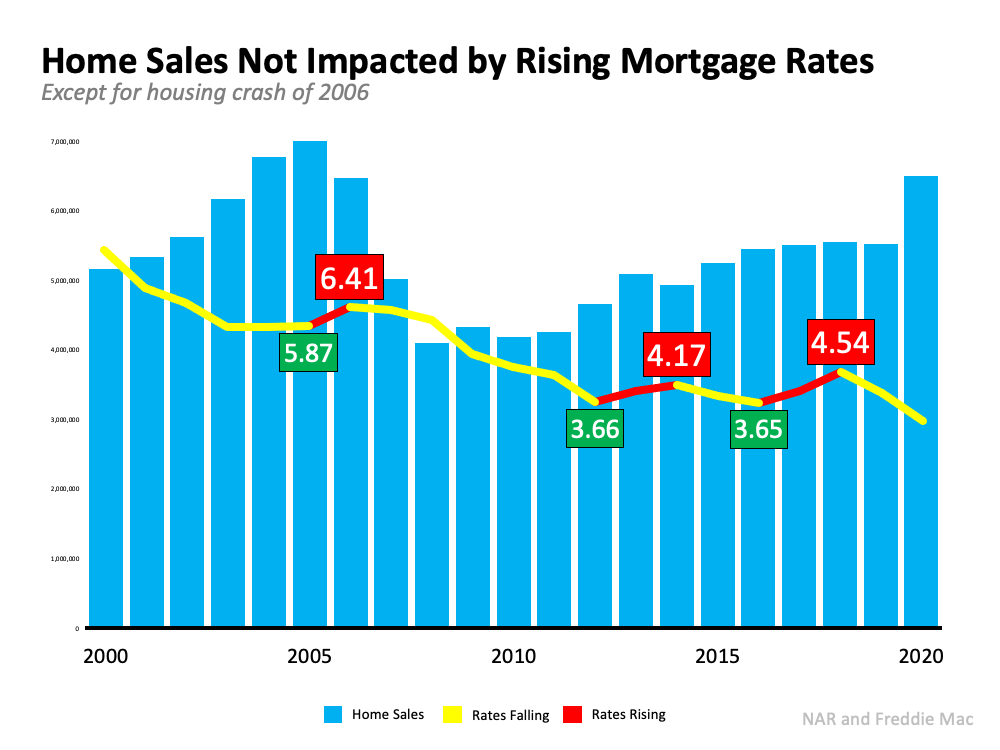
Another topic that’s generating frequent headlines is the rise in mortgage rates. Some people are expressing concern that rising rates will negatively impact the housing market by causing home sales to dramatically decline. The resulting headlines are raising unneeded alarm bells. To counteract those headlines, we need to take a look at what history tells us. Looking at data over the last 20 years, there’s no evidence that an increase in rates dramatically forces sales to come to a halt. Nor does home price appreciation come to a screeching stop. Let’s look at home sales first:Don't Believe Everything You Read: The Truth Many Headlines Overlook | Simplifying The MarketThe last three times rates increased (shown in the graph above in red), sales (depicted in blue in the graph) remained rather consistent. It’s true that sales fell rather dramatically from 2007 through 2010, but mortgage rates were also falling at the time. The next two instances showed no meaningful drop in sales.

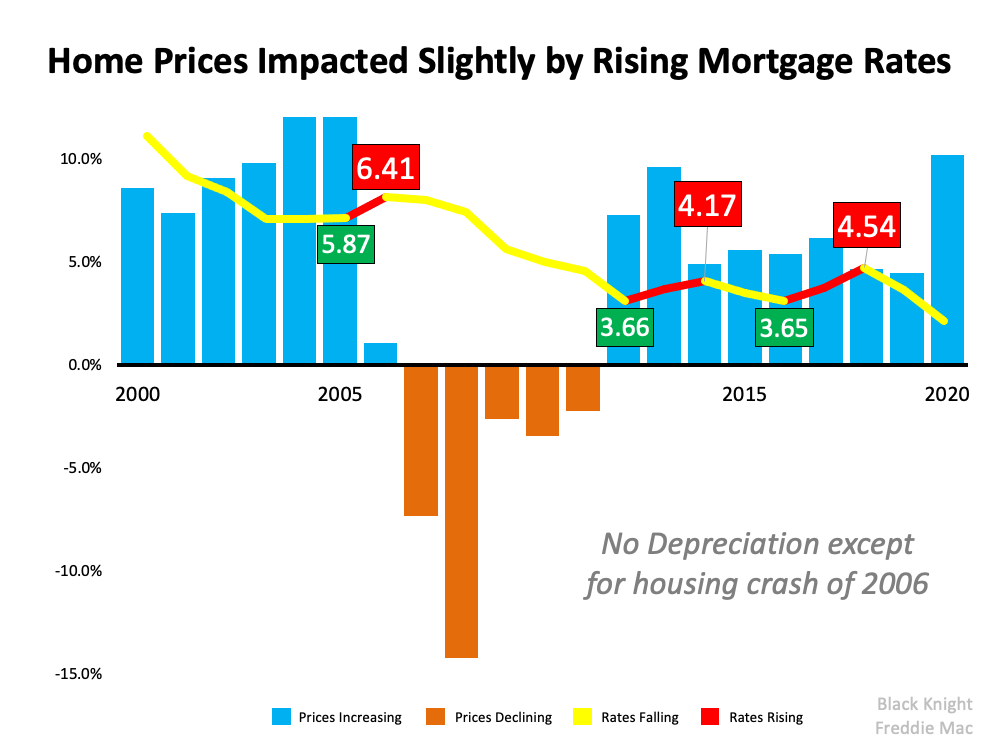
Now, let’s take a look at home price appreciation (see graph below):Don't Believe Everything You Read: The Truth Many Headlines Overlook | Simplifying The MarketAgain, we see that a rise in rates didn’t cause prices to depreciate. Outside of the years following the crash, prices continued to appreciate, just at a slower rate.

Bottom Line

There’s a lot of misinformation out there. If you want the best advice on what’s happening in the current housing market, let’s connect.

Content previously posted on Keeping Current Matters

Your Journey to Homeownership [INFOGRAPHIC]

Your Journey to Homeownership [INFOGRAPHIC] | Simplifying The Market

Your Journey to Homeownership [INFOGRAPHIC] | Simplifying The Market

Some Highlights

  • When it comes to buying a home, there are a number of key milestones along the way.
  • The process includes everything from building your team and understanding your finances to going house hunting, making an offer, and more.
  • When you’re ready to start your journey, let’s connect so you have trusted guidance at every milestone in the process.

Content previously posted on Keeping Current Matters

Home Sales About To Surge? We May See a Winter Like Never Before.

Home Sales About To Surge? We May See a Winter Like Never Before. | Simplifying The Market

Like most industries, residential real estate has a seasonality to it. For example, toy stores sell more toys in October, November, and December than they do in any other three-month span throughout the year. More cars are sold in the U.S. during the second quarter (April, May, and June) than in any other quarter of the year.

Real estate is very similar. The number of homes sold in the spring is almost always much greater than at any other time of the year. It’s even labeled as the spring buying season. Historically, the number of buyers and listings for sale significantly increase in the spring and remains strong throughout the summer. Once fall sets in, the number of buyers and sellers typically drops off.

Last year, however, that seasonality didn’t happen. The outbreak of the virus and subsequent slowing of the economy limited sales during the spring market. These sales were pushed back later in the year, and last fall and winter saw a dramatic increase in home sales over previous years. The only thing that held the market back was the extremely limited supply of homes for sale.

What About This Winter?

Some experts thought we’d return to the industry’s normal seasonality this winter with both the number of purchasers and houses available for sale falling off. However, data now shows that neither of those situations will likely occur. Buyer demand is still extremely strong, and it appears we may soon see a somewhat uncharacteristic increase in the number of homes coming to the market.

Buyer Demand Remains Strong

The latest Showing Index from ShowingTime, which tracks the average number of monthly showings on available homes, indicates buyer activity was slightly lower than at the same time last year but much higher than any of the three previous years (see chart below):Home Sales About To Surge? We May See a Winter Like Never Before. | Simplifying The MarketA report from realtor.com confirms buying activity remains strong in the existing home sales market:

“New housing data shows 2021’s feverish home sales pace broke a yearly record in October, . . . with last month marking the eighth straight month of buyers snatching up homes more quickly than the fastest pace in previous years. . . .”

Buyer activity for newly constructed homes is also very strong. Ali Wolf, Chief Economist for Zonda, recently reported that Stuart Miller, the Executive Chairman of Lennar, one of the nation’s largest home builders, said this about demand:

“There is still a great deal of demand at our sales centers with people lining up and not enough supply.”

The only question heading into this winter is whether the number of listings available could come close to meeting this buyer demand. We may have just received the answer to that question.

Sellers Are About To List – Right Now

Instead of waiting for the normal spring buying market, new research indicates that homeowners thinking about selling are about to put their homes on the market this winter.

Speaking to the release of a report on this recent research, George Ratiu, Manager of Economic Research for realtor.com, said:

“The pandemic has delayed plans for many Americans, and homeowners looking to move on to the next stage of life are no exception. Recent survey data suggests the majority of prospective sellers are actively preparing to enter the market this winter.

Here are some highlights in the report:

Of homeowners planning to enter the market in the next year:

  • 65% – Have just listed (19%) or plan to list this winter
  • 93% – Have already taken steps toward listing their home, including working with an agent (28%)
  • 36% – Have researched the value of their home and others in their neighborhood
  • 36% – Have started making repairs or decluttering

The report also discusses the reasons sellers want to move:

  • 33% – Have realized they want different home features
  • 37% – Say their home no longer meets their family’s needs
  • 32% – Want to move closer to friends and family
  • 23% – Are looking for a home office

Data shows buyer demand remains unusually strong going into this winter. Research indicates the supply of inventory is about to increase. This could be a winter real estate market like never before.

Bottom Line

If you’re thinking of buying or selling, now is the time to have a heart-to-heart conversation with a real estate professional in your market, as things are about to change in an unexpected way.

Content previously posted on Keeping Current Matters

Retirement May Be Changing What You Need in a Home

Retirement May Be Changing What You Need in a Home | Simplifying The Market

The past year and a half brought about significant life changes for many of us. For some, it meant entering retirement earlier than expected. Recent data shows more people retired this year than anticipated. According to the Schwartz Center for Economic Policy Analysis, 2021 saw a retirement boom:

“At least 1.7 million more older workers than expected retired due to the pandemic recession.”

If you’ve recently retired, your home may not fit your new lifestyle. The good news is, you’ve likely built-up significant equity that can fuel your next move. According to the latest Homeowner Equity Insights report from CoreLogic, homeowners gained more than $50,000 in equity over the past 12 months alone. That, plus today’s sellers’ market, presents a great opportunity to sell your house and address your evolving needs.

You Can Move Closer to the Ones You Love

The 2021 Home Buyers and Sellers Generational Trends report from the National Association of Realtors (NAR) provides a look at the reasons people buy homes. For those reaching retirement age, the number one reason to buy is the opportunity to be closer to loved ones, friends, or relatives.

If you find yourself farther from your loved ones than you’d like to be, retirement and the equity you’ve built in your home may enable you to move closer to the people in your life who matter most.

You Can Find the Right Home for Your Needs

Not only can your equity power a move to a new location, but it can also help you purchase the right size home. Lawrence Yun, Chief Economist at NAR, says many homebuyers 55 and older choose to downsize – or buy a smaller home – when they make a purchase:

“Clearly from the age patterns, young people want to upsize, and the older generation is looking to downsize. . . .”

Whatever your home goals are, a trusted real estate advisor can help you to find the best option for your situation. They’ll help you sell your current home and guide you as you buy your next one while you move into this new phase of life.

Bottom Line

If you’ve recently retired and your needs are changing, you’re not alone. Let’s connect so you can get a better sense of how to find a home that will match your situation.

Content previously posted on Keeping Current Matters

4 Things Every Renter Needs To Consider

4 Things Every Renter Needs To Consider | Simplifying The Market

As a renter, you’re constantly faced with the same dilemma: keep renting for another year or purchase a home? Your answer depends on your current situation and future plans, but there are a number of benefits to homeownership every renter needs to consider.

Here are a few things you should think about before you settle on renting for another year.

1. Rents Are Rising Quickly

Rent increasing each year isn’t new. Looking back at Census data confirms rental prices have gone up consistently for decades (see graph below):4 Things Every Renter Needs To Consider | Simplifying The MarketIf you’re a renter, you’re faced with payments that continue to climb each year. Realtor.com recently shared the September Rental Report, and it shows price increases accelerating from August to September (see graph below):4 Things Every Renter Needs To Consider | Simplifying The MarketAs the graph shows, rents are still on the rise. It’s important to keep this in mind when the time comes for you to sign a new lease, as your monthly rental payment may increase substantially when you do.

2. Renters Miss Out on Equity Gains

One of the most significant advantages of buying a home is the wealth you build through equity. This year alone, homeowners gained a substantial amount of equity, which, in turn, grew their net worth. As a renter, you miss out on this wealth-building tool that can be used to fund your retirement, buy a bigger home, downsize, or even achieve personal goals like paying for an education or starting a new business.

3. Homeowners Can Customize to Their Heart’s Content

This is a big decision-making point if you want to be able to paint, renovate, and make home upgrades. In many cases, your property owner determines these selections and prefers you don’t alter them as a renter. As a homeowner, you have the freedom to decorate and personalize your home to truly make it your own.

4. Owning a Home May Provide Greater Mobility than You Think

You may choose to rent because you feel it provides greater flexibility if you need to move for any reason. While it’s true that selling a home may take more time than finding a new rental, it’s important to note how quickly houses are selling in today’s market. According to the National Association of Realtors (NAR), the average home is only on the market for 17 days. That means you may have more flexibility than you think if you need to relocate as a homeowner.

Bottom Line

Deciding if it’s the right time for you to buy is a personal decision, and the timing is different for everyone. However, if you’d like to learn more about the benefits of homeownership, let’s connect so you can make a confident, informed decision and have a trusted advisor along the way.

Content previously posted on Keeping Current Matters

VA Loans: Helping Veterans Achieve Their Homeownership Dreams

VA Loans: Helping Veterans Achieve Their Homeownership Dreams | Simplifying The Market

The purpose of Veterans Affairs (VA) home loans is to provide a pathway to homeownership for those who have sacrificed so much by serving our nation. As the Veterans Administration says of the program:

“The objective of the VA Home Loan Guaranty program is to help eligible Veterans, active-duty personnel, surviving spouses, and members of the Reserves and National Guard purchase, retain, and adapt homes in recognition of their service. . . .”

For over 75 years, VA home loans have provided millions of veterans and their families the opportunity to purchase their own homes.

2020 Data on VA Home Loans

  • 1,246,817 home loans are guaranteed by the Veterans Administration
  • The average VA loan amount totals $301,044
  • 178,171 of those using a VA Loan are first-time homebuyers

Top Benefits of the VA Home Loan Program

As we reflect on their sacrifice and honor our nation’s veterans, it’s important to ensure all veterans know the full extent of benefits VA home loans offer. As Jeff London, Director of the VA Home Loan Program, says:

“VA loans offer an extraordinary opportunity for veterans because of lower interest rates, lower monthly payments, no or low-down payments, and no private mortgage insurance.”

Those who qualify for a VA home loan are eligible for the following:

  • Borrowers can often purchase a home with no down payment. In 2020, 350,094 individuals using a VA Loan were able to purchase their homes without putting money down.
  • Many other loans with down payments under 20% require Private Mortgage Insurance (PMI). VA Loans do not require PMI, which means veterans can save on their monthly housing costs.
  • Finally, VA-Backed Loans often offer the most competitive terms and interest rates.

Bottom Line

One way we can honor and thank our veterans this year is to ensure they have the best information about the benefits of VA home loans. Homeownership is the American Dream. Our veterans sacrifice so much in service to our nation and deserve to achieve their homeownership goals. Thank you for your service.

Content previously posted on Keeping Current Matters

What’s Happening with Home Prices?

What’s Happening with Home Prices? | Simplifying The Market

Many people have questions about home prices right now. How much have prices risen over the past 12 months? What’s happening with home values right now? What’s projected for next year? Here’s a look at the answers to all three of these questions.

How much have home values appreciated over the last 12 months?

According to the latest Home Price Index from CoreLogic, home values have increased by 18.1% compared to this time last year. Additionally, prices have gone up at an accelerated pace for each of the last eight months (see graph below):What’s Happening with Home Prices? | Simplifying The MarketThe increase in the rate of appreciation that’s shown by CoreLogic coincides with data from the other two main home price indices: the FHFA Home Price Index and the S&P Case Shiller Index.

The last year has shown tremendous home price appreciation, which is resulting in a major gain in wealth for homeowners through rising equity.

What’s happening with home prices right now?

All three indices mentioned above also show that while appreciation is in the high double digits right now, that price acceleration is beginning to level off (see graph below):What’s Happening with Home Prices? | Simplifying The MarketYear-over-year appreciation is still close to 20%, but it’s clearly plateauing at that rate. Many experts believe it will drop below 15% by the end of the year.

Keep in mind, that doesn’t mean home values will depreciate. It means the rate of appreciation will slow, yet stay well above the 25-year average of 5.1%.

What about next year?

The recent surge in prices is the result of heavy buyer demand and a shortage of homes available for sale. Most experts believe that as more housing inventory comes to market (both new construction and existing homes), the supply and demand for housing will come more into balance. That balance will bring a lower rate of appreciation in 2022. Here’s a look at home price forecasts from six major entities, and they all project future appreciation:

  1. Fannie Mae
  2. Freddie Mac
  3. Mortgage Bankers Association
  4. Home Price Expectation Survey
  5. Zelman & Associates
  6. National Association of Realtors

What’s Happening with Home Prices? | Simplifying The MarketWhile the projected rate of appreciation varies among the experts, due to things like supply chain challenges, virus variants, and more, it’s clear that home values will continue to appreciate next year.

Bottom Line

There have been historic levels of home price appreciation over the last year. That pace will slow as we finish 2021 and enter into 2022. Prices will still rise in value, just at a much more moderate pace, which is good news for the housing market.

Content previously posted on Keeping Current Matters

Two Graphs That Show Why You Shouldn’t Be Upset About 3% Mortgage Rates

Two Graphs That Show Why You Shouldn’t Be Upset About 3% Mortgage Rates | Simplifying The Market

With the average 30-year fixed mortgage rate from Freddie Mac climbing above 3%, rising rates are one of the topics dominating the discussion in the housing market today. And since experts project rates will rise further in the coming months, that conversation isn’t going away any time soon.

But as a homebuyer, what do rates above 3% really mean?

Today’s Average Mortgage Rate Still Presents Buyers with a Great Opportunity

Buyers don’t want mortgage rates to rise, as any upward movement increases your monthly mortgage payment. But it’s important to put today’s average mortgage rate into perspective. The graph below shows today’s rate in comparison to average rates over the last five years:Two Graphs That Show Why You Shouldn’t Be Upset About 3% Mortgage Rates | Simplifying The MarketAs the graph shows, even though today’s rate is above 3%, it’s still incredibly competitive.

But today’s rate isn’t just low when compared to the most recent years. To truly put today into perspective, let’s look at the last 50 years (see graph below):Two Graphs That Show Why You Shouldn’t Be Upset About 3% Mortgage Rates | Simplifying The MarketWhen we look back even further, we can see that today’s rate is truly outstanding by comparison.

What Does That Mean for You?

Being upset that you missed out on sub-3% mortgage rates is understandable. But it’s important to realize, buying now still makes sense as experts project rates will continue to rise. And as rates rise, it will cost more to purchase a home.

As Mark Fleming, Chief Economist at First American, explains:

“Rising mortgage rates, all else equal, will diminish house-buying power, meaning it will cost more per month for a borrower to buy ‘their same home.’”

In other words, the longer you wait, the more it will cost you.

Bottom Line

While it’s true today’s average mortgage rate is higher than just a few months ago, 3% mortgage rates shouldn’t deter you from your homebuying goals. Historically, today’s rate is still low. And since rates are expected to continue rising, buying now could save you money in the long run. Let’s connect so you can lock in a great rate now.

Content previously posted on Keeping Current Matters