
All posts by Brenda Jones

Home Prices: The Difference 5 Years Makes

Home Prices: The Difference 5 Years Makes | Simplifying The Market

The economists at CoreLogic recently released a special report entitled, Evaluating the Housing Market Since the Great Recession. The goal of the report was to look at economic recovery since the Great Recession of December 2007 through June 2009.

One of the key indicators used in the report to determine the health of the housing market was home price appreciation. CoreLogic focused on appreciation from December 2012 to December 2017 to show how prices over the last five years have fared.

Frank Nothaft, Chief Economist at CoreLogic, commented on the importance of breaking out the data by state,

“Homeowners in the United States experienced a run-up in prices from the early 2000s to 2006, and then saw the trend reverse with steady declines through 2011. After finally reaching bottom in 2011, home prices began a slow rise back to where we are now.

Greater demand and lower supply – as well as booming job markets – have given some of the hardest-hit housing markets a boost in home prices. Yet, many are still not back to pre-crash levels.”

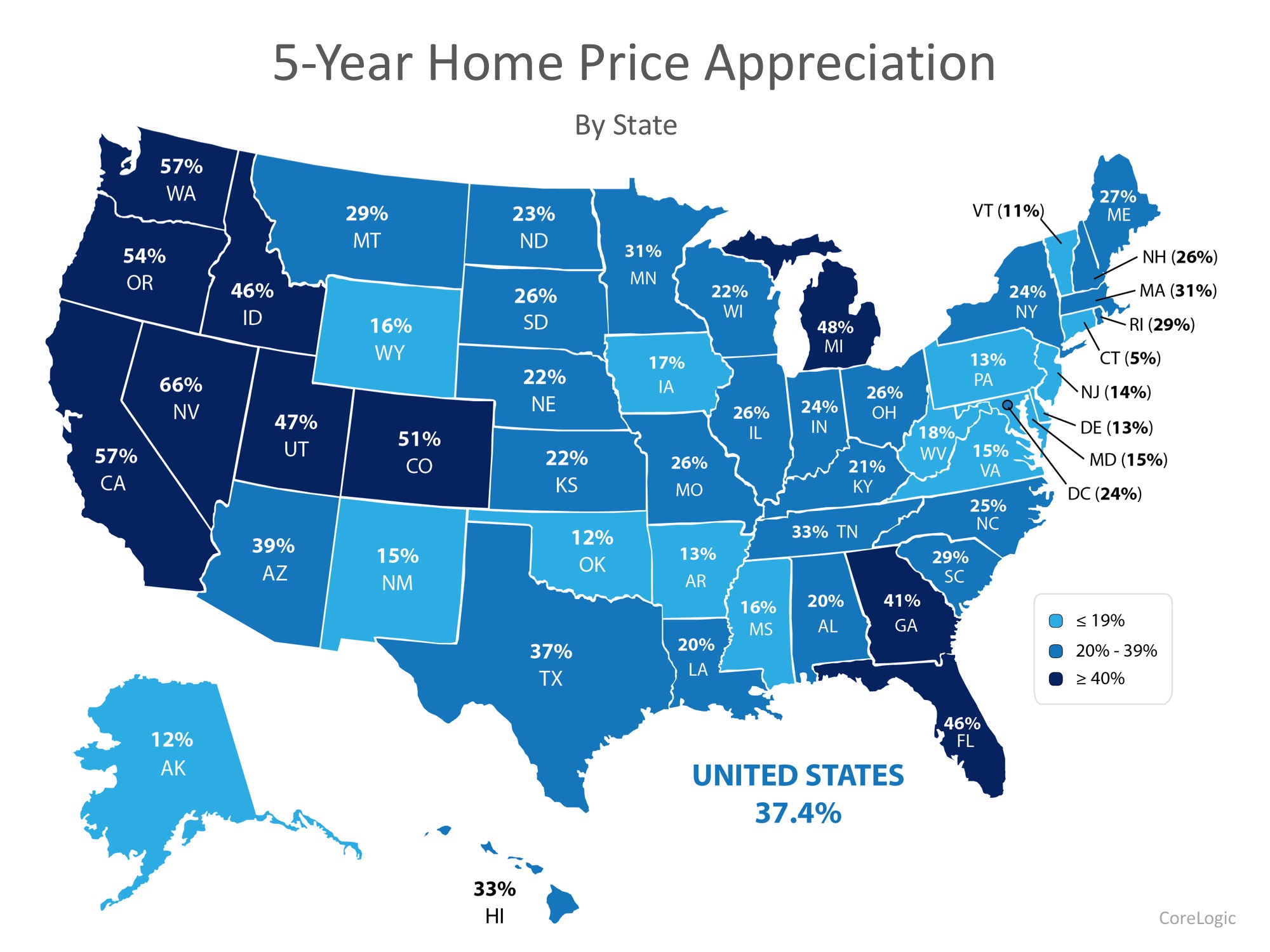
The map below was created to show the 5-year appreciation from December 2012 – December 2017 by state.
Home Prices: The Difference 5 Years Makes | Simplifying The Market

Nationally, the cumulative appreciation over the five-year period was 37.4%, with a high of 66% in Nevada, and a modest increase of 5% in Connecticut.

Where were prices expected to go?

Every quarter, Pulsenomics surveys a nationwide panel of over 100 economists, real estate experts, and investment and market strategists and asks them to project how residential home prices will appreciate over the next five years for their Home Price Expectation Survey (HPES).

According to the December 2012 survey results, national homes prices were projected to increase cumulatively by 23.1% by December 2017. The bulls of the group predicted home prices to rise by 33.6%, while the more cautious bears predicted an appreciation of 11.2%.

Where are prices headed in the next 5 years?

Data from the most recent HPES shows that home prices are expected to increase by 18.2% over the next 5 years. The bulls of the group predict home prices to rise by 27.4%, while the more cautious bears predict an appreciation of 8.3%.

Bottom Line

Every day, thousands of homeowners regain positive equity in their homes. Some homeowners are now experiencing values even higher than before the Great Recession. If you’re wondering if you have enough equity to sell your house and move on to your dream home, let’s get together to discuss conditions in our neighborhood!


Competition is Coming, Are You Thinking of Selling Your Home?

Competition is Coming, Are You Thinking of Selling Your Home? | Simplifying The Market

The number of building permits issued for single-family homes is the best indicator of how many newly built homes will rise over the next few months. According to the latest U.S. Census Bureau and U.S. Department of Housing & Urban Development Residential Sales Report, the number of these permits were up 7.4% over last year.

How will this impact buyers?

More inventory means more options. Lawrence Yun, NAR’s Chief Economist, explained this is good news for the housing market – especially for those looking to buy:

“This rise in single-family housing construction will help tame home price growth, and the increase in multifamily units should continue to help slow rent growth.”

How will this impact sellers?

More inventory means more competition. Today, because of the tremendous lack of inventory, a seller can expect:

  1. A great price on their home as buyers outbid each other for it
  2. A quick sale as buyers have so little to choose from
  3. Fewer hassles as buyers don’t want to “rock the boat” on the deal

With an increase in competition, the seller may not enjoy these same benefits. As Chief Economist Nela Richardson, added:

“Because existing home inventory has been so low for so long, new construction is taking a larger share of the market…Builders meet the buyers and see the demand firsthand.”

Bottom Line

If you are considering selling your house, you’ll want to beat this new competition to market to ensure you get the most attention for your listing and the best price.

Housing Market Expected To “Spring Forward” This Year

Housing Market Expected To "Spring Forward" This Year | Simplifying The Market

Just like our clocks this weekend in the majority of the country, the housing market will soon “spring forward!” Similar to tension in a spring, the lack of inventory available for sale in the market right now is what is holding back the market.

Many potential sellers believe that waiting until Spring is in their best interest, and traditionally they would have been right.

Buyer demand has seasonality to it, which usually falls off in the winter months, especially in areas of the country impacted by arctic temperatures and conditions.

That hasn’t happened this year.

Demand for housing has remained strong as mortgage rates have remained near historic lows. Even with the recent increase in rates, buyers are still able to lock in an affordable monthly payment. Many more buyers are jumping off the fence and into the market to secure a lower rate.

The National Association of Realtors (NAR) recently reported that the top 10 dates sellers listed their homes in 2017 all fell in April, May, or June.

Those who act quickly and list now could benefit greatly from additional exposure to buyers prior to a flood of more competition coming to market in the next few months.

Bottom Line

If you are planning on selling your home in 2018, let’s get together to evaluate the opportunities in our market.

4 Reasons to Sell This Spring [INFOGRAPHIC]

4 Reasons to Sell This Spring [INFOGRAPHIC] | Simplifying The Market

4 Reasons to Sell This Spring [INFOGRAPHIC] | Simplifying The Market

Some Highlights:

  • Buyer demand continues to outpace the supply of homes for sale which means that buyers are often competing with one another for the few listings that are available!
  • Housing inventory is still under the 6-month supply needed to sustain a normal housing market.
  • Perhaps the time has come for you and your family to move on and start living the life you desire.

Are Home Values Really Overinflated?

Are Home Values Really Overinflated? | Simplifying The Market

Last week, the National Association of Realtors (NAR) released their most recent Existing Home Sales Report. According to the report:

“The median existing-home price for all housing types in January was $240,500, up 5.8 percent from January 2017 ($227,300). January’s price increase marks the 71st straight month of year-over-year gains.”

Seventy-one consecutive months of price increases may have some concerned that current home values may be overinflated.

However, at the same time, Zillow issued a press release which revealed:

“If the housing bubble and bust had not happened, and home values had instead appreciated at a steady pace, the median home value would be higher than its current value.”

Here are two graphs that help show why home prices are exactly where they should be.

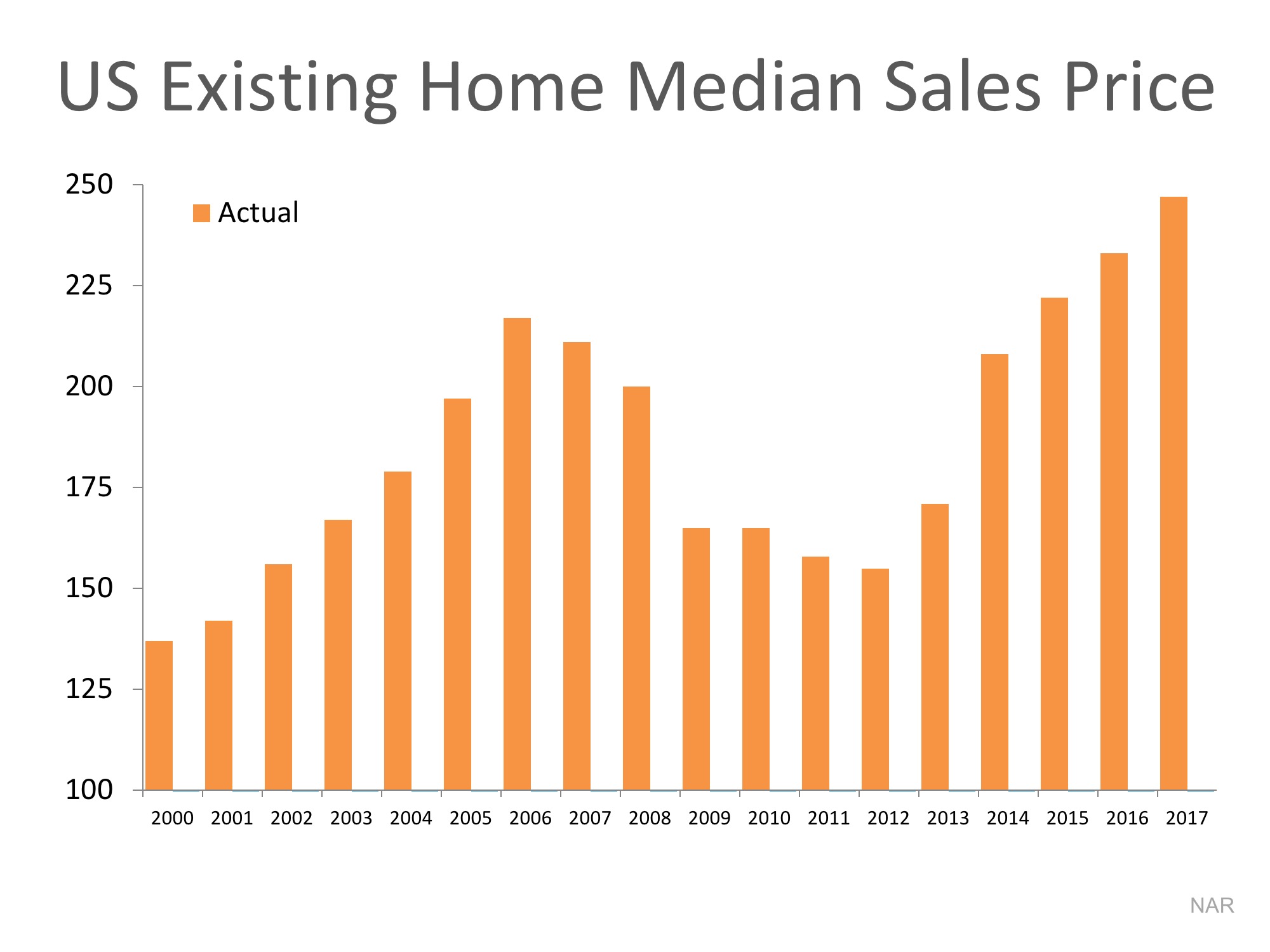
The first graph shows actual median home sales prices from 2000 through 2017.

Are Home Values Really Overinflated? | Simplifying The Market

By itself, this graph could heighten concerns as it shows home values rose in the early 2000s, came tumbling down and are now headed up again. It gives the feel of a rollercoaster ride that is about to take another turn downward.

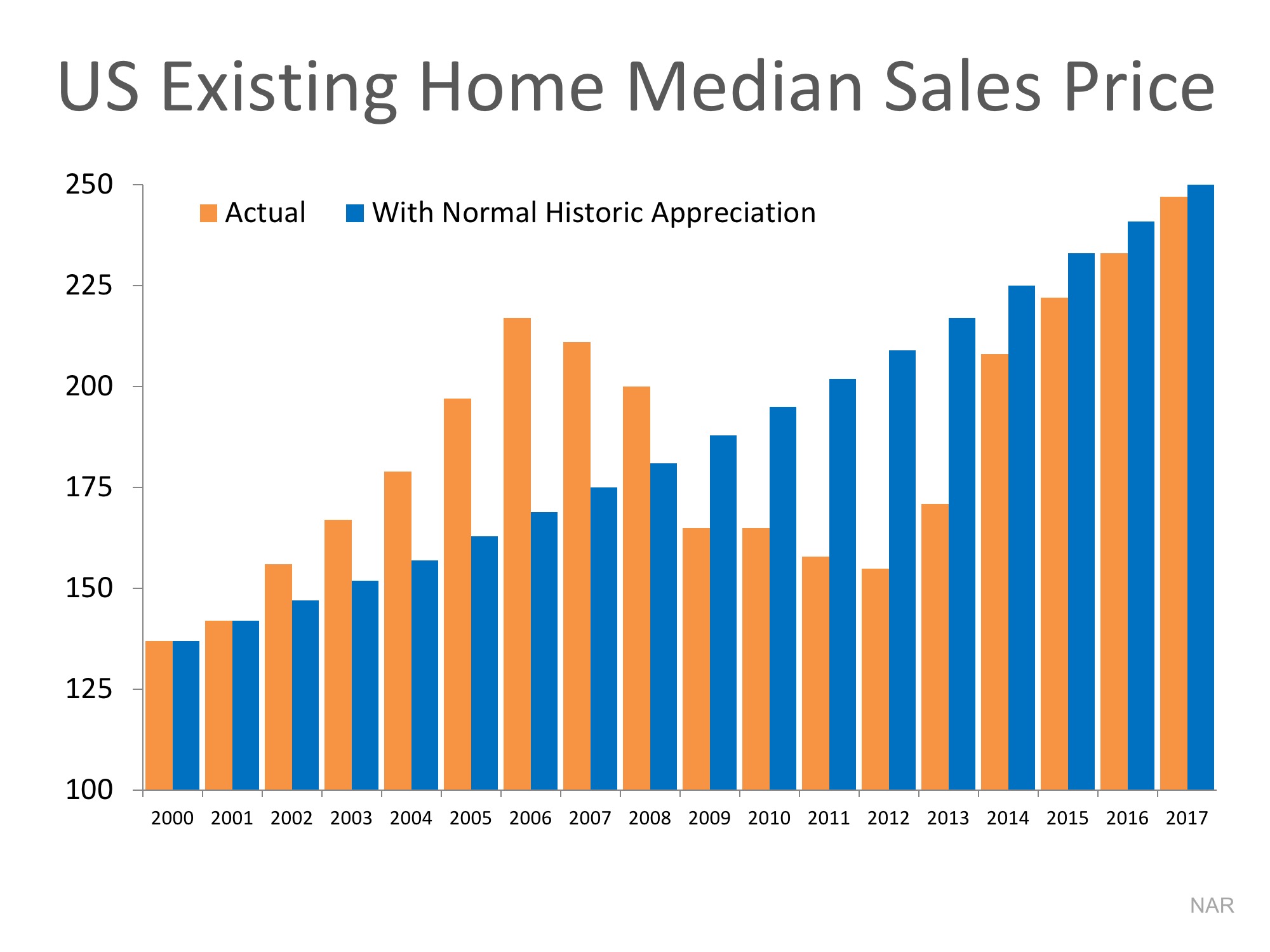
However, if we also include where prices would naturally be, had there not been a boom & bust, we see a different story.

Are Home Values Really Overinflated? | Simplifying The Market

The blue bars on this graph represent where prices would be if they had increased by the normal annual appreciation rate (3.6%). By adding 3.6% to the actual 2000 price and repeating that for each subsequent year, we can see that prices were overvalued during the boom, undervalued during the bust, and a little bit LOWER than where they should be right now.

Bottom Line

Based on historic appreciation levels, we should be very comfortable that current home values are not overinflated.

It’s Tax Season… Use Your Refund to Jump Start Your Down Payment Savings!

It's Tax Season… Use Your Refund to Jump Start Your Down Payment Savings! | Simplifying The Market

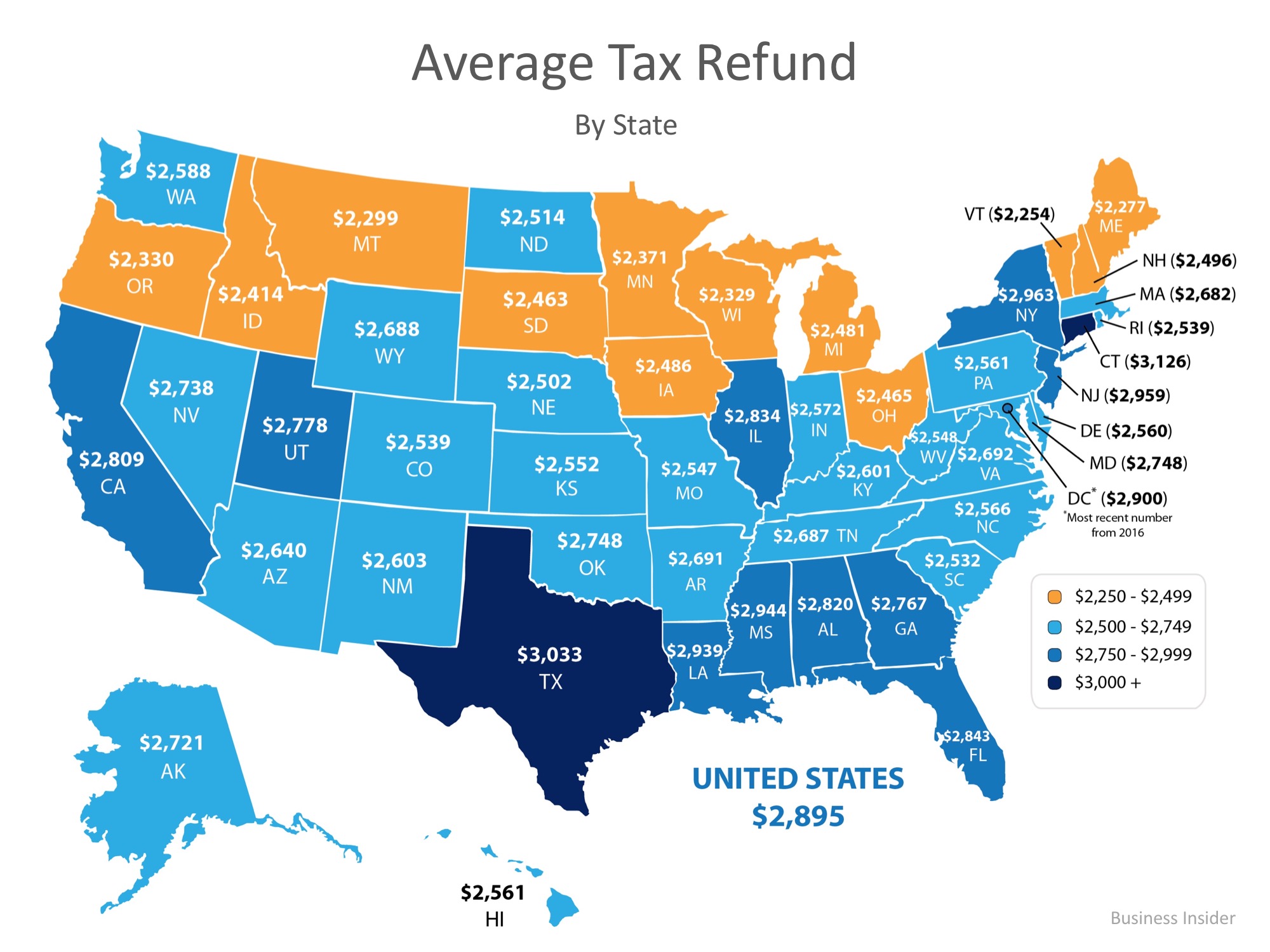
According to data released by the Internal Revenue Service (IRS), Americans can expect an estimated average refund of $2,840 this year when filing their taxes. This is down slightly from the average refund of $2,895, last year.

Tax refunds are often thought of as ‘extra money’ that can be used toward larger goals; for anyone looking to buy a home in 2018, this can be a great jump start toward a down payment!

The map below shows the average tax refund Americans received last year by state. (The refunds received for the 2017 tax year should continue to reflect these numbers as the new tax code will go into effect for 2018 tax filings.)

It's Tax Season… Use Your Refund to Jump Start Your Down Payment Savings! | Simplifying The Market

Many first-time buyers believe that a 20% down payment is required to qualify for a mortgage. Programs from the Federal Housing Authority, Freddie Mac, and Fannie Mae all allow for down payments as low as 3%, with Veterans Affairs Loans allowing many veterans to purchase a home with 0% down.

If you started your down payment savings with your tax refund check this year, how close would you be to a 3% down payment?

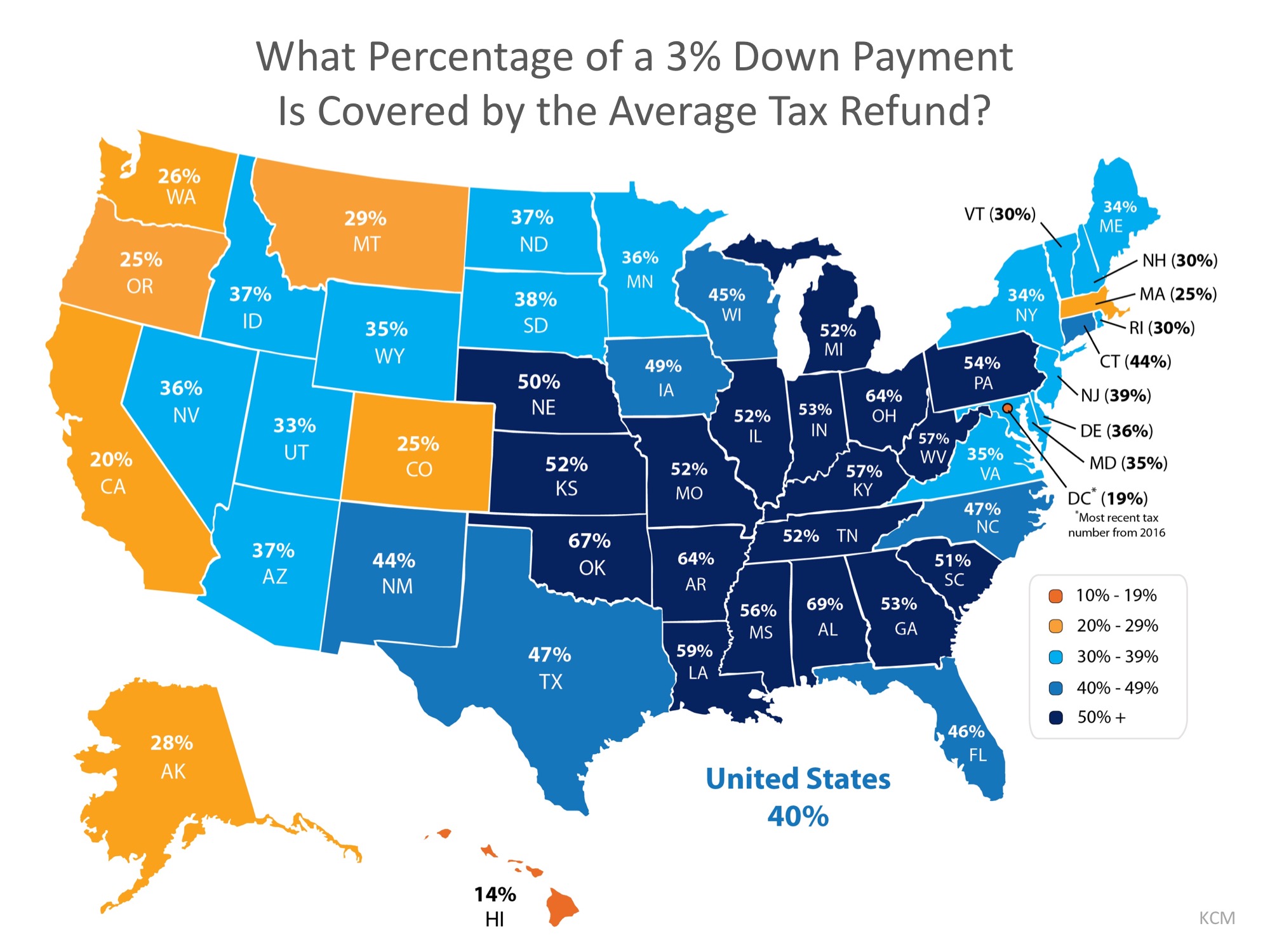
The map below shows what percentage of a 3% down payment is covered by the average tax refund by taking into account the median price of homes sold by state.

It's Tax Season… Use Your Refund to Jump Start Your Down Payment Savings! | Simplifying The Market

The darker the blue, the closer your tax refund gets you to homeownership! For those in Alabama looking to purchase their first homes, their tax refund could potentially get them 69% closer to that dream!

Bottom Line

Saving for a down payment can seem like a daunting task. But the more you know about what’s required, the more prepared you can be to make the best decision for you and your family! This tax season, your refund could be your key to homeownership!

Latest NAR Data Shows Now Is a Great Time to Sell!

Latest NAR Data Shows Now Is a Great Time to Sell! | Simplifying The Market

We all realize that the best time to sell anything is when demand for that item is high, and the supply of that item is limited. Two major reports released by the National Association of Realtors (NAR) revealed information that suggests that now is a great time to sell your house.

Let’s look at the data covered in the latest REALTORS® Confidence Index and Existing Home Sales Report.

REALTORS® CONFIDENCE INDEX

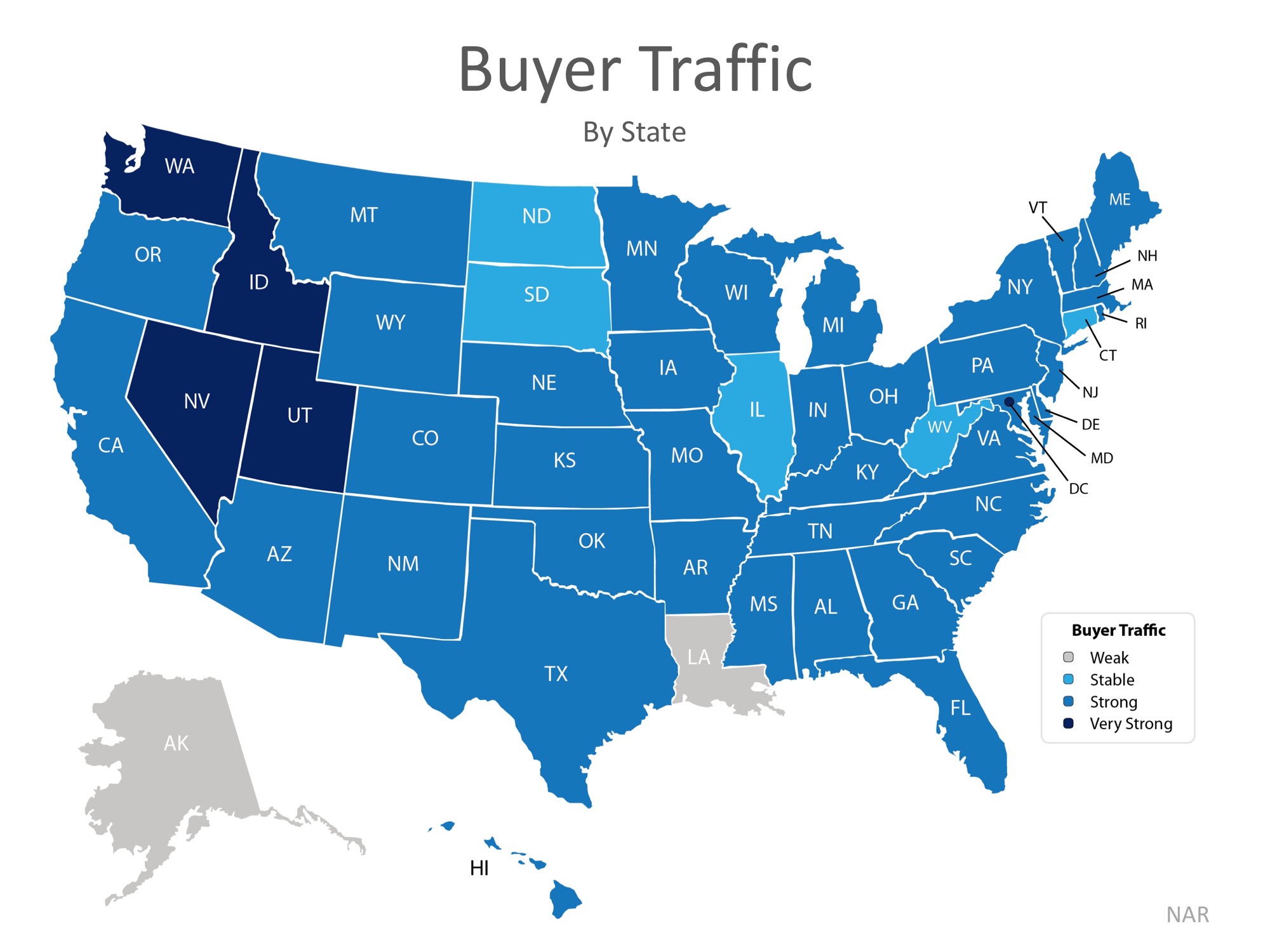
Every month, NAR surveys “over 50,000 real estate practitioners about their expectations for home sales, prices and market conditions.” This month, the index showed (again) that homebuying demand continued to outpace the supply of homes available in January.

The map below illustrates buyer demand broken down by state (the darker your state, the stronger demand there is).

Latest NAR Data Shows Now Is a Great Time to Sell! | Simplifying The Market

In addition to revealing high demand, the index also shows that compared to conditions in the same month last year, seller traffic conditions were ‘weak’ in 22 states, ‘stable’ in 25 states, and ‘strong’ in only 4 states (Alaska, Nevada, North Dakota & Utah).

Takeaway: Demand for housing continues to be strong but supply is struggling to keep up, and this trend is likely to continue throughout 2018.

THE EXISTING HOME SALES REPORT

The most important data revealed in the report was not sales but was instead the inventory of homes for sale (supply). The report explained:

  • Total housing inventory rose 4.1% from December to 1.52 million homes available for sale.
  • Unsold inventory is 9.5% lower than a year ago, marking the 32nd consecutive month with year-over-year declines.
  • This represents a 3.4-month supply at the current sales pace.

According to Lawrence Yun, Chief Economist at NAR:

“Another month of solid price gains underlines this ongoing trend of strong demand and weak supply. The underproduction of single-family homes over the last decade has played a predominant role in the current inventory crisis that is weighing on affordability.”

In real estate, there is a guideline that often applies; when there is less than a 6-month supply of inventory available, we are in a seller’s market and we will see appreciation. Between 6-7 months is a neutral market, where prices will increase at the rate of inflation. More than a 7-month supply means we are in a buyer’s market and should expect depreciation in home values.

As we mentioned before, there is currently a 3.4-month supply, and houses are going under contract fast. The Existing Home Sales Report shows that 43% of properties were on the market for less than a month when sold.

In January, properties sold nationally were typically on the market for 42 days. As Yun notes, this will continue unless more listings come to the market.

“While the good news is that Realtors in most areas are saying buyer traffic is even stronger than the beginning of last year, sales failed to follow course and far lagged last January’s pace. It’s very clear that too many markets right now are becoming less affordable and desperately need more new listings to calm the speedy price growth.”

Takeaway: Inventory of homes for sale is still well below the 6-month supply needed for a normal market and supply will ‘fail to catch up with demand’ if a ‘sizable’ supply does not enter the market.

Bottom Line

If you are going to sell, now may be the time to take advantage of the ready, willing, and able buyers that are still out searching for your house.

Mortgage Rates on FIRE! Home Prices Up in Smoke?

Mortgage Rates on FIRE! Home Prices Up in Smoke? | Simplifying The Market

Mortgage interest rates have already risen by over a quarter of a percentage point in 2018. Many are projecting that rates could increase to 5% by the end of the year.

What impact will rising rates have on house values?

Many quickly jump to the conclusion that an increase in mortgage rates will have a detrimental impact on real estate prices as fewer buyers will be able to qualify for a loan. This seems logical; if there is less demand for housing then prices will drop.

However, in a good economy, rising mortgage rates increase demand as many prospective purchasers immediately jump off the fence to guarantee they get the lower rate.

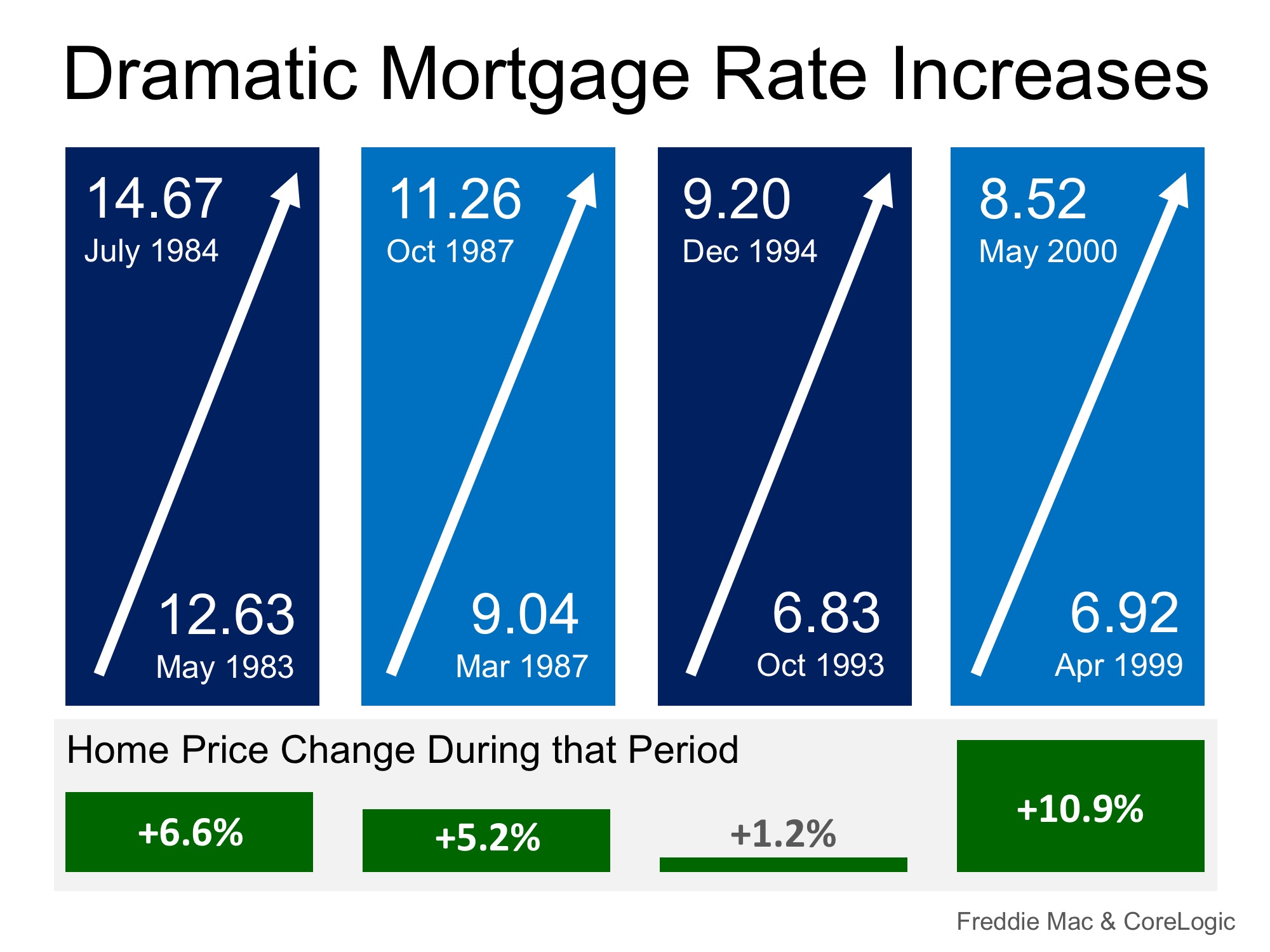
Let’s look at home prices the last four times mortgage rates increased dramatically.

Mortgage Rates on FIRE! Home Prices Up in Smoke? | Simplifying The Market

In each case, home prices APPRECIATED and did not depreciate. No one is projecting as dramatic an increase in rates as the examples above. Most are projecting an increase of approximately 1% by the end of the year.

The last time mortgage rates increased by 1% over a twelve-month period was January 2013 (3.41%) to January 2014 (4.43%). What happened to house prices during that span? They appreciated by 9.8%.

Just two weeks ago, Rick Palacios Jr., Director of Research at John Burns Real Estate Consulting explained:

“Mortgage rates have risen 1% or more ten times in the last 43 years, with little impact on home sales and prices when the economy was also strong…Historically, rising confidence, solid job growth, and higher wages have more than offset reduced demand for housing resulting from higher mortgage rates.”

Bottom Line

When mortgage rates increase, history has shown that prices appreciate (and do not depreciate) during that same time span.

80% of Renters Believe Homeownership is a Part of Their American Dream

80% of Renters Believe Homeownership is a Part of Their American Dream | Simplifying The Market

According to the latest Aspiring Home Buyers Profile by the National Association of Realtors (NAR), 82% of surveyed renters desire to own a home in the future, with 80% believing homeownership is a big part of achieving their American Dream.

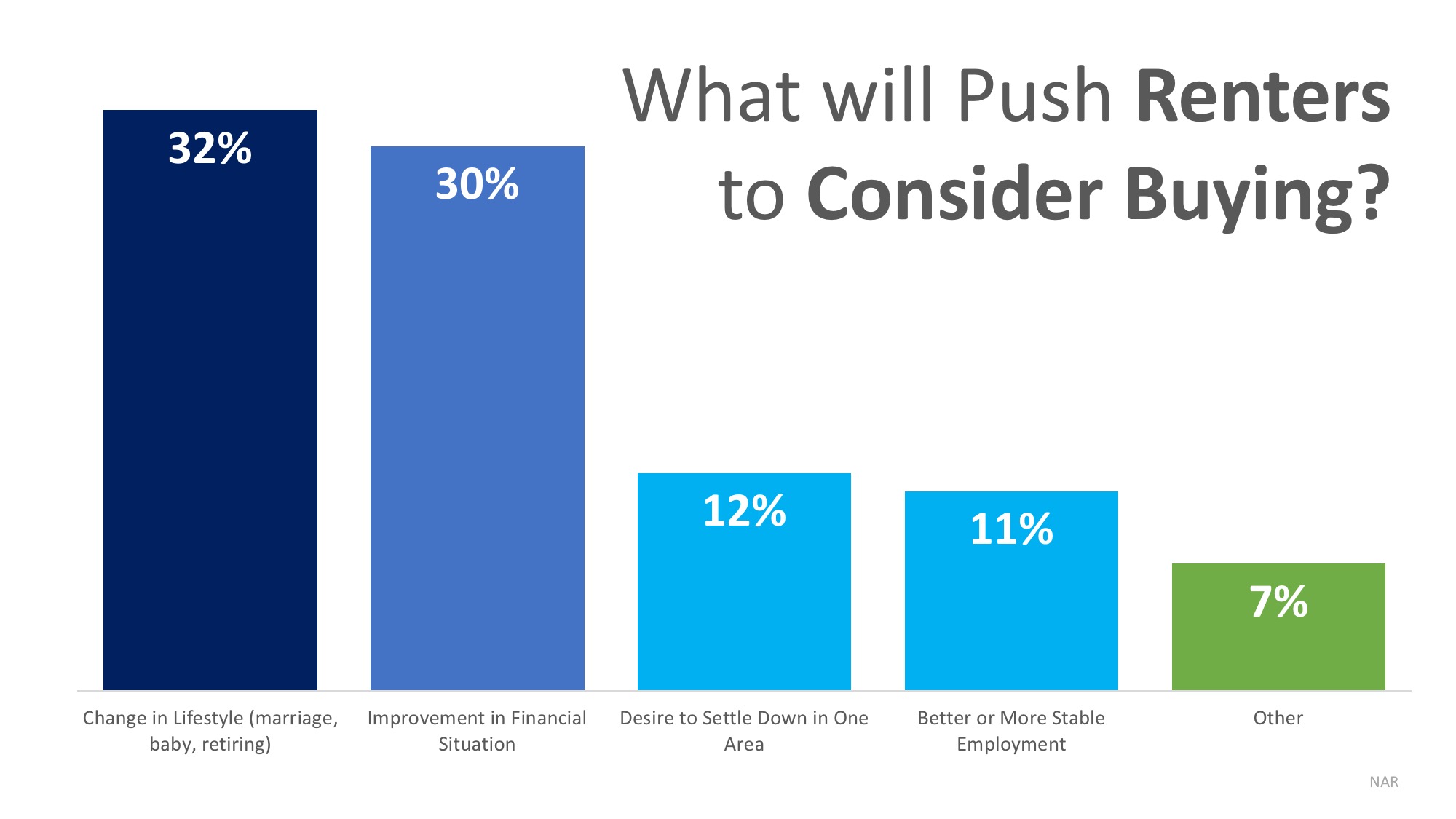
The profile went on to state that 50% of millennials believe that their rent will increase, with 20% believing that an increase in rent will be the catalyst that pushes them to consider buying a home vs. renewing their lease.

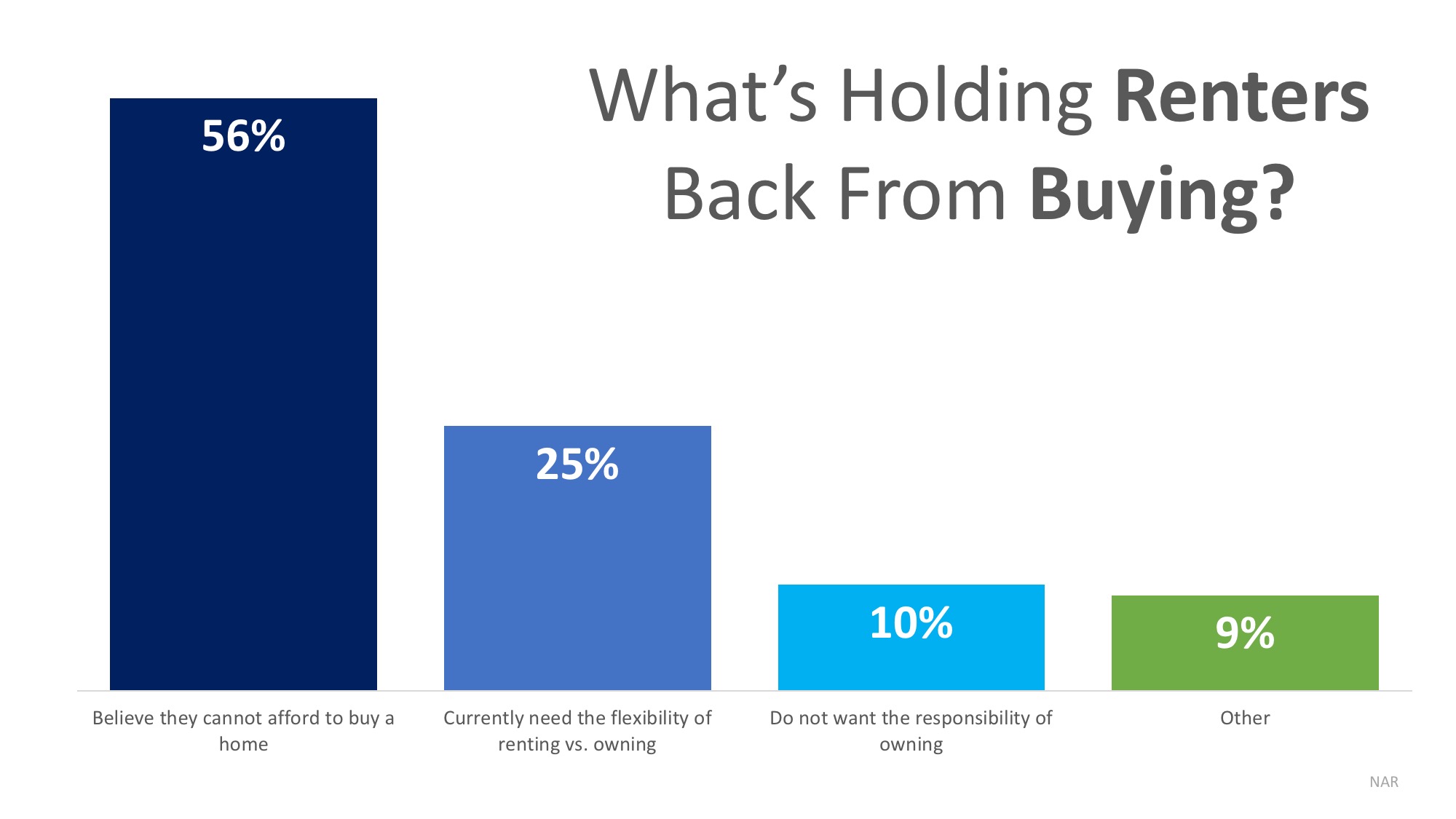
So, what is holding renters back?

80% of Renters Believe Homeownership is a Part of Their American Dream | Simplifying The Market

What would make renters take the plunge?

80% of Renters Believe Homeownership is a Part of Their American Dream | Simplifying The Market

NAR’s Chief Economist, Lawrence Yun believes that,

“Housing demand in 2018 will be fueled by more millennials finally deciding to marry and have kids and the expectations that solid job growth and the strengthening economy will push incomes higher.”

Yun goes on to warn that,

“However, with prices and mortgage rates also expected to increase, affordability pressures will persist. That is why it is critical for much of the country to start seeing a significant hike in new and existing housing supply. Otherwise, many would-be first-time buyers will be forced to continue renting and not reach their dream of being a homeowner.”

Bottom Line

If you are one of the many homeowners whose houses no longer fit their needs and are looking to move up to your dream home, now is a great time to list your starter home! First-time buyers are out in force looking to achieve their American Dream.

2 Ways to Get the Most Money from The Sale of Your Home

2 Ways to Get the Most Money from The Sale of Your Home | Simplifying The Market

Every homeowner wants to make sure they maximize their financial reward when selling their home. But how do you guarantee that you receive the maximum value for your house?

Here are two keys to ensure that you get the highest price possible.

1. Price it a LITTLE LOW 

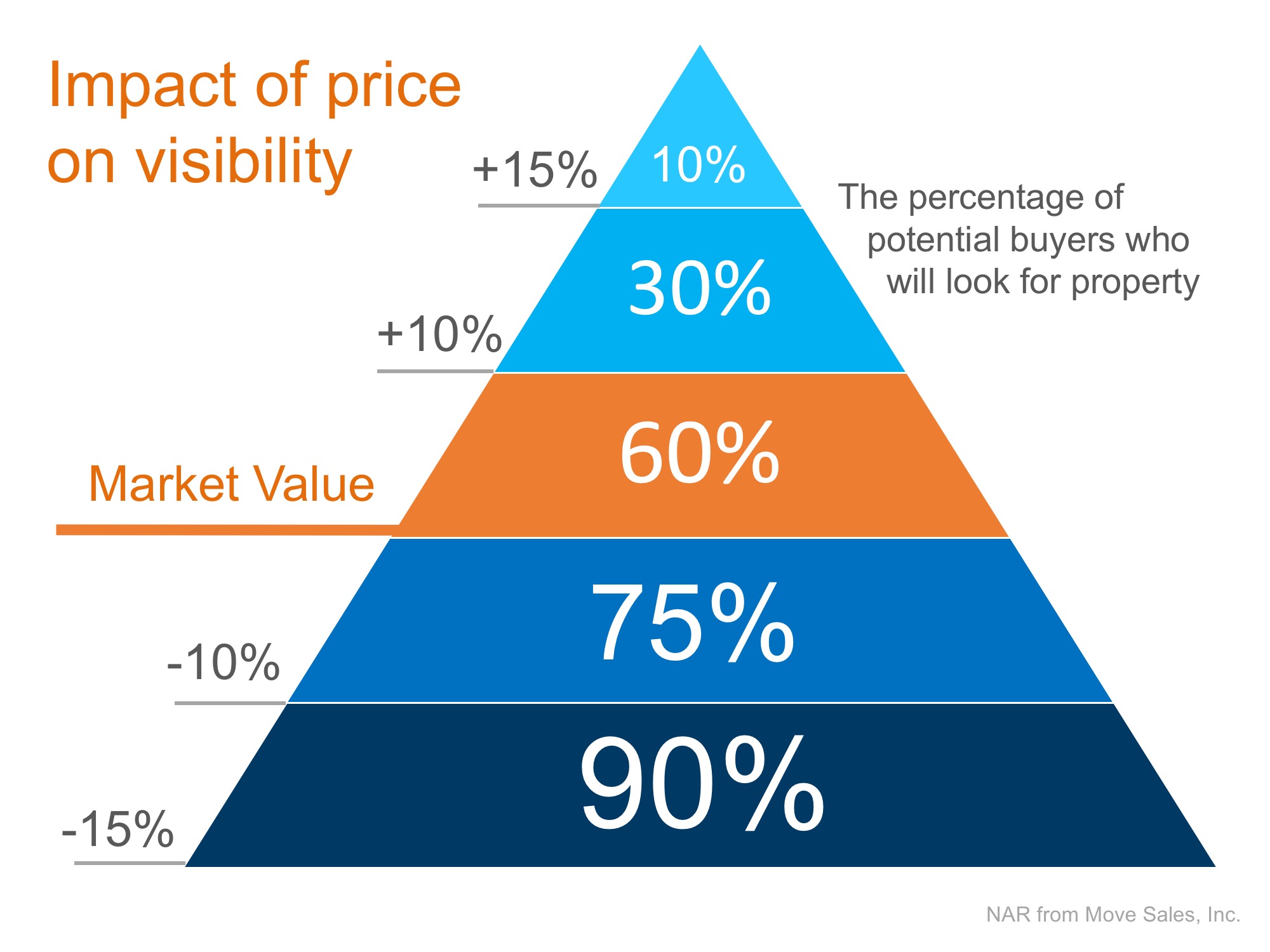
This may seem counterintuitive, but let’s look at this concept for a moment. Many homeowners think that pricing their homes a little OVER market value will leave them with room for negotiation. In actuality, this just dramatically lessens the demand for your house (see chart below).

2 Ways to Get the Most Money from The Sale of Your Home | Simplifying The Market

Instead of the seller trying to ‘win’ the negotiation with one buyer, they should price it so that demand for the home is maximized. By doing this, the seller will not be fighting with a buyer over the price but will instead have multiple buyers fighting with each other over the house.

Realtor.com gives this advice:

“Aim to price your property at or just slightly below the going rate. Today’s buyers are highly informed, so if they sense they’re getting a deal, they’re likely to bid up a property that’s slightly underpriced, especially in areas with low inventory.”

2. Use a Real Estate Professional

This, too, may seem counterintuitive. The seller may think they would make more money if they didn’t have to pay a real estate commission. With this being said, studies have shown that homes typically sell for more money when handled by a real estate professional.

study by Collateral Analytics, reveals that FSBOs don’t actually save any money, and in some cases may be costing themselves more, by not listing with an agent.

In the study, they analyzed home sales in a variety of markets in 2016 and the first half of 2017. The data showed that:

“FSBOs tend to sell for lower prices than comparable home sales, and in many cases below the average differential represented by the prevailing commission rate.”

The results of the study showed that the differential in selling prices for FSBOs when compared to MLS sales of similar properties is about 5.5%. Sales in 2017 suggest the average price was near 6% lower for FSBO sales of similar properties.

Bottom Line

Price your house at or slightly below the current market value and hire a professional. This will guarantee that you maximize the price you get for your house.