

Category Archives: For Buyers

Auto Added by WPeMatico

Is the Current Pace of Home Sales Maintainable?

Is the Current Pace of Home Sales Maintainable? | Simplifying The Market

There are some experts questioning whether the current pace of residential home sales is maintainable. Are too many people buying homes like in 2004-2006? Are we headed for another housing crisis? Actually, if we look closely at the numbers, we can see that we are looking at a very healthy real estate market.

Why the concern?

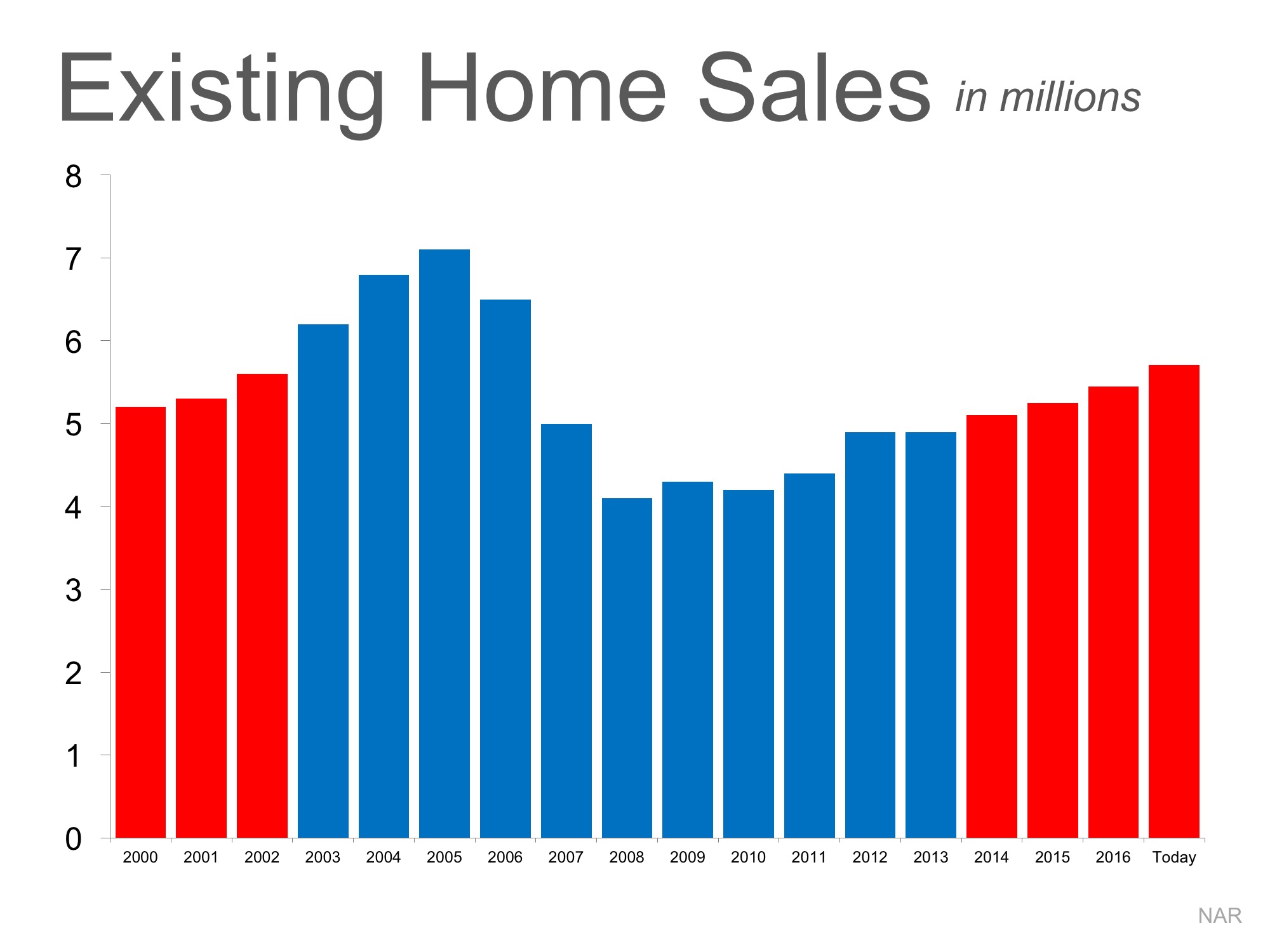
Some are looking at the last four years of home sales and comparing them to the three years just prior to the housing bubble. Looking at the graph below, we can understand that thinking.
Is the Current Pace of Home Sales Maintainable? | Simplifying The Market

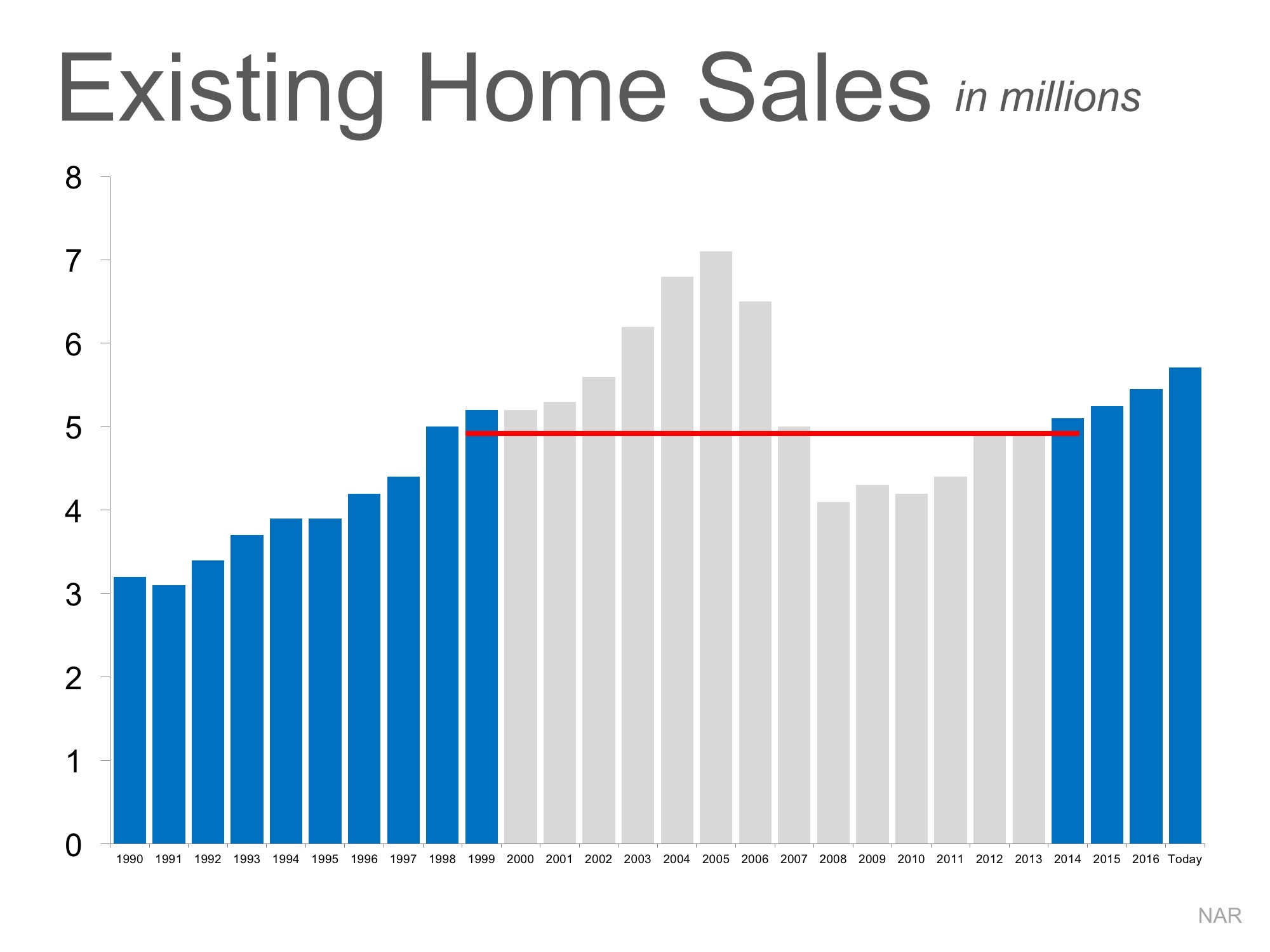
However, if we go further back in history, we can see the real picture. After taking out the “boom & bust” years, the pace of sales is growing at quite a natural pace.
Is the Current Pace of Home Sales Maintainable? | Simplifying The Market

And new home sales are way below historic numbers. Dave Liniger, Re/Max CEO explains:

“We expect a seasonal uptick in sales this time of year and March certainly met and somewhat exceeded that expectation. We don’t anticipate the tightening inventory to ease up in most markets until new home construction can catch up to its pre-recession pace. Until then, sellers will enjoy a fast-paced market and buyers will need to work with their agents to get in the right home.”

Bottom Line

The current pace of residential home sales definitely seems maintainable.

Your Tax Return: Bring it Home

Your Tax Return: Bring it Home | Simplifying The Market

This time of year, many people eagerly check their mailboxes looking for their tax return check from the IRS. But, what do most people plan to do with the money? GO Banking Rates recently surveyed Americans and asked the question – “What do you plan on doing with your tax refund?”

The results of the survey were interesting. Here is what they plan to do with their money:

  • 41% – Put it into savings
  • 38% – Pay off debt
  • 11% – Go on a vacation
  • 5% – Make a major purchase (car, home, etc.)
  • 5% – Splurge on a purchase

Upon seeing the research, The National Association of Realtors (NAR) wondered if this could help with a constant challenge cited by many people who wish to purchase a home – saving for the down payment.

In a recent post in NAR’s Economists’ Outlook Blog, they explained:

“With a sizable tax refund, the average American would have a decent down payment depending on which region or market you live in.”

They went on to add:

“[A]pproximately 5 percent of all respondents indicated they would make a major purchase which does not seem like a lot. However, there is a bigger group 41 percent who see saving the tax return is best and that group could be potential homebuyers if they are not already.”

In other words, putting that money toward purchasing a home is a form of savings.

Bottom Line

When one considers that first-time home buyers in 2016 had an average down payment of 6%, a decent tax return could go a long way toward the necessary funds needed for a down payment on a house. Or perhaps, the down payment needed by a son or daughter to make their homeownership dream a reality. How are you going to spend your return?

Real Estate Mogul: Here’s Why You Should Buy

Real Estate Mogul: Here’s Why You Should Buy | Simplifying The Market

Real Estate mogul, Sean Conlon, host of The Deed: Chicago on CNBC, was recently asked the question, should you buy? Or should you rent a house?

Conlon responded:

“I am a true believer that you save every penny and you buy your first house… and that is still the fastest path to wealth in this country.”

Conlon went on to suggest that first-time buyers put down 10-20% “if they can make it work,” and to remain in their home at least 4-5 years to see a return on their investment.

Who is Sean Conlon, and why should you listen to his advice?

Within a few years of working in the real estate industry, Conlon had established himself as one of the leading agents in the United States and has founded 3 billion-dollar brokerages dealing in residential, commercial and investment sales. Since immigrating to America from the United Kingdom in 1990, he believes very strongly in the American Dream and the role that homeownership plays in achieving it. Conlon is quoted on his website as saying:

“I treat people the way I would like to be treated if I went in to buy a house and I work harder than anybody I know. I think if you do that in America, you will always succeed.”

Bottom Line

Homeownership is an investment you can leverage against in the future that not only provides shelter and safety but also helps you build your family’s wealth. If you are debating whether or not to purchase a home this year, let’s get together to discuss the opportunities available in today’s market!

How Fast Can You Save for a Down Payment?

How Fast Can You Save for a Down Payment? | Simplifying The Market

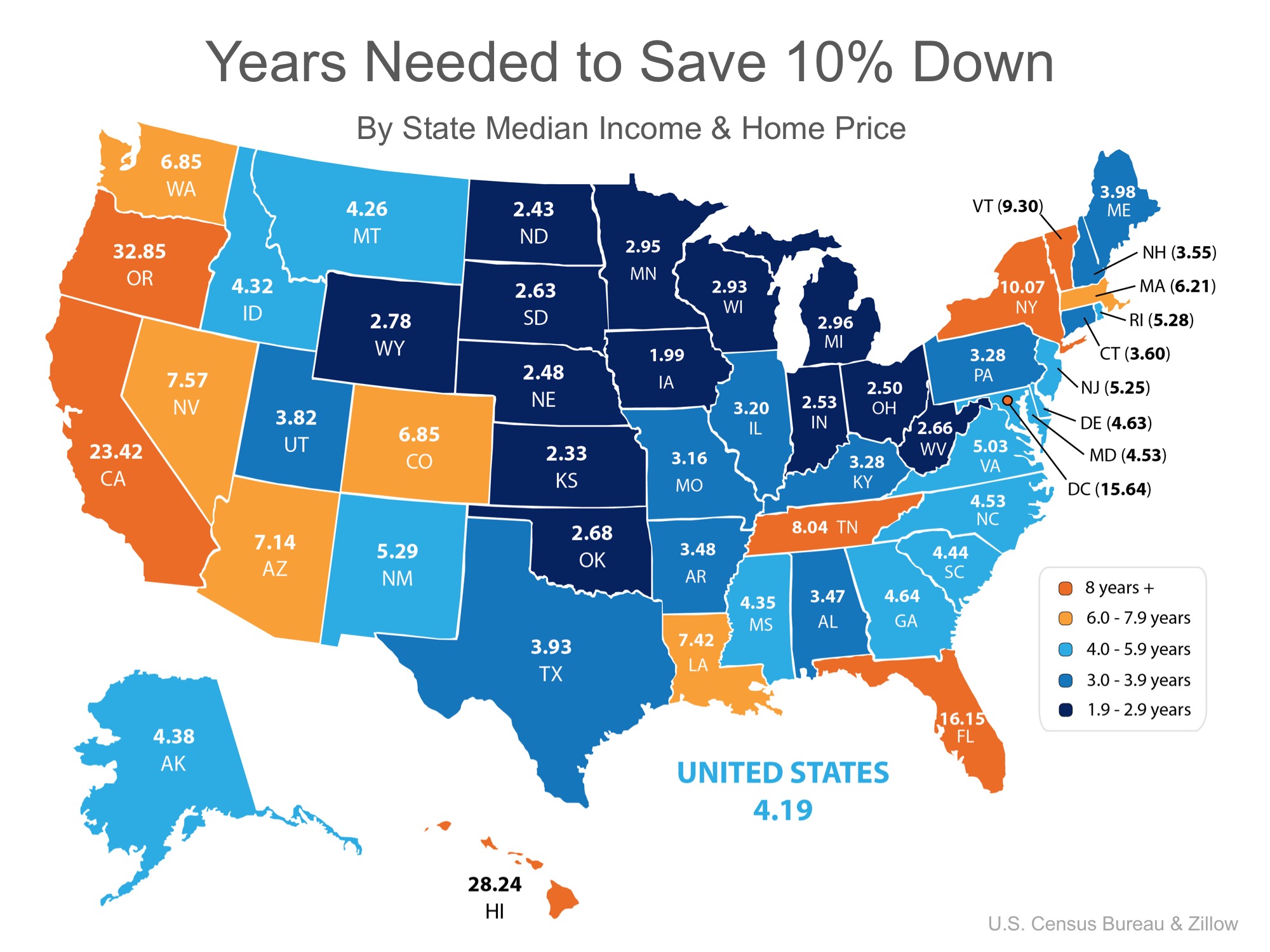
Saving for a down payment is often the biggest hurdle for a first-time homebuyer. Depending on where you live, median income, median rents, and home prices all vary. So, we set out to find out how long would it take you to save for a down payment in each state?

Using data from the United States Census Bureau and Zillow, we determined how long it would take, nationwide, for a first-time buyer to save enough money for a down payment on their dream home. There is a long-standing ‘rule’ that a household should not pay more than 28% of their income on their monthly housing expense.

By determining the percentage of income spent renting a 2-bedroom apartment in each state, and the amount needed for a 10% down payment, we were able to establish how long (in years) it would take for an average resident to save enough money to buy a home of their own.

According to the data, residents in Iowa can save for a down payment the quickest in just under 2 years (1.99). Below is a map created using the data for each state:

How Fast Can You Save for a Down Payment? | Simplifying The Market

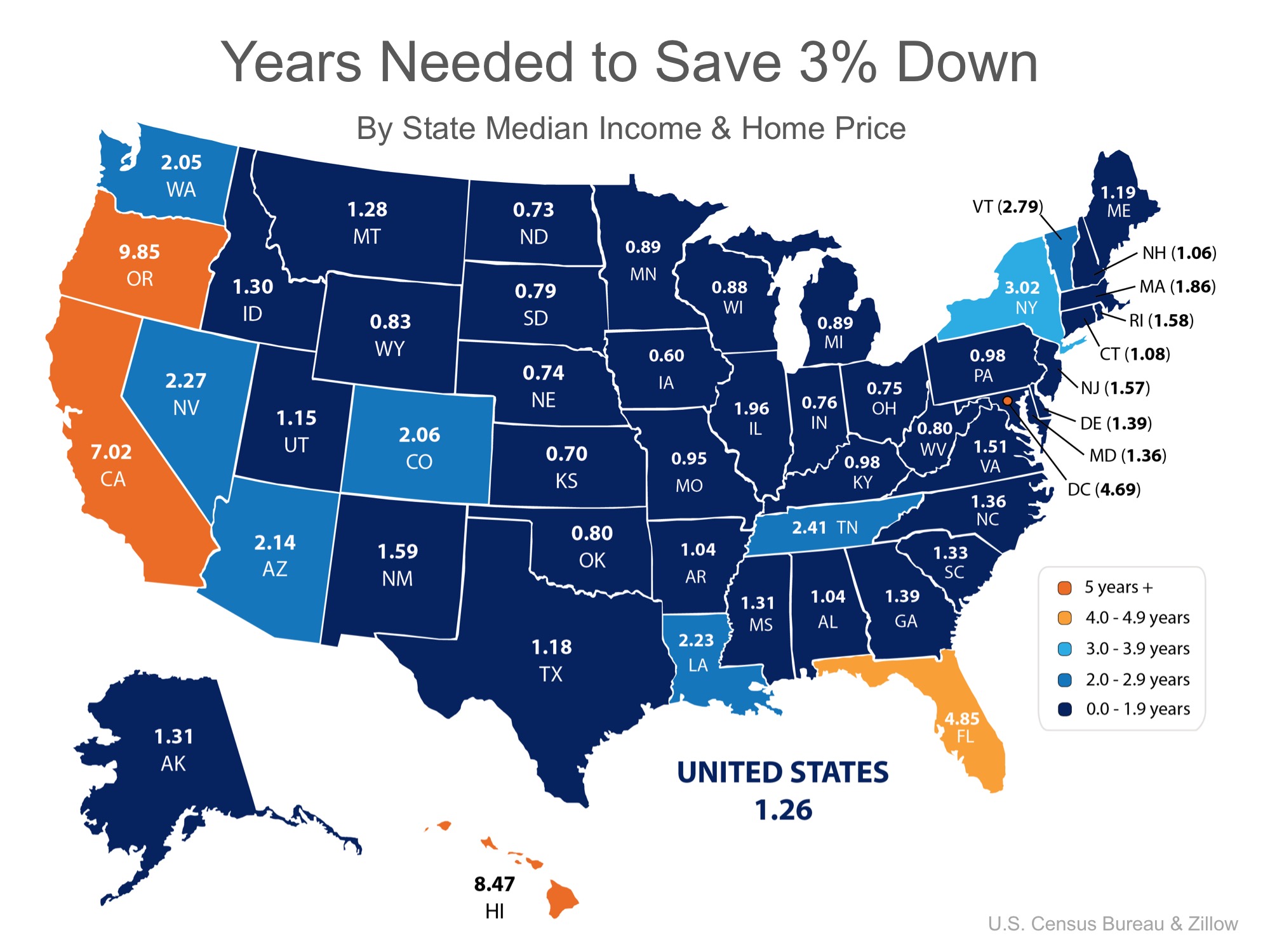
What if you only needed to save 3%?

What if you were able to take advantage of one of Freddie Mac’s or Fannie Mae’s 3% down programs? Suddenly, saving for a down payment no longer takes 5 or 10 years, but becomes attainable in a year or two in many states as shown in the map below.

How Fast Can You Save for a Down Payment? | Simplifying The Market

Bottom Line

Whether you have just started to save for a down payment, or have been saving for years, you may be closer to your dream home than you think! Let’s meet up so I can help you evaluate your ability to buy today.

Tax Return Depressing? Owning a Home Could Help

Tax Return Depressing? Owning a Home Could Help | Simplifying The Market

Many Americans got some depressing news last week; either their tax return was not as large as they had hoped or, in some cases, they were told they owed additional money to either the Federal or State government or both. One way to save on taxes is to own your own home.

Continue reading Tax Return Depressing? Owning a Home Could Help

Measuring Your Ability to Achieve the American Dream

Measuring Your Ability to Achieve the American Dream | Simplifying The Market

Forbes.com recently released the results of their new American Dream Index, in which they measure “the prosperity of the middle class, and…examine which states best support the American Dream.”

Continue reading Measuring Your Ability to Achieve the American Dream

US Housing Market Continues the Move into ‘Buy Territory’!

US Housing Market Continues the Move into ‘Buy Territory’! | Simplifying The Market

According to the Beracha, Hardin & Johnson Buy vs. Rent (BH&J) Index, the U.S. housing market has continued to move deeper into buy territory, supporting the belief that housing markets across the country remain a sound investment.

The BH&J Index is a quarterly report that attempts to answer the question:

In today’s housing market, is it better to rent or buy a home?

The index examines the entire US housing market and then isolates 23 major cities for comparison. The researchers “measure the relationship between purchasing property and building wealth through a buildup in equity versus renting a comparable property and investing in a portfolio of stocks and bonds.” 

While most of the metropolitan markets examined moved further into buy territory (15 of the 23), markets like Dallas, Denver, and Houston are currently deep into rent territory. In these three markets, it is estimated that renting will top homeownership 7 out of 10 times.

Due to a lack of inventory, the home prices in the Dallas, Denver, and Houston, areas have increased by 13%, 11.4%, and 7.3% respectively. Home prices in these areas will begin to return to more normal levels once residents realize that renting is not the best option, therefore bringing home affordability back as well.

Bottom Line

The majority of the country is strongly in buy territory. Buying a home makes sense socially and financially, as rents are predicted to increase substantially in the next year. Protect yourself from rising rents by locking in your housing cost with a mortgage payment now. 

To Find Out More About the Study: The BH&J Index and other FAU real estate activities are sponsored by Investments Limited of Boca Raton. The BH&J Index is published quarterly and is available online at http://business.fau.edu/buyvsrent.

Is Your First Home Within Your Grasp? [INFOGRAPHIC]

Is Your First Home Within Your Grasp? [INFOGRAPHIC] | Simplifying the Market

Some Highlights:

  • ‘Millennials’ are defined as 18-36 year olds according to the US Census Bureau.
  • According to NAR’s latest Profile of Home Buyers & Sellers, the median age of all first-time home buyers is 31 years old.
  • More and more ‘Old Millennials’ (25-36 year olds) are realizing that homeownership is within their reach now!

Home Mortgages: Rates Up, Requirements Easing

The media has extensively covered the rise in mortgage interest rates since last fall (from 3.42% last September to the current 4.1% according to Freddie Mac). However, a less covered aspect of the mortgage market is that requirements to get a mortgage have eased while rates have risen.

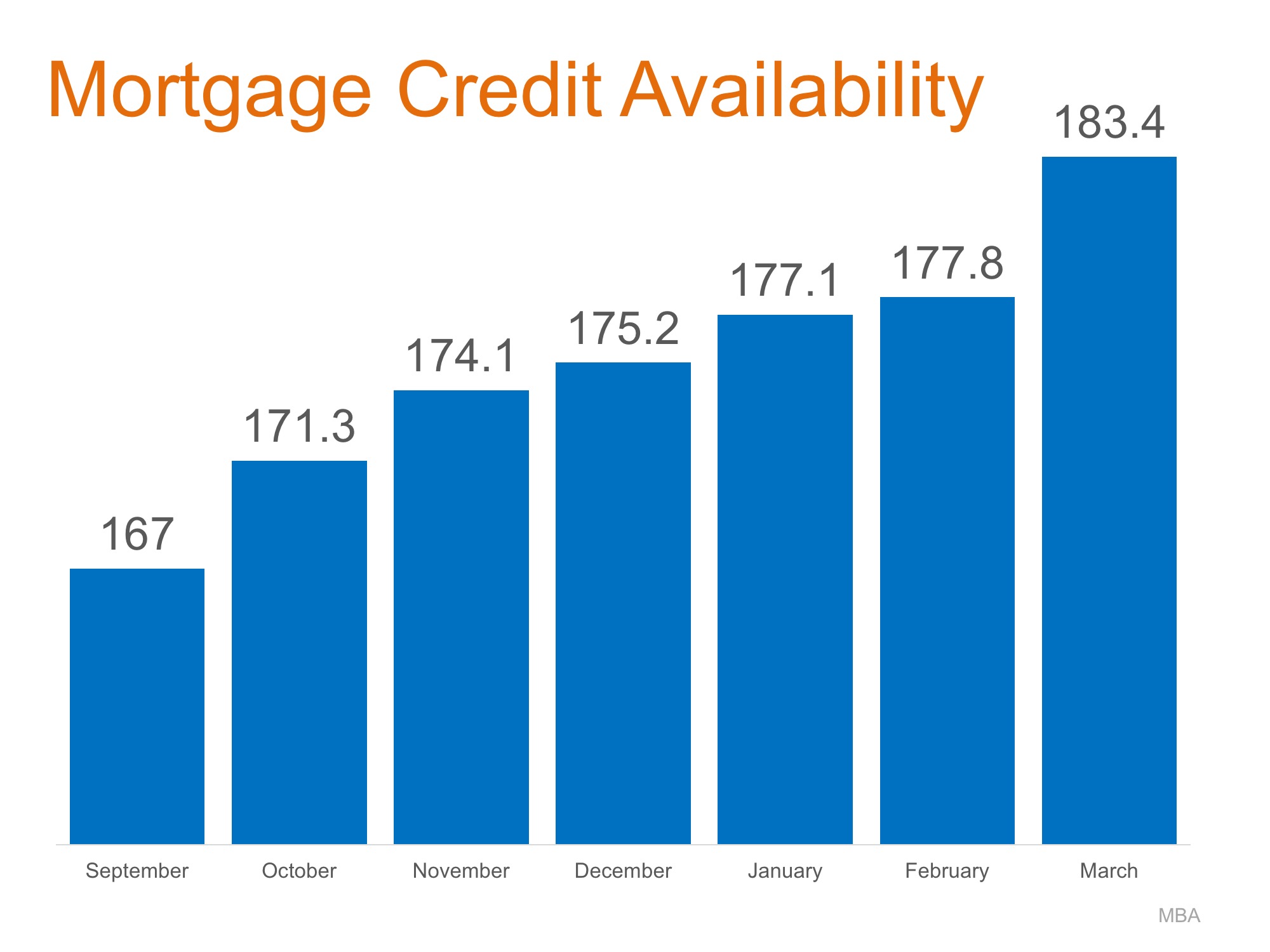
The Mortgage Bankers Association (MBA) quantifies the availability of mortgage credit each month with their Mortgage Credit Availability Index (MCAI). According to the MBA, the MCAI is:

“A summary measure which indicates the availability of mortgage credit at a point in time.”

The higher the index, the easier it is to get a mortgage. Here is a chart showing the MCAI over the last several months as rates have increased.

Home Mortgages: Rates Up, Requirements Easing | Simplifying The Market

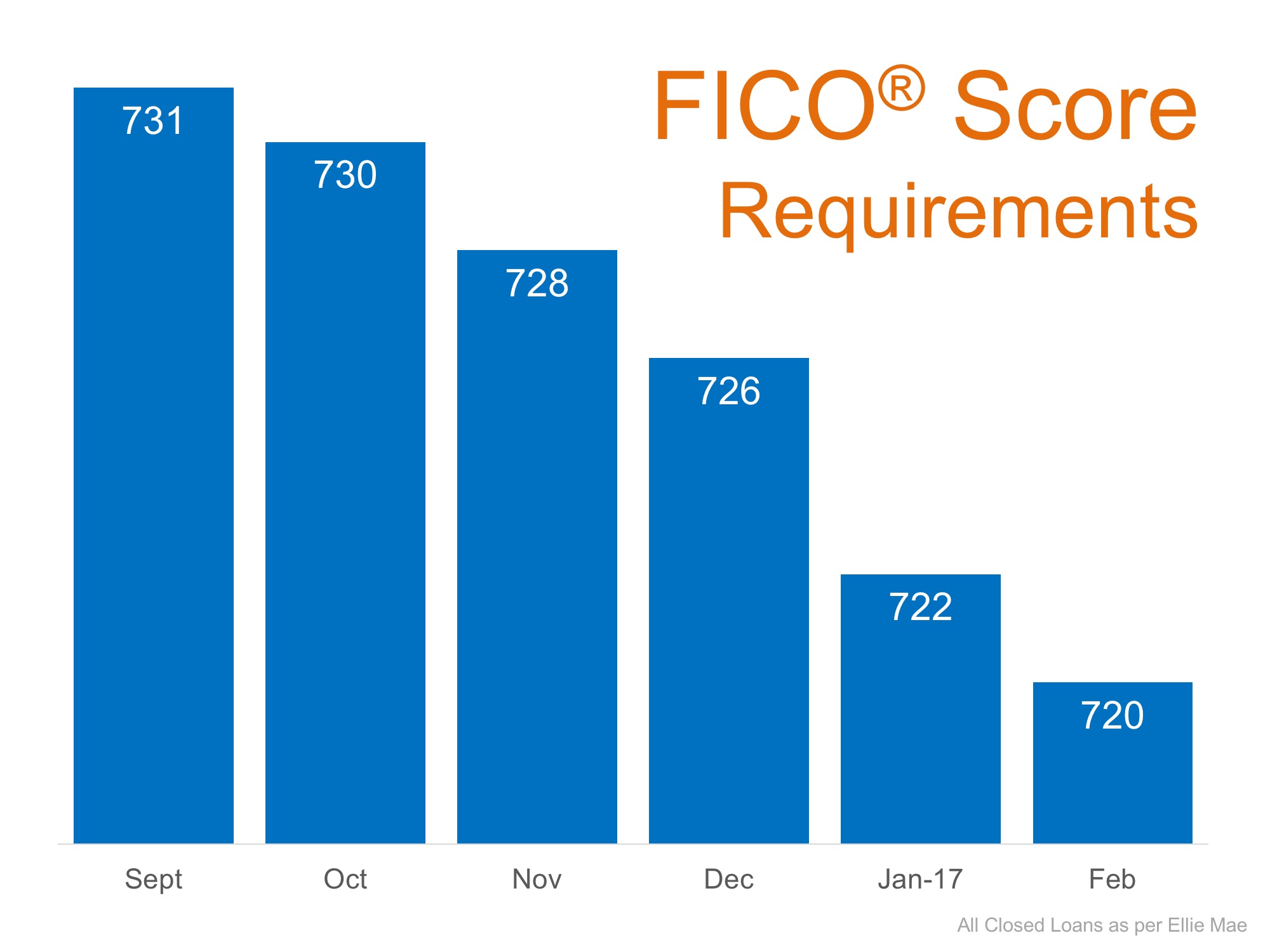
Have requirements for attaining a mortgage actually eased?

Yes. Here are two examples:

  1. FICO® Score – the credit score which helps determine a buyer’s eligibility. The score required to attain a mortgage has been falling over the last five months:

Home Mortgages: Rates Up, Requirements Easing | Simplifying The Market

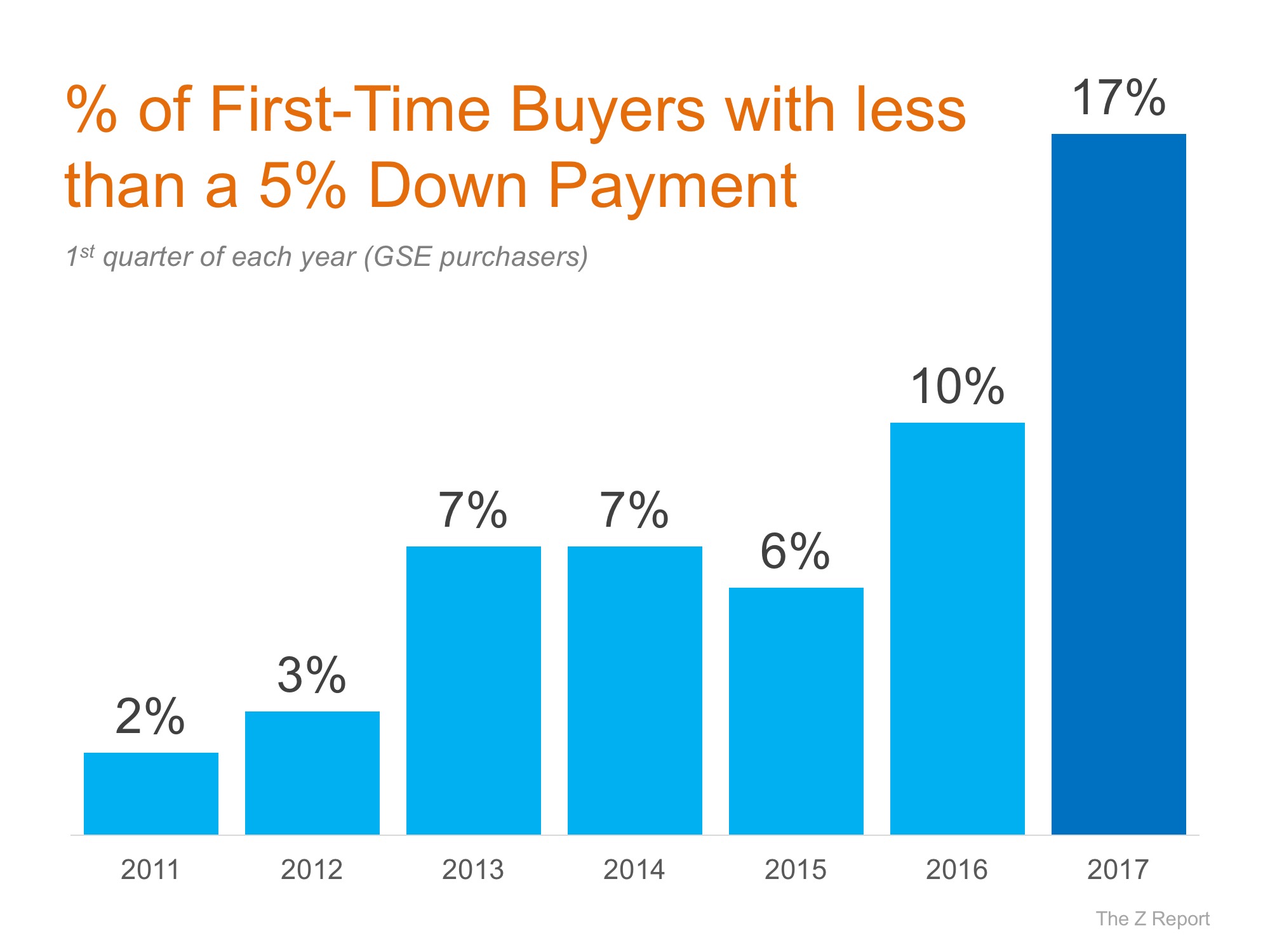
  1. Down Payment Requirement – the percentage of the purchase price necessary to place as a down payment on a home. To make this point, let’s look at the percentage of first-time buyers who have put less than 5% down over the last several years as compared to the 1st quarter of 2017:

Home Mortgages: Rates Up, Requirements Easing | Simplifying The Market

Bottom Line

Whether you are a current homeowner looking to move to a home that will better serve your family’s current needs, or a first-time buyer looking for a starter home, it is easier to get a mortgage today than it has been at any other time in the last ten years.