
Category Archives: For Buyers

Auto Added by WPeMatico

Homeowners Aged 65+ Have 48x More Net Worth Than Renters

Homeowners Aged 65+ Have 48x More Net Worth Than Renters | Simplifying The Market

Every three years, the Federal Reserve conducts their Survey of Consumer Finances in which they collect data across all economic and social groups. Their latest survey data covers responses from 2013-2016.

The study revealed that the median net worth of a homeowner was $231,400 – a 15% increase since 2013. At the same time, the median net worth of renters decreased by 5% ($5,200 today compared to $5,500 in 2013).

These numbers reveal that the net worth of a homeowner is over 44 times greater than that of a renter.

There are many who see that statistic and point toward how broad the range of respondents are for the Federal Reserve survey. Their study includes all economic and social groups and also includes all age groups. The argument is that older respondents have a higher likelihood of being homeowners, while the homeownership rate among younger survey takers is much lower.

Recently, the Joint Center for Housing Studies at Harvard University focused on homeowners and renters over the age of 65. Their study revealed that the difference in net worth between homeowners and renters at this age group was actually 47.5 times greater!

Homeowners Aged 65+ Have 48x More Net Worth Than Renters | Simplifying The Market

Homeowners over the age of 65 are much more financially prepared for retirement and often own their homes outright if they were fortunate enough to purchase their homes before the age of 36. Their 30 years of mortgage payments have paid off as they gained equity through their monthly payments and as home values appreciated.

It is no surprise that lifelong-renters have had a hard time accruing net worth as the latest Census report shows that the Median Asking Rent has been climbing consistently over the last 30 years.

Homeowners Aged 65+ Have 48x More Net Worth Than Renters | Simplifying The Market

Bottom Line

As a homeowner you put your monthly mortgage payment to work for you, building your net worth with every payment.

Home Prices Up 6.34% Across the Country! [INFOGRAPHIC]

Home Prices Up 6.34% Across the Country! [INFOGRAPHIC] | Simplifying The Market

Some Highlights:

  • The Federal Housing Finance Agency (FHFA) recently released their latest Quarterly Home Price Index report.
  • In the report, home prices are compared both regionally and by state.
  • Based on the latest numbers, if you plan on relocating to another state, waiting to move may end up costing you more!

Further Proof It’s NOT 2008 All Over Again

Further Proof It’s NOT 2008 All Over Again | Simplifying The Market

Home sales numbers are leveling off, the rate of price appreciation has slowed to more historically normal averages, and inventory is finally increasing. We are headed into a more normal housing market.

However, some are seeing these adjustments as red flags and are suggesting that we are headed back to the same challenges we experienced in 2008. Today, let’s look at one set of statistics that prove the current market is nothing like the one that preceded the housing crash last decade.

The previous bubble was partially caused by unhealthy levels of mortgage debt. New purchasers were putting down the minimum down payment, resulting in them having little if any equity in their homes.

Existing homeowners were using their homes as ATMs by refinancing and swapping their equity for cash. When prices started to fall, many homeowners found themselves in a negative equity situation (where their mortgage was higher than the value of their home) so they walked away which caused prices to fall even further. When this happened, even more homeowners found themselves in negative equity situations which caused them to walk away as well, and so a vicious cycle formed.

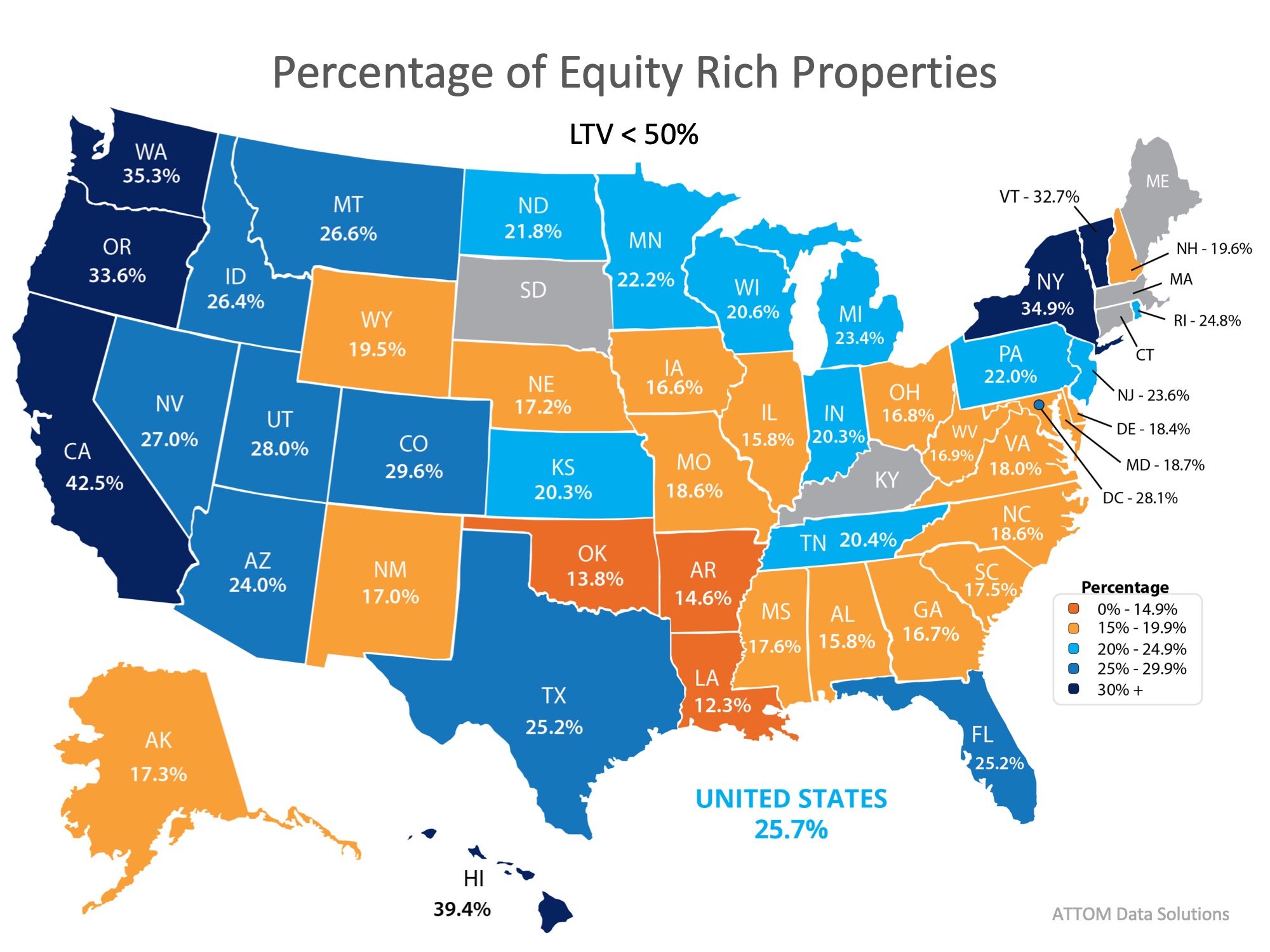
Today, the equity situation is totally different. According to a new report from ATTOM Data Solutions more than 1-in-4 homes with a mortgage have at least 50% equity. The report explains:

“…nearly 14.5 million U.S. properties were equity rich — where the combined estimated amount of loans secured by the property was 50 percent or less of the property’s estimated market value…The 14.5 million equity rich properties in Q3 2018 represented 25.7 percent of all properties with a mortgage.”

In addition, according to the U.S. Census Bureau, 30.3% of homes in the country have no mortgage on them.

Further Proof It’s NOT 2008 All Over Again | Simplifying The Market

Almost 50% of all homes have at least 50% equity.

If we take both numbers, the 30.3% of all homes without a mortgage and the 17.9% with at least 50% equity (25.7% of the 69.3% of homes with a mortgage), we realize that 48.2% of all homes in the country have at least 50% equity.

Bottom Line

Unlike 2008, almost half of the homeowners in the country are sitting on massive amounts of home equity. They will not be walking away from their homes if the housing market begins to soften.

24% of Renters Believe Winter is the Best Time to Buy a Home

24% of Renters Believe Winter is the Best Time to Buy a Home | Simplifying The Market

In real estate, the spring is often seen as the ideal time to buy or sell a house. The term “Spring Buyer’s Season” exists for a reason, as renters and those looking to move on from their current home thaw out from the winter and hit the market ready to buy.

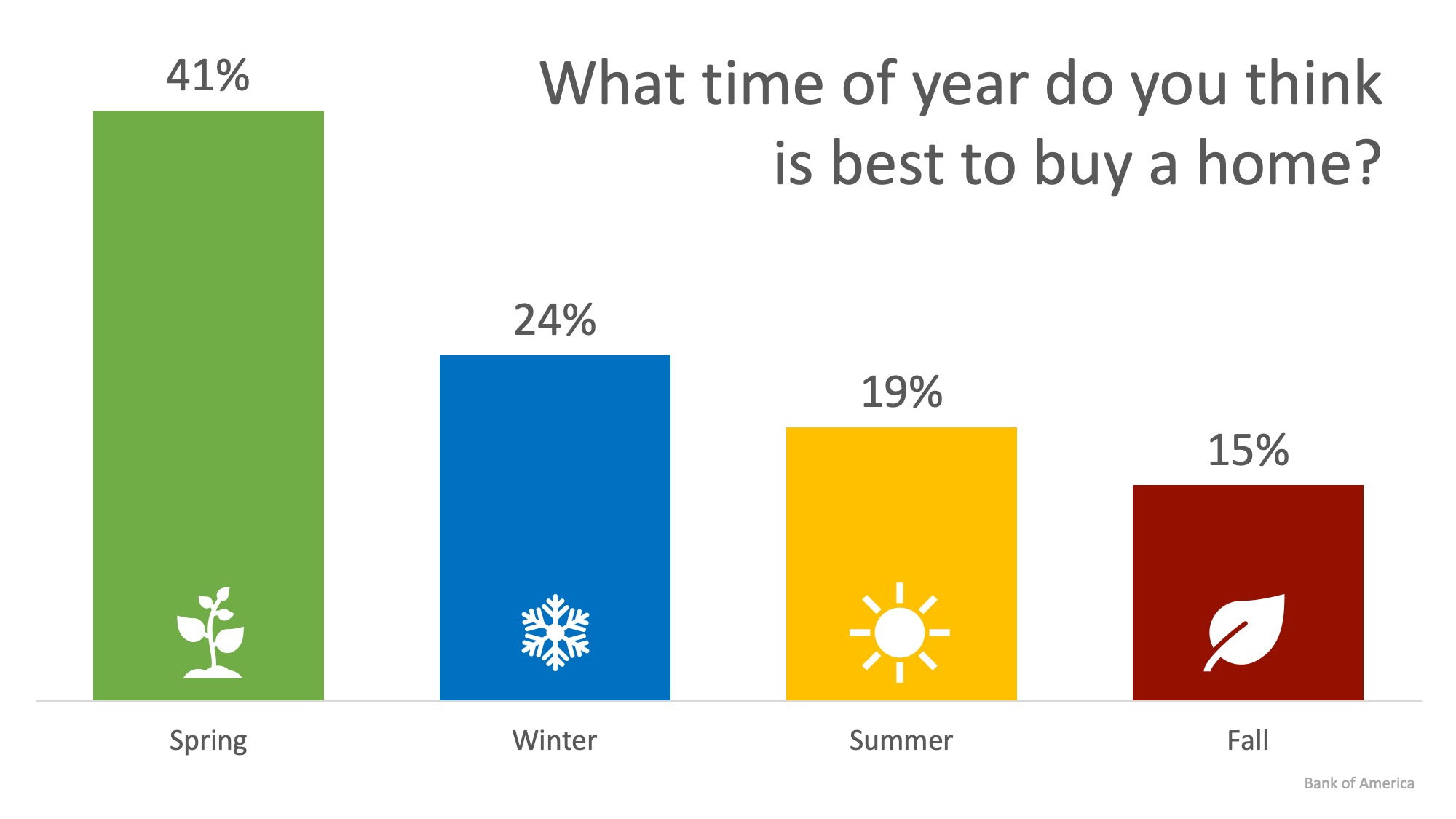
According to Bank of America’s annual Home Buyer Insights Report, 41% of renters surveyed agree that spring is the best time to buy a home. The surprising result, however, is that when ranking the seasons, winter comes in second at 24%.

24% of Renters Believe Winter is the Best Time to Buy a Home | Simplifying The Market

In many areas of the country, the spring and summer are the most competitive seasons for buyers. Families with children often want to move over the summer to make sure that their kids are ready for school in the fall. This often leads those families who haven’t found homes to buy to push pause on their search in the fall and winter months.

This creates a great environment for buyers to find a home with less competition. According to moving.com, scheduling a move during the winter months also comes with the best price.

“If you define ‘best’ by cost then, generally speaking, you are more likely to save on a move during the late September to April window. Demand for movers usually slows down during this time frame and rates are low.”

There are also many benefits to listing your house for sale during the winter months as well!

As we recently mentioned, buyers who are out in the winter are serious about wanting to find a home, and there is traditionally less competition on the market which gives you greater exposure to those buyers.

Bottom Line

As always, the best time to buy or move all depends on each individual buyer or seller’s goals and needs. If you are one of the many who would like to make a move this winter, let’s get together to create a plan to make it happen!

Buyers: Don’t Be Surprised by Closing Costs!

Buyers: Don’t Be Surprised by Closing Costs! | Simplifying The Market

Many homebuyers think that saving for their down payment is enough to buy the house of their dreams, but what about the closing costs that are required to obtain a mortgage?

By law, a homebuyer will receive a loan estimate from their lender 3 days after submitting their loan application and they should receive a closing disclosure 3 days before the scheduled closing on their home. The closing disclosure includes final details about the loan and the closing costs.

But what are closing costs anyway?

According to Trulia:

“Closing costs are lender and third-party fees paid at the closing of a real estate transaction, and they can be financed as part of the deal or be paid upfront. They range from 2% to 5% of the purchase price of a home. (For those who buy a $150,000 home, for example, that would amount to between $3,000 and $7,500 in closing fees.)”

Keep in mind that if you are in the market for a home above this price range, your costs could be significantly greater. As mentioned before,

Closing costs are typically between 2% and 5% of your purchase price.

Trulia continues to give great advice, saying that:

“…understanding and educating yourself about these costs before settlement day arrives might help you avoid any headaches at the end of the deal.”

Bottom Line

Speak with your lender and agent early and often to determine how much you’ll be responsible for at closing. Finding out that you’ll need to come up with thousands of dollars right before closing is not a surprise anyone is ever looking forward to.

Will Your Side Hustle Buy You a House This Year?

Will Your Side Hustle Buy You a House This Year? | Simplifying The Market

The top concern for most first-time home buyers is their ability to save for a down payment. According to a new survey, 36% of millennials took on a second job to make their dreams of homeownership a reality in 2017. 

Among millennials with incomes over $100,000 a year, the top ways to come up with the necessary funds were to sell stocks (20%) or to sell cryptocurrency (16%).

The most popular method of savings was the most traditional; 60% of those saving for a down payment used a percentage of their paychecks to achieve their goal, while 75% of those with salaries over $100k were able to save this way.

For those who have not yet begun to save for their down payment, 32% plan on pursuing additional employment, while 15% plan on driving for a ride-share service as their second job.

Many first-time buyers are mistaken about the down payment needed in today’s real estate market. In fact,

“In a 2017 survey, 68% of renters cited saving for a down payment as an obstacle to homeownership. Thirty-nine percent of renters believe that more than 20% is needed for a down payment and many renters are unaware of low-down payment programs.”

The many benefits of homeownership make the extra jobs, sacrificing new clothes, or skipping vacations well worth it.

Bottom Line

If you have been saving for your down payment for a while now and are curious how much further you have to go, let’s get together to help you determine what priced home you can afford and what size down payment you’ll need.

Females Are Making It a Priority to Invest in Real Estate!

Females Are Making It a Priority to Invest in Real Estate! | Simplifying The Market

Everyone wants a place to call home; a place that gives them a sense of security. We are currently seeing major interest from females who want to achieve this dream, and the numbers are proving it!

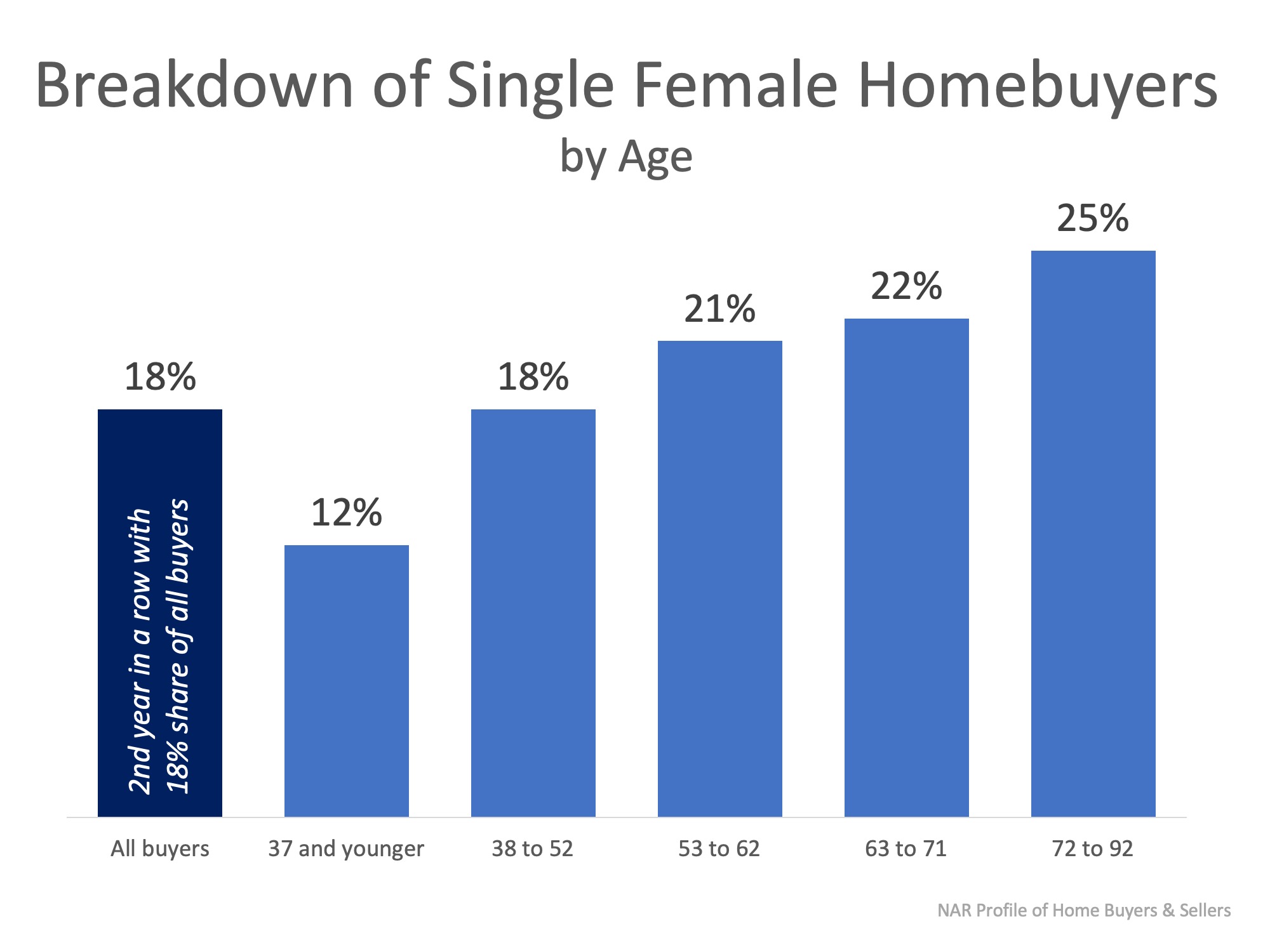
In 2018, for the second year in a row, single female buyers accounted for 18% of all buyers. In 2017, 60% of millennial women listed as the primary borrowers on mortgages were single.

According to the 2018 Home Buyer and Seller Generational Trends Report by the National Association of Realtors, one in five homebuyers in the U.S. were single females (most of them part of the baby boomer generation) as you can see in the graph below:

Females Are Making It a Priority to Invest in Real Estate! | Simplifying The Market

This does not come as a surprise since 50.8% of the U.S. population is female and 15.6% of them are 65 years and over, according to the Census Bureau.

What are the reasons for this demographic’s booming interest in homeownership?

Bankrate published an article with what they believe to be some of the reasons:

  • Divorce rate: Known as the “Gray Divorce,” the divorce rate has doubled for those ages 50 and over and tripled for those ages 65 and over.
  • Average life expectancy: For women it’s 81, four years longer than men.
  • To build home equity: Women want to build equity through their home. As mentioned by Bankrate, “some are hoping to escape rising rents, some might be downsizing or looking for a new start,” especially those going through a gray divorce.

Are they only downsizing and buying small homes?

Not really; The Institute of Luxury Home Marketing recently stated that:

“The number of female billionaires grew faster globally in 2017 than the number of male billionaires. This redistribution of wealth has seen an impact on luxury real estate both in its purchase and design attributes – and obviously, this is important for realtors to recognize when relating to their clients.”

Bottom Line

Whether you are a millennial who wants to buy a starter home, a billionaire looking for that luxury home you’ve always wanted, or maybe even someone who just went through a gray divorce, let’s get together to help you create your real estate portfolio so that you can start investing your money in real estate today!

Wage Increases Make Home Buying More Affordable

Wage Increases Make Home Buying More Affordable | Simplifying The Market

Everyone knows that housing affordability has been negatively impacted by rising prices and increasing mortgage rates, but there is another piece to the affordability equation – wages.

How much a family earns obviously impacts how easy or difficult it is for them to afford to own a home. Because of an improving economy, wages are finally beginning to increase – and that dramatically affects home affordability.

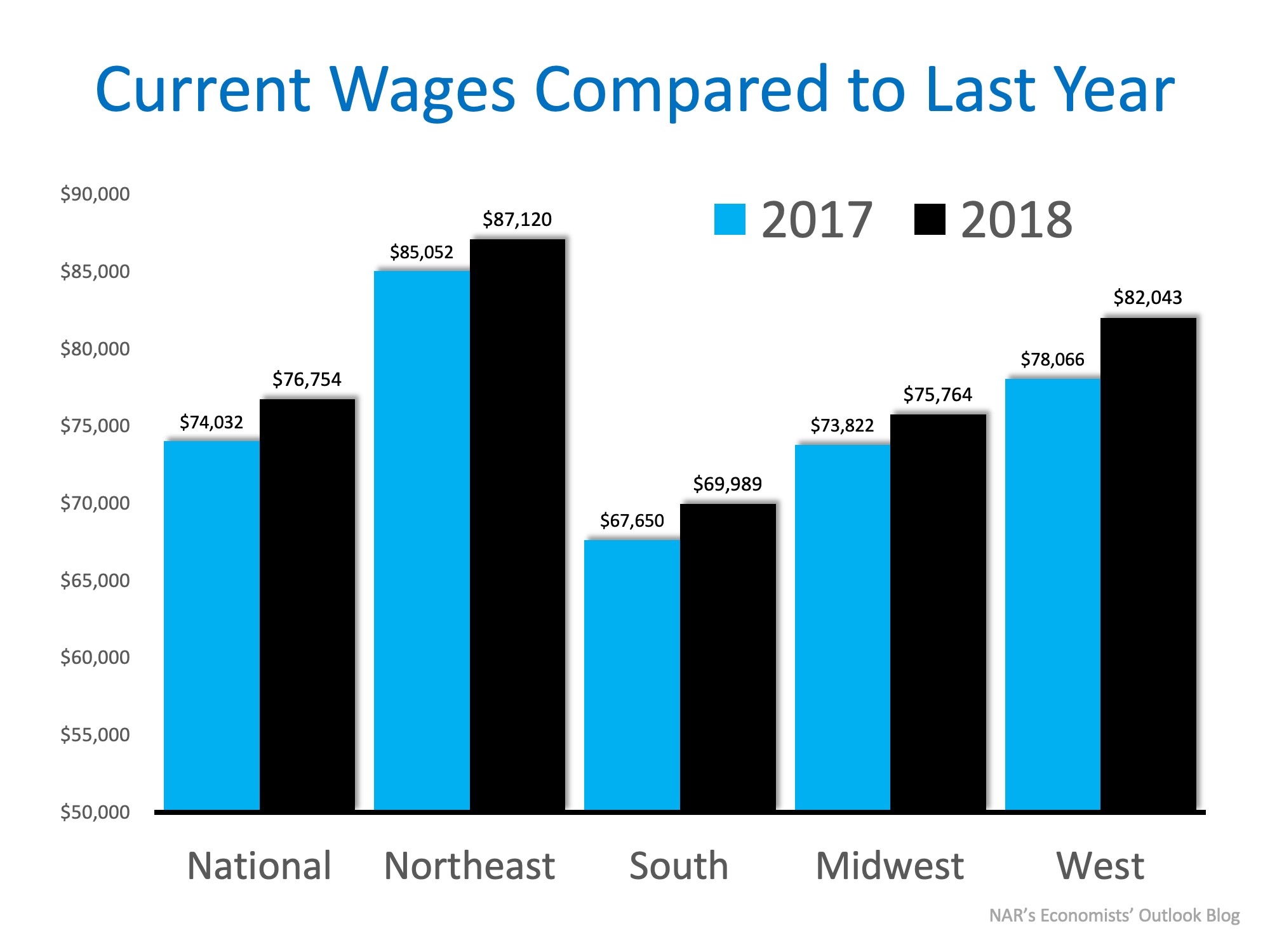
According to the National Association of Realtors’ (NAR) September 2018 Housing Affordability Index, wages have increased in every region of the country:

Wage Increases Make Home Buying More Affordable | Simplifying The Market

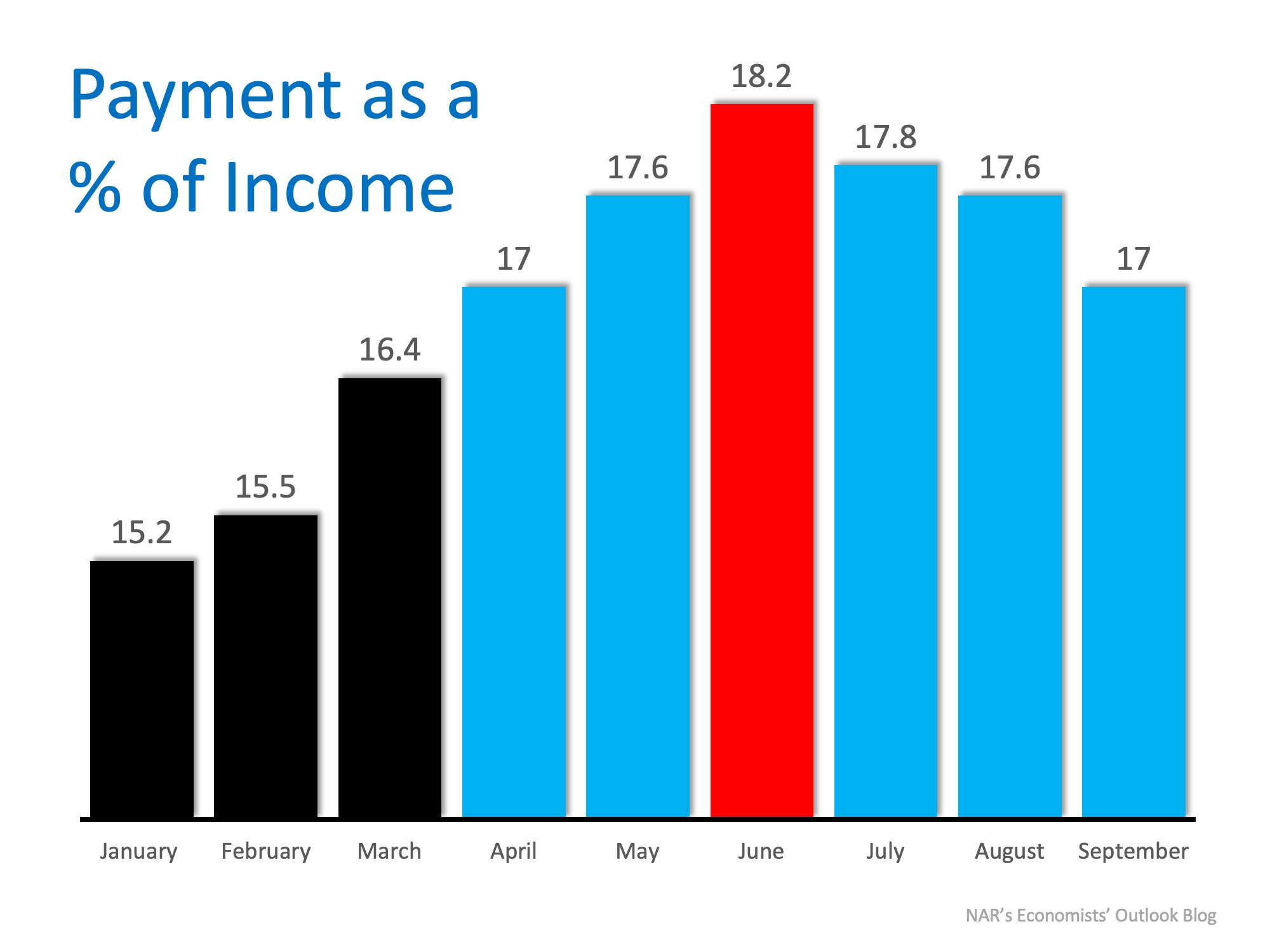
After applying current salaries, home prices, and mortgage rates to their Home Affordability Index equation, the index, though still lower than this time last year (160.1 to 146.7), increased over the last month (141.2 to 146.7). For the complete methodology used by NAR, click here.

The percentage of income needed to own a home has also decreased each of the last three months. It currently sits at 17% which is substantially lower than historic numbers.

Wage Increases Make Home Buying More Affordable | Simplifying The Market

Bottom Line

If you are a first-time buyer or a move-up buyer who believes that purchasing a home is not within your budget, let’s get together to determine if that is still true.

How to Honor a Veteran Today and Everyday

How to Honor a Veteran Today and Everyday | Simplifying The Market

One hundred years ago, on the eleventh hour of the eleventh day of the eleventh month, we marked the end of the “war to end all wars.” That day, which was to be observed annually on the eleventh day of the eleventh month, became known as Armistice Day and then, later on, became Veterans Day.

But Veterans Day is not for veterans. They don’t serve for thanks or recognition. Veterans Day sets aside a day for those of us who haven’t worn the uniform to acknowledge those who have.

So today, we honor and remember.

If you ask a military family, ANY military family, how you can help them, they will respond without hesitation, “Make sure my service member is taken care of.”

If you ask a service member, ANY service member, how you can best honor them, they will respond without hesitation, “Take care of my family.”

Don’t know anyone who has served or is serving? More than likely, there are veterans in your midst. Each year, 260,000 military personnel relocate to new communities, and another 230,000 transition out of the military. In total, there are 22 million veterans among us in the world.

For those who relocate through a Permanent Change of Station (or PCS), it can be a pretty stressful time. There isn’t a lot of time to find a new place to live and the timeline is more accelerated for finding a place to call home.

MILLIE is an online community and digital marketplace that connects members of the military and their families with specialized knowledge and trusted resource providers to alleviate the stress of PCSing.

According to MILLIE, “70% of active duty families live off the installation and in the surrounding communities.” Wondering what you can do to help make a recently PCSed family feel welcome?

A recent survey of military families revealed that,

“When respondents described the support they most appreciate, family, friends, and faith-based communities rose to the top. When they described the support they needed, they called for more networking, communication, and support groups.

Families said that when leaving service, they feel as though they do not fit into the civilian world. Forging partnerships between military and civilian support systems will encourage pathways of understanding.”

If you find out that your new neighbor may have been PCSed, make an effort to share what you know about your community, from the best pizza place to where you can get your oil changed.

If you know that the service member of the family is actively deployed, helping out with tasks like mowing the lawn or bringing over a home-cooked meal are small gestures that will go a long way towards welcoming this family into their new home.

Bottom Line

Today, we honor and remember those who have served for our country. Everyone always asks what they can do to help, sometimes the simplest answer is the best one.

More about MILLIE:

MILLIE is an online community and digital marketplace that connects members of the military and their families with specialized knowledge and trusted resource providers to alleviate the stress of PCS’ing. Check out MILLIE’s Installation Guides, their network of Veteran and military spouse real estate agents, and MILLIE Scouts, their on-demand task service comprised of military spouses.

VA Home Loans by the Numbers [INFOGRAPHIC]

VA Home Loans by the Numbers [INFOGRAPHIC] | Simplifying The Market

VA Home Loans by the Numbers [INFOGRAPHIC] | Simplifying The Market

Some Highlights:

  • The Veterans Administration (VA) Home Loan is a benefit that is available to more than 22 million veterans & 2 million active duty service members which helps them achieve their dreams of homeownership.
  • In 2017, $189 billion was loaned to veterans and their families through the program.
  • VA Purchase Loans are on the rise in 46 out of 50 states and Washington, DC.