

Category Archives: First Time Home Buyers

Auto Added by WPeMatico

75% of Renters Have Been Misinformed

75% of Renters Have Been Misinformed | Simplifying The Market

Recently, multiple headlines have been written asserting that homeownership is less affordable today than at any other time in the last decade. Though the headlines are accurate, they lack context and lead too many Americans to believe that they can’t partake in a major part of the American Dream – owning a home.

In 2008, the housing market crashed and home values fell by as much as 60% in certain markets. This was the major trigger to the Great Recession we experienced from 2008 to 2010. To come back from that recession, mortgage interest rates were pushed down to levels that were never seen before.

For the last ten years, you could purchase a home at a dramatically discounted price and attain a mortgage at a historically low mortgage rate.

Affordability skyrocketed.

Now that home values have returned to where they should be, and mortgage rates are beginning to increase, it is less affordable to own a home than it was over the last ten years.

However, what is not being reported is that it is MORE AFFORDABLE to own a home today than at any other time since 1985 (when data was first collected on this point).

If you take out the years after the crash, affordability today is greater than it has been at almost any time in American history.

This has not been adequately reported which has led to many Americans believing that they cannot currently afford a home.

As an example, the latest edition of Freddie Mac’s Research: Profile of Today’s Renter reveals that 75% of renters now believe it is more affordable to rent than to own their own homes. This percentage is the highest ever recorded. The challenge is that this belief is incorrect. Study after study has proven that in today’s market, it is less expensive to own a home than it is to rent a home in the United States.

Thankfully, some are starting to see this situation and accurately report on it. The National Association of Realtors, in their 2019 Housing Forecast, mentions this concern:

“While the U.S. is experiencing historically normal levels of affordability, potential buyers may be staying out of the market because of perceived problems with affordability.”

Bottom Line

If you are one of the many renters who would like to own their own homes, let’s get together to find out if homeownership is affordable for you right now.


5 Tips When Buying a Newly Constructed Home

5 Tips When Buying a Newly Constructed Home | Simplifying The Market

The lack of existing inventory for sale has forced many homebuyers to begin looking at new construction. When you buy a newly constructed home instead of an existing home, there are many extra steps that must take place.

To ensure a hassle-free process, here are 5 tips to keep in mind if you are considering new construction:

1. Hire an Inspector

Despite the fact that builders must comply with town and city regulations, a home inspector will have your best interests in mind! When buying new construction, you will have between 1-3 inspections, depending on your preference (the foundation inspection, the pre-drywall inspection, and a final inspection).

These inspections are important because the inspector will often notice something that the builder missed. If possible, attend the inspection so that you can ask questions about your new home and make sure the builder fixes any problems found by the inspector.

2. Maintain good communication with your builder

Starting with the pre-construction meeting (where you will go over all the details of your home with your project manager), establish a line of communication. For example, will the builder email you every Friday with progress updates? If you are an out-of-state buyer, will you receive weekly pictures of the progress via email? Can you call the builder and if so, how often? How often can you visit the site?

3. Look for builder’s incentives

The good thing about buying a new home is that you can add the countertop you need, the mudroom you want, or an extra porch off the back of your home! However, there is always a price for such additions, and they add up quickly!

Some builders offer incentives that can help reduce the amount you spend on your home. Do your homework and see what sort of incentives the builders in your area are offering.

4. Schedule extra time into the process

There are many things that can impact the progress on your home. One of these things is the weather, especially if you are building in the fall and winter. Rain can delay the pouring of a foundation as well as other necessary steps at the beginning of construction, while snow can freeze pipes and slow your timeline.

Most builders already have a one-to-two-week buffer added into their timelines, but if you are also in the process of selling your current home, you must keep that in mind! Nobody wants to be between homes for a couple of weeks.

5. Visit the site often

As we mentioned earlier, be sure to schedule time with your project manager at least once a week to see the progress on your home. It’s easy for someone who is not there all the time to notice little details that the builder may have forgotten or overlooked. Additionally, don’t forget to take pictures! You might need them later to see exactly where that pipe is or where those electrical connections are once they’re covered up with drywall!

Bottom Line

Watching your home come to life is a wonderful experience that can sometimes come with hassles. To avoid some of these headaches, keep these tips in mind!

If you are ready to put your current home on the market and find out what new construction is available in your area, let’s get together to discuss your options!

Taking Fear Out of the Mortgage Process

Taking Fear Out of the Mortgage Process | Simplifying The Market

A considerable number of potential buyers shy away from jumping into the real estate market due to their uncertainties about the buying process. A specific cause for concern tends to be mortgage qualification.

For many, the mortgage process can be scary, but it doesn’t have to be!

In order to qualify in today’s market, you’ll need a down payment (the average down payment on all loans last year was 5%, with many buyers putting down 3% or less), a stable income, and good credit history.

Throughout the entire home buying process, you will interact with many different professionals who will all perform necessary roles. These professionals are also valuable resources for you.

Once you’re ready to apply, here are 5 easy steps that Freddie Mac suggests to follow:

  1. Find out your current credit history & score – even if you don’t have perfect credit, you may already qualify for a loan. The average FICO Score® of all closed loans in September was 731, according to Ellie Mae.
  2. Start gathering all of your documentation – income verification (such as W-2 forms or tax returns), credit history, and assets (such as bank statements to verify your savings).
  3. Contact a professional – your real estate agent will be able to recommend a loan officer who can help you develop a spending plan, as well as help you determine how much home you can afford.
  4. Consult with your lender – he or she will review your income, expenses, and financial goals in order to determine the type and amount of mortgage you qualify for.
  5. Talk to your lender about pre-approval – a pre-approval letter provides an estimate of what you might be able to borrow (provided your financial status doesn’t change) and demonstrates to home sellers that you are serious about buying!

Bottom Line

Do your research, reach out to professionals, stick to your budget, and be sure that you are ready to take on the financial responsibilities of becoming a homeowner.

Are You Spending TOO Much on Rent?

Are You Spending TOO Much on Rent? | Simplifying The Market

Chances are if you are renting you are spending too much of your income on your monthly housing expense. There is a long-standing ‘rule’ that a household should not pay more than 28% of their income on their rent or mortgage payment. This percentage allows the household to save money for the future while comfortably covering other expenses.

According to new data released from ApartmentList.com, 49.5 million renters in the United States were cost-burdened in 2017, meaning they spent more than 30% of their monthly incomes on rent. This accounts for nearly half of all renter households in the country and is up 3.1 million from 2007.

When a household is cost-burdened by their monthly housing expense, they are not as easily able to save money for the future. This is a big factor for many renters who dream of owning their own homes someday.

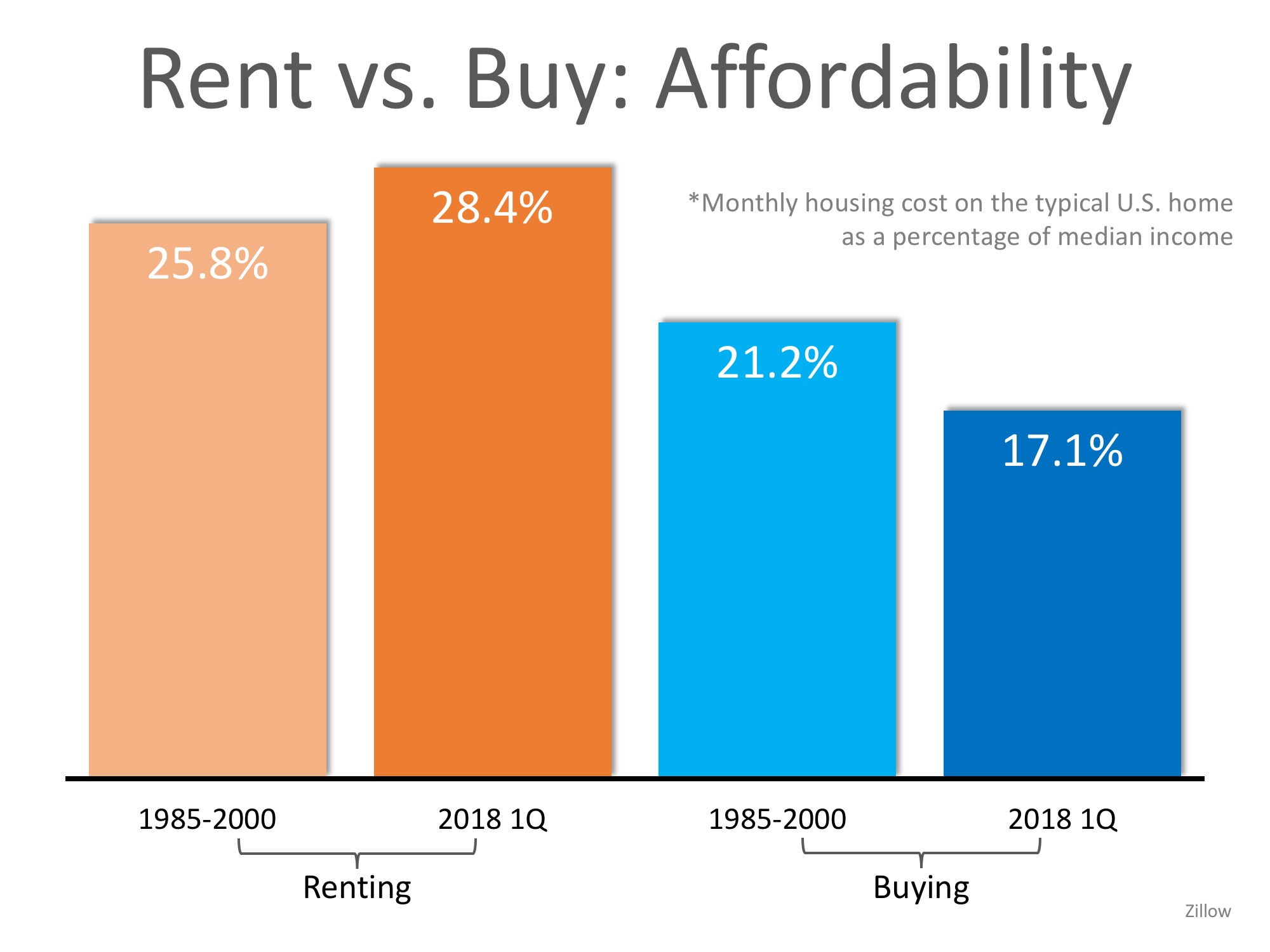
But there is hope for those who are able to save at least a 3% down payment! The percentage of income needed in the US to buy a home is significantly less than renting at 17.1%!

The chart below compares the historic percentage of income needed to rent and buy from 1985-2000 to the first quarter of 2018. As you can see, the cost of renting has climbed above historic numbers while the cost of buying dropped over the same period of time.

Are You Spending TOO Much on Rent? | Simplifying The Market

Bottom Line

If you are one of the many renters who is spending too much of their monthly income on rent, consider saving money by getting a roommate, moving into a less expensive apartment, or even moving in with family. These are all ways to save for a down payment so that you can put your housing costs to work for you!

Buying a Home Can Be Scary… Until You Know the Facts [INFOGRAPHIC]

Buying a Home Can Be Scary... Until You Know the Facts [INFOGRAPHIC] | Simplifying The Market

Buying a Home Can Be Scary... Until You Know the Facts [INFOGRAPHIC] | Simplifying The Market

Some Highlights:

Many potential homebuyers believe that they need a 20% down payment and a 780 FICO® score to qualify to buy a home which stops many of them from even trying! Here are some facts:

  • 72% of buyers who purchased homes this year have put down less than 20%.
  • 76.4% of loan applications were approved last month.
  • The average credit score of approved loans was 727 in September.

Still Think You Need 15-20% Down to Buy a Home? Think Again!

Still Think You Need 15-20% Down to Buy a Home? Think Again! | Simplifying The Market

According to a new study from Urban Institute, there are over 19 million millennials in 31 cities who are not only ready and willing to become homeowners, but are able to as well!

Now that the largest generation since baby boomers has aged into prime homebuying age, there will no doubt be an uptick in the national homeownership rate. The study from Urban Institute revealed that nearly a quarter of this generation has the credit and income needed to purchase a home.

Surprisingly, the largest share of mortgage-ready millennials lives in expensive coastal cities. These cities often attract highly skilled workers who demand higher salaries for their expertise.

So, what’s holding these mortgage-ready millennials back from buying?

Myths About Down Payment Requirements! 

Most of the millennials surveyed for the study believe that they need at least a 15% down payment in order to buy a home when, in reality, the median down payment in the US in 2017 was just 5%, and many programs are available for even lower down payments!

The study goes on to point out that:

“Despite limited awareness, every state has programs that provide grants and loans to make homeownership more attainable, with average assistance in various states ranging from $2,436 to $21,171.”

Bottom Line

With so many young families now able to buy a home in today’s market, the demand for housing will continue for years to come. If you are one of the many millennials who have questions about their ability to buy in today’s market, let’s get together so we can assist you along your journey!

Housing Is Still Affordable in the United States!

Housing Is Still Affordable in the United States! | Simplifying The Market

Lately, there have been many headlines circulating about whether or not there is an “affordability issue forming in the housing market.”

If you are considering selling your current house and moving up to the home of your dreams, but are unsure whether or not to believe what you’re seeing in the news, let’s look at the results of the latest Housing Affordability Report from the National Association of Realtors (NAR).

According to NAR:

“A value of 100 means that a family with the median income has exactly enough income to qualify for a mortgage on a median-priced home. An index above 100 signifies that a family earning the median income has more than enough income to qualify for a mortgage loan on a median-priced home, assuming a 20 percent down payment.”

  • The national index results for August came in at 141.2.
  • This is up from 138.9 in July, but down 8.3% from last August’s value of 153.9.

One big factor in determining affordability each month is the interest rate available at the time of calculation. In August 2017, the 30-year fixed rate mortgage interest rate was 4.19%. This August, the rate rose to 4.78%!

With an index reading of 141.2, housing remains affordable in the U.S.

Regionally, affordability is up in three out of four regions. The Northeast had the biggest gain at 6.2%. The South had an increase of 2.4% followed by the West with a slight increase of 0.1%. The Midwest had the only dip in affordability at 4.8%.

Despite month-over-month changes, the most affordable region remains the Midwest, with an index value of 175.7. The West remains the least affordable region at 101.2. For comparison, the index was 146.7 in the South, and 151.2 in the Northeast.

Bottom Line

If you are thinking of selling your home, let’s get together to discuss the affordability conditions in our marketplace.

Will Home Prices Continue to Increase?

Will Home Prices Continue to Increase? | Simplifying The Market

There are many unsubstantiated theories about what is happening with home prices. From those who are worried that prices are falling (data shows this is untrue), to those who are concerned that prices are again approaching boom peaks because of “irrational exuberance” (this is also untrue as prices are not at peak levels when they are adjusted for inflation), there seems to be no shortage of opinion.

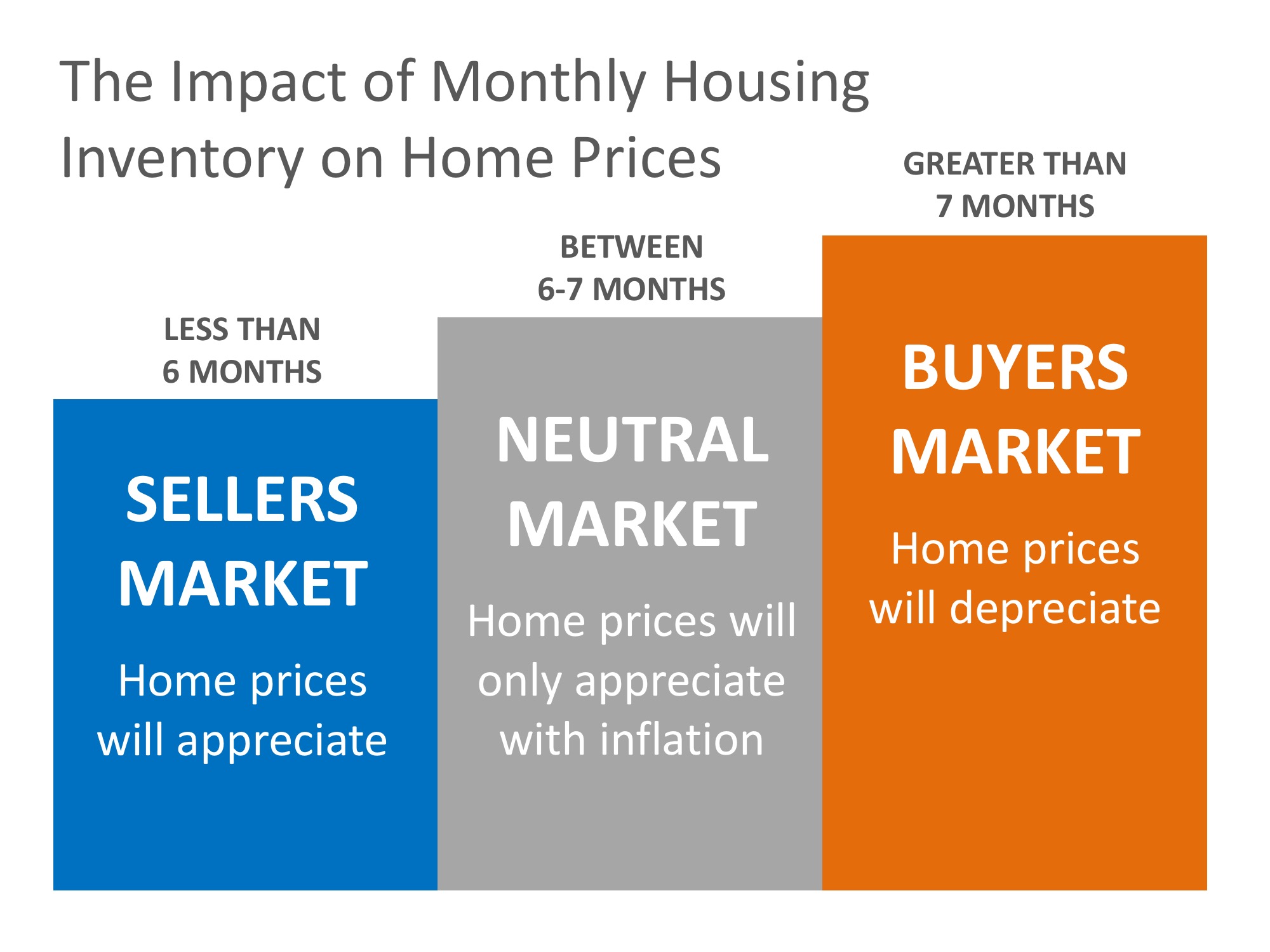
However, the increase in prices is easily explained by the theory of supply & demand. Whenever there is a limited supply of an item that is in high demand, prices increase. It is that simple. In real estate, it takes a six-month supply of existing salable inventory to maintain pricing stability. In most housing markets, anything less than six months will cause home values to appreciate and anything greater than seven months will cause prices to depreciate (see chart below).

Will Home Prices Continue to Increase? | Simplifying The Market

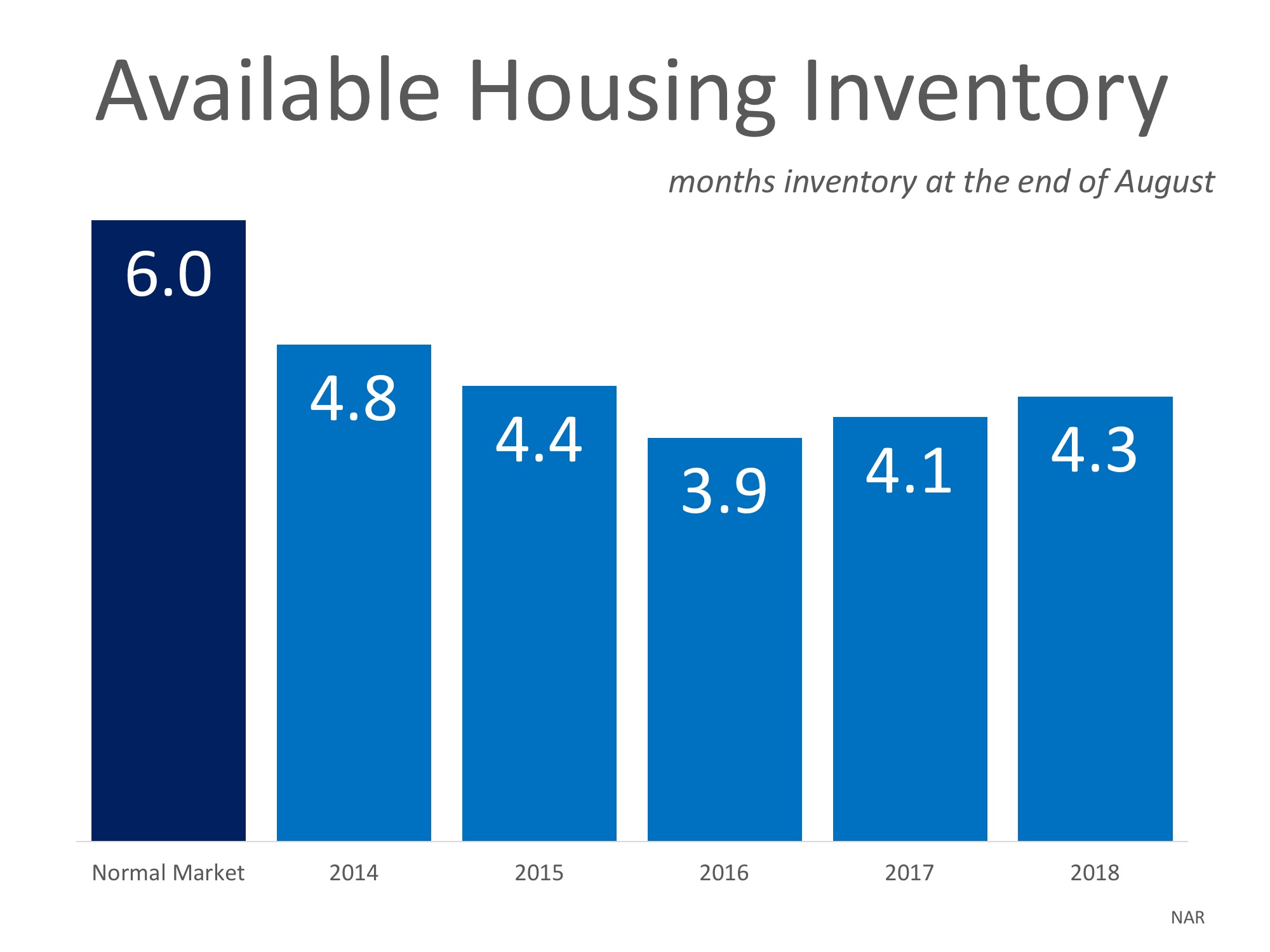
According to the Existing Home Sales Report from the National Association of Realtors (NAR), the monthly inventory of homes for sale has been below six months for the last five years (see chart below).

Will Home Prices Continue to Increase? | Simplifying The Market

Bottom Line

If buyer demand continues to outpace the current supply of existing homes for sale, prices will continue to appreciate. Nothing nefarious is taking place. It is simply the theory of supply & demand working as it should.

Is the Increase in Inventory a Bullish or Bearish Sign for Real Estate?

Is the Increase in Inventory a Bullish or Bearish Sign for Real Estate? | Simplifying The Market

In a recent article, National Housing Inventory Crisis Reaches Inflection Point, realtor.com reported that:

  1. New listings jumped 8% year-over-year nationally, the largest increase since 2013
  2. Total listings in the 45 largest markets are now up 6% on average over last year

This increase in housing inventory has sparked two different reactions. Some are saying this is the first sign of a potential collapse while others are saying it is a welcomed reprieve from the lack of inventory that has stalled the market recently. As Zelman & Associates reported in a recent ‘Z Report’:

“With the rate of home price appreciation starting to decelerate alongside the uptick in inventory, we expect significant debate whether this is a bullish or bearish sign.”

Is this a sign the market might crash?

There are those who look at the increase in inventory as a sign that we are returning to the market we saw last decade. However, a closer look shows that we are nowhere near the levels of inventory we reached before the crash in 2008.

A normal market would have about 6-months inventory, but the latest Existing Home Sales Report issued by the National Association of Realtors revealed that:

“Unsold inventory is at a 4.3-month supply at the current sales pace up from 4.1 months a year ago.”

A decade ago, prices began to rapidly depreciate in June 2007. At that time, we had a 9.1-month supply (more than double what it is today) and inventory kept rising until it hit a peak of 11.1 months in April of 2008.

With the current levels of buyer demand, any such increase in months supply is highly unlikely. As Danielle Hale, realtor.com’s Chief Economist explains:

 “After years of record-breaking inventory declines, September’s almost flat inventory signals a big change in the real estate market. Would-be buyers who had been waiting for a bigger selection of homes for sale may finally see more listings materialize. But don’t expect the level to jump dramatically.

Plenty of buyers in the market are scooping up homes as soon as they’re listed, which will keep national increases relatively small for the time being.”

What will be the result of the increase in inventory?

The increase in inventory will allow many families who had been unable to find a home to finally become homeowners. Again, we quote from the ‘Z Report’:

“In our view, the short-term narrative will probably be confusing, but more sustainable growth and affordability will likely be the end result.”

Bottom Line

If you are either a first-time or second-time buyer who has given up, let’s get together discuss the inventory available in our market.

5 Tips for Starting Your Home Search

5 Tips for Starting Your Home Search | Simplifying The Market

In today’s real estate market, with low inventory dominating the conversation in many areas of the country, it can often be frustrating to be a first-time homebuyer if you aren’t prepared.

In a recent realtor.com article entitled, “How to Find Your Dream Home—Without Losing Your Mind,” the author highlights some steps that first-time homebuyers can take to help carry their excitement of buying a home throughout the whole process.

1. Get Pre-Approved for a Mortgage Before You Start Your Search

One way to show you are serious about buying your dream home is to get pre-qualified or pre-approved for a mortgage before starting your search. Even if you are in a market that is not as competitive, understanding your budget will give you the confidence of knowing whether or not your dream home is within your reach.

This step will also help you narrow your search based on your budget and won’t leave you disappointed if the home you tour, and love, ends up being outside your budget!

2. Know the Difference Between Your ‘Must-Haves’ and ‘Would-Like-To-Haves’

Do you really need that farmhouse sink in the kitchen to be happy with your home choice? Would a two-car garage be a convenience or a necessity? Could the ‘man cave’ of your dreams be a future renovation project instead of a make-or-break right now?

Before you start your search, list all the features of a home you would like and then qualify them as ‘must-haves’, ‘should-haves’, or ‘absolute-wish list’ items. This will help keep you focused on what’s most important.

3. Research and Choose a Neighborhood You Want to Live In

Every neighborhood has its own charm. Before you commit to a home based solely on the house itself, the article suggests test-driving the area. Make sure that the area meets your needs for “amenities, commute, school district, etc. and then spend a weekend exploring before you commit.”

4. Pick a House Style You Love and Stick to It

Evaluate your family’s needs and settle on a style of home that would best serve those needs. Just because you’ve narrowed your search to a zip code, doesn’t mean that you need to tour every listing in that zip code.

An example from the article says, “if you have several younger kids and don’t want your bedroom on a different level, steer clear of Cape Cod–style homes, which typically feature two or more bedrooms on the upper level and the master on the main.”

5. Document Your Home Visits

Once you start touring homes, the features of each individual home will start to blur together. The article suggests keeping your camera handy and documenting what you love and don’t love about each property you visit. They even go as far as to suggest snapping a photo of the ‘for sale’ sign on the way into the property to help keep the listings divided in your photo gallery.

Making notes on the listing sheet as you tour the property will also help you remember what the photos mean, or what you were feeling while touring the home.

Bottom Line

In a high-paced, competitive environment, any advantage you can give yourself will help you on your path to buying your dream home.