
Category Archives: For Buyers

Auto Added by WPeMatico

More Americans Chose to Own a Home Than Rent in Q1

More Americans Chose to Own a Home Than Rent in Q1 | Simplifying The Market

According to the latest report from the US Census Bureau, more Americans chose purchasing a home over signing a lease to rent in the first quarter of 2017. This marks the first time since 2006 that the number of new homeowner households outpaced the number of new renter households.

Of the 1.22 million new households that were formed in the first quarter, 854,000 were new-owner households making the jump straight to homeownership rather than renting first.

That means that the homeownership rate amongst new households was 70%!

This is huge news as the national homeownership rate is currently 63.6% and has only ever come close to this figure in the second quarter of 2004 when the homeownership rate reached an all-time high of 69.2%.

A recent Wall Street Journal article pointed to the uptick in first-time homebuyers coming to market as a reason for the jump:

“The return of first-time buyers is accelerating. In all they have accounted for 42% of buyers this year, up from 38% in 2015 and 31% at the lowest point during the recent housing cycle in 2011, according to Fannie Mae, which defines first-time buyers as anyone who hasn’t owned a home in the past three years.”

Ralph McLaughlin, Trulia’s Chief Economist, had this to say about what a bump in new homeowner households could mean for the housing market:

“Strong renter household formation is one of the reasons why the homeownership rate has continued to drop since the onset of the housing crisis, so any sign this trend is reversing is something to take note of. We look forward to future releases of these data to determine whether this is a statistical blip or a trend.”

Bottom Line

As more and more potential first-time buyers realize their ability to buy a home without having to rent first, not only will the homeownership rate benefit, but so will the overall economy.

Is Now a Good Time to Rent?

Is Now a Good Time to Rent? | Simplifying The Market

People often ask if now is a good time to buy a home, but nobody ever asks when a good time to rent is. Regardless, we want to make certain that everyone understands that today is NOT a good time to rent.

The Census Bureau recently released their 2017 first quarter median rent numbers. Here is a graph showing rent increases from 1988 until today:

Is Now a Good Time to Rent? | Simplifying The Market

As you can see, rents have steadily increased and are showing no signs of slowing down. If you are faced with making the decision of whether or not you should renew your lease, you might be pleasantly surprised at your ability to buy a home of your own instead.

Bottom Line

One way to protect yourself from rising rents is to lock in your housing expense by buying a home. If you are ready and willing to buy, let’s meet to determine if you are able to today!

5 Reasons to Hire a Real Estate Professional When Buying or Selling!

5 Reasons to Hire a Real Estate Professional When Buying or Selling! | Simplifying The Market

Whether you are buying or selling a home it can be quite an adventurous journey, which is why you need an experienced real estate professional to guide you on the path to your ultimate goal. In this world of instant gratification and internet searches, many sellers think that they can For Sale by Owner or FSBO. Continue reading 5 Reasons to Hire a Real Estate Professional When Buying or Selling! →

Why Americans Consider Moving to Another State? [INFOGRAPHIC]

Why Americans Consider Moving to Another State? [INFOGRAPHIC] | Simplifying The Market

Some Highlights:

  • In a recent Harris Poll, Americans listed “change in climate/weather” as their top reason for wanting to relocate.
  • 41% would move for a “better job opportunity.”
  • Being closer to loved ones filled out 3 of the top 6 reasons why Americans move.

#1 Answer to the Housing Shortage: New Construction

The biggest challenge to today’s housing market is the shortage of housing inventory for sale. A normal market would see a six-month supply of homes for sale. Currently, that number is below four months. This is the major reason home prices have continued to appreciate at higher levels than historic averages.

Continue reading #1 Answer to the Housing Shortage: New Construction →

4 Tips for Effectively Making an Offer

4 Tips for Effectively Making an Offer | Simplifying The Market

So, you’ve been searching for that perfect house to call a ‘home,’ and you finally found one! The price is right, and in such a competitive market, you want to make sure that you make a good offer so that you can guarantee that your dream of making this house yours comes true!

Freddie Mac covered “4 Tips for Making an Offer” in their latest Executive Perspective. Here are the 4 tips they covered along with some additional information for your consideration:

1. Understand How Much You Can Afford

“While it’s not nearly as fun as house hunting, fully understanding your finances is critical in making an offer.”

This ‘tip’ or ‘step’ should really take place before you start your home search process.

As we’ve mentioned before, getting pre-approved is one of many steps that will show home sellers that you are serious about buying, and will allow you to make your offer with the confidence of knowing that you have already been approved for a mortgage for that amount. You will also need to know if you are prepared to make any repairs that may need to be made to the house (ex: new roof, new furnace).

2. Act Fast

“Even though there are fewer investors, the inventory of homes for sale is also low and competition for housing continues to heat up in many parts of the country.” 

According to the latest Existing Home Sales Report, the inventory of homes for sale is currently at a 3.7-month supply; this is well below the 6-month supply that is needed for a ‘normal’ market. Buyer demand has continued to outpace the supply of homes for sale, causing buyers to compete with each other for their dream homes.

Make sure that as soon as you decide that you want to make an offer, you work with your agent to present it as soon as possible.

3. Make a Solid Offer

Freddie Mac offers this advice to help make your offer the strongest it can be:

“Your strongest offer will be comparable with other sales and listings in the neighborhood. A licensed real estate agent active in the neighborhoods you are considering will be instrumental in helping you put in a solid offer based on their experience and other key considerations such as recent sales of similar homes, the condition of the house and what you can afford.”

Talk with your agent to find out if there are any ways that you can make your offer stand out in this competitive market!

4. Be Prepared to Negotiate

“It’s likely that you’ll get at least one counteroffer from the sellers so be prepared. The two things most likely to be negotiated are the selling price and closing date. Given that, you’ll be glad you did your homework first to understand how much you can afford.

Your agent will also be key in the negotiation process, giving you guidance on the counteroffer and making sure that the agreed-to contract terms are met.”

If your offer is approved, Freddie Mac urges you to “always get an independent home inspection, so you know the true condition of the home.” If the inspector uncovers undisclosed problems or issues, you can discuss any repairs that may need to be made with the seller, or cancel the contract.

Bottom Line 

Whether you’re buying your first home or your fifth, having a local professional on your side who is an expert in their market is your best bet in making sure the process goes smoothly. Happy House Hunting!

Do You Know the Cost of NOT Owning Your Home?

Do You Know the Cost of NOT Owning Your Home? | Simplifying The Market

Owning a home has great financial benefits, yet many continue renting! Today, let’s look at the financial reasons why owning a home of your own has been a part of the American Dream for as long as America has existed.

Zillow recently reported that:

“With Rents continuing to climb and interest rates staying low, many renters find themselves gazing over the homeownership fence and wondering if the grass really is greener. Leaving aside, for the moment, the difficulties of saving for a down payment, let’s focus on the monthly expenses of owning a home: it turns out that renters currently paying the median rent in many markets could afford to buy a higher-quality property than the typical (read: median-valued) home without increasing their monthly expenses.”

What proof exists that owning is financially better than renting?

1. The latest Rent Vs. Buy Report from Trulia pointed out the top 5 financial benefits of homeownership:

  • Mortgage payments can be fixed while rents go up.
  • Equity in your home can be a financial resource later.
  • You can build wealth without paying capital gain.
  • A mortgage can act as a forced savings account
  • Overall, homeowners can enjoy greater wealth growth than renters.

2. Studies have shown that a homeowner’s net worth is 45x greater than that of a renter.

3. Just a few months ago, we explained that a family buying an average priced home at the beginning of 2017 could build more than $42,000 in family wealth over the next five years.

4. Some argue that renting eliminates the cost of taxes and home repairs, but every potential renter must realize that all the expenses the landlord incurs are already baked into the rent payment –along with a profit margin!!

Bottom Line

Owning a home has always been, and will always be, better from a financial standpoint than renting.

What You Need to Know About Qualifying for a Mortgage [INFOGRAPHIC]

What You Need to Know About Qualifying for a Mortgage [INFOGRAPHIC] | Simplifying The Market

Some Highlights:

  • Many buyers are purchasing a home with a down payment as little as 3%.
  • You may already qualify for a loan, even if you don’t have perfect credit.
  • Take advantage of the knowledge of your local professionals who are there to help you determine how much you can afford.

3 Reasons the Housing Market is NOT in a Bubble

3 Reasons the Housing Market is NOT in a Bubble | Simplifying The Market

With housing prices appreciating at levels that far exceed historical norms, some are fearful that the market is heading for another bubble. To alleviate that fear, we just need to look back at the reasons that caused the bubble ten years ago.

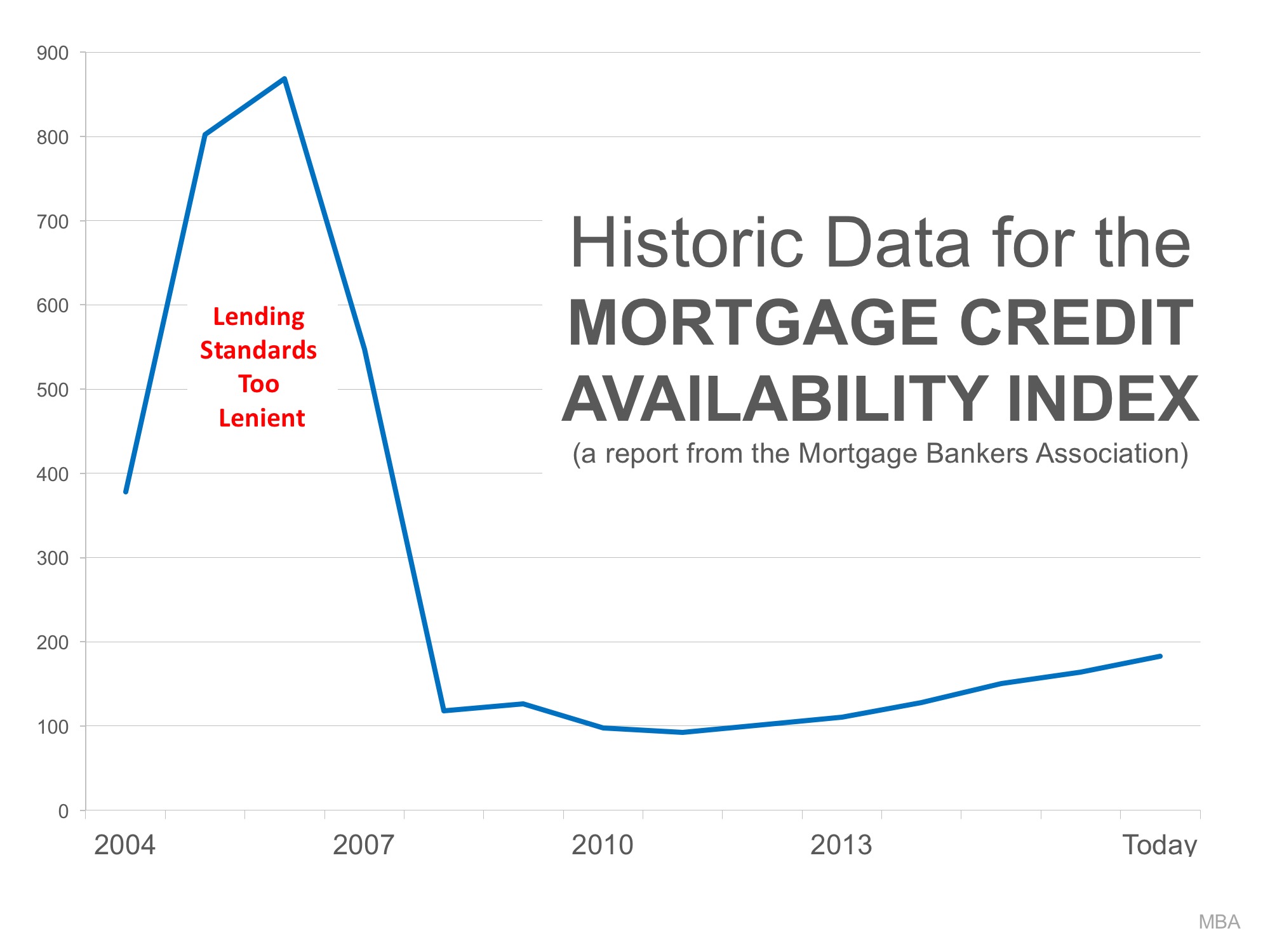
Last decade, demand for housing was artificially propped up because mortgage lending standards were way too lenient. People that were not qualified to purchase were able to attain a mortgage anyway. Prices began to skyrocket. This increase in demand caused homebuilders in many markets to overbuild.

Eventually, the excess in new construction and the flooding of the market with distressed properties (foreclosures & short sales), caused by the lack of appropriate lending standards, led to the housing crash.

Where we are today…

1. If we look at lending standards based on the Mortgage Credit Availability Index released monthly by the Mortgage Bankers Association, we can see that, though standards have become more reasonable over the last few years, they are nowhere near where they were in the early 2000s.

3 Reasons the Housing Market is NOT in a Bubble | Simplifying The Market

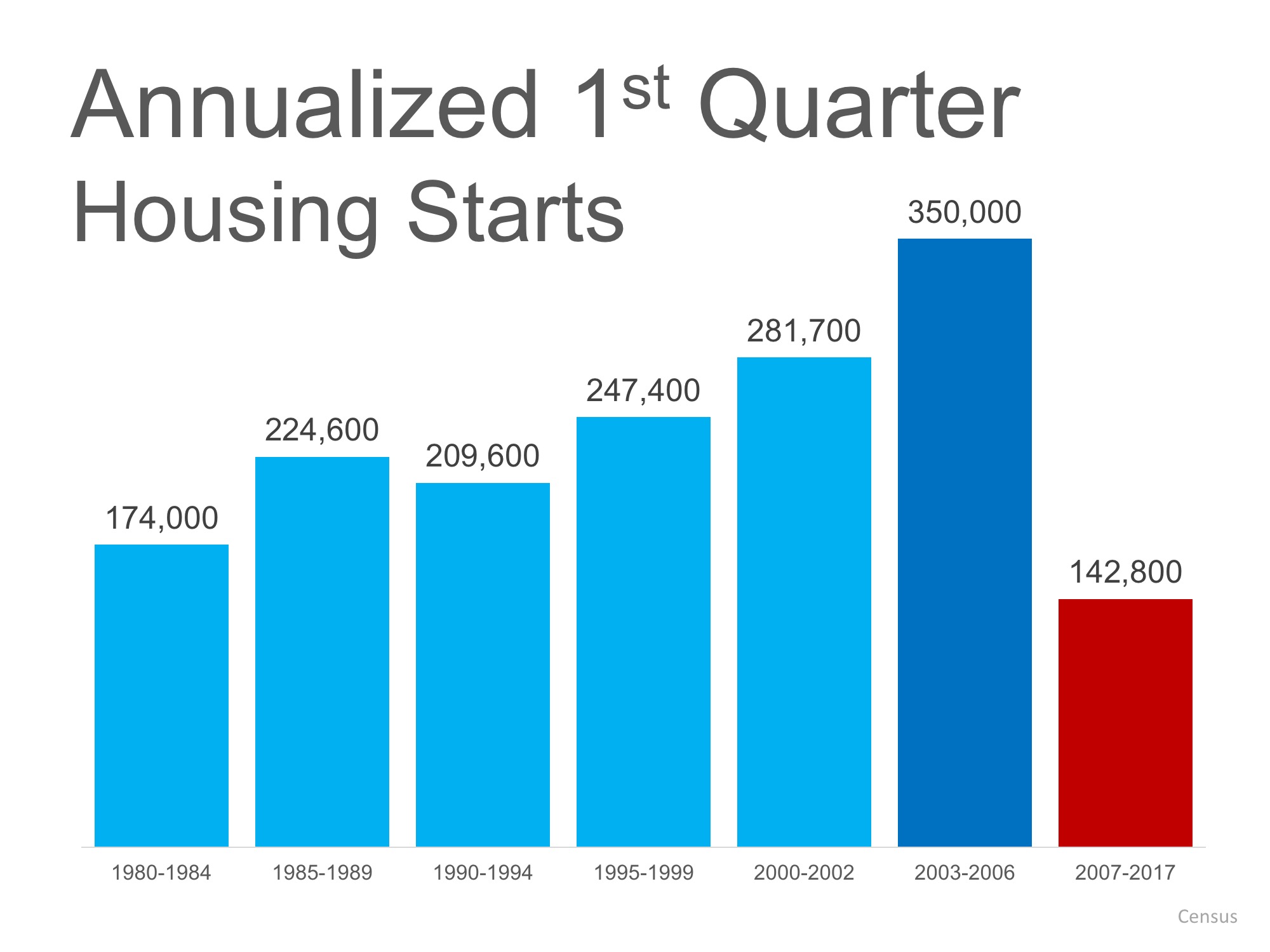
2. If we look at new construction, we can see that builders are not “over building.” Average annual housing starts in the first quarter of this year were not just below numbers recorded in 2002-2006, they are below starts going all the way back to 1980.

3 Reasons the Housing Market is NOT in a Bubble | Simplifying The Market

3. If we look at home prices, most homes haven’t even returned to prices seen a decade ago. Trulia just released a report that explained:

“When it comes to the value of individual homes, the U.S. housing market has yet to recover. In fact, just 34.2% of homes nationally have seen their value surpass their pre-recession peak.”

Bottom Line

Mortgage lending standards are appropriate, new construction is below what is necessary and home prices haven’t even recovered. It appears fears of a housing bubble are over-exaggerated.

Gallup: Real Estate is Best Long-Term Investment 4 Years Running

Gallup: Real Estate is Best Long-Term Investment 4 Years Running | Simplifying The Market

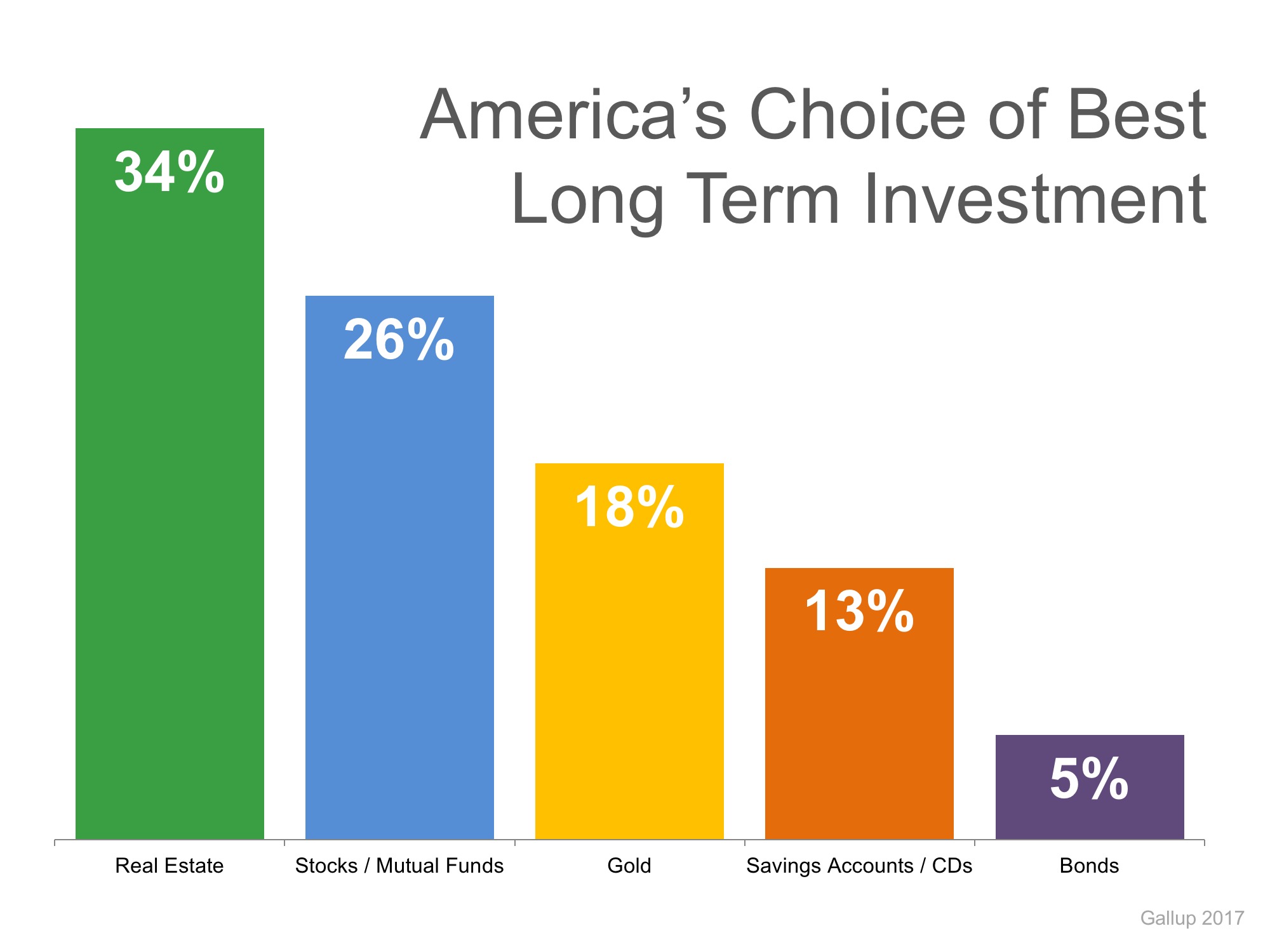
Every year, Gallup surveys Americans to determine their choice for the best long-term investment. Respondents are given a choice between real estate, stocks/mutual funds, gold, savings accounts/CDs, or bonds.

For the fourth year in a row, Real Estate has come out on top as the best long-term investment! This year’s results showed that 34% of Americans chose real estate, followed by stocks at 26%. The full results are shown in the chart below.

Gallup: Real Estate is Best Long-Term Investment 4 Years Running | Simplifying The Market

The study makes it a point to draw attention to the contrast of the sentiment over the last four years compared to that of 2011-2012, when gold took the top slot with 34% of the votes. Real estate and stocks took second and third place, respectively, while still in recovery from the Great Recession.

Bottom Line

As the real estate market has recovered, so has the belief of the American people in the stability of housing as a long-term investment.