

Category Archives: For Sellers

Auto Added by WPeMatico

Tips to Sell Your Home Faster

Tips to Sell Your Home Faster | Simplifying The Market

When selling your house, there are a few key things you can prioritize to have the greatest impact for a faster sale:

1. Make Buyers Feel at Home

Declutter your home! Pack away all personal items like pictures, awards, and sentimental belongings. Make buyers feel like they belong in the house. According to the 2019 Profile of Home Staging by the National Association of Realtors, “83% of buyers’ agents said staging a home made it easier for a buyer to visualize the property as a future home.”

Not only will your house spend less time on the market, but the same report mentioned that, “One-quarter of buyers’ agents said that staging a home increased the dollar value offered between 1 – 5%, compared to other similar homes on the market that were not staged.”

2. Keep It Organized

Since you took the time to declutter, keep it organized. Before buyers arrive, pick up toys, make the bed, and put away clean dishes. According to the same report, the kitchen is one of the most important rooms to stage in order to attract more buyers. Put out a scented candle or some cookies fresh from the oven. Buyers will remember the smell of your home.

3. Price It Right

More inventory coming into the market guarantees there will be some competition. You want to make sure your home is noticed. A key to selling your house is ensuring it is Priced to Sell Immediately (PTSI). This means you’ll be driving more traffic to your property, and ultimately creating more interest in your home.

4. Give Buyers Full Access

One of the top four elements when selling your home is access. If your home is available anytime, that opens up more opportunity to find a buyer right away. Some buyers, especially those relocating, don’t have much time available. If they cannot get into the house, they will move on to the next one.

Bottom Line

If you want to sell your home in the least amount of time at the best price with as little hassle as possible, a local real estate professional is a useful guide. Let’s connect today to determine what you need to do to sell your home as quickly as possible.

7 Reasons to List Your House This Holiday Season

7 Reasons to List Your House This Holiday Season | Simplifying The Market

Around this time each year, many homeowners decide to wait until after the holidays to list their houses. Similarly, others who already have their homes on the market remove their listings until the spring. Let’s unpack the top reasons why listing your house now or keeping it on the market this winter may be the best choice you can make.

Here are seven great reasons not to wait:

  1. Relocation buyers are out there now. Many companies are still hiring throughout the holidays, and they need their new employees to start as soon as possible.
  2. Purchasers who are looking for homes during the holidays are serious buyers and are ready to buy now.
  3. You can restrict the showings on your home to days and times that are most convenient for you. You will remain in control.
  4. Homes show better when decorated for the holidays.
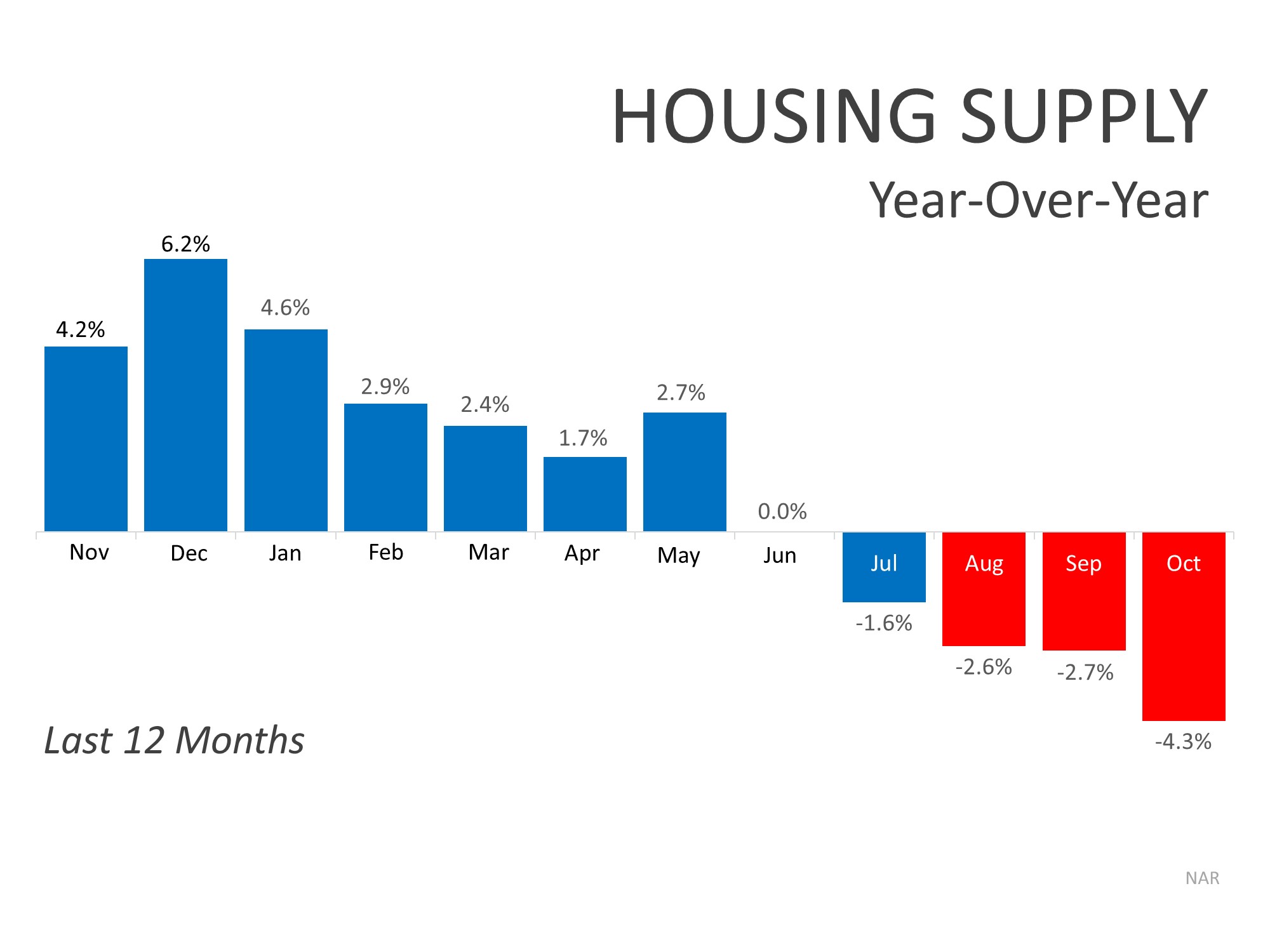
  5. There is minimal competition for you as a seller right now. Over the past few months we’ve seen the supply of homes for sale decreasing year-over-year, as shown in the graph below:7 Reasons to List Your House This Holiday Season | Simplifying The Market
  6. The desire to own a home doesn’t stop during the holidays. Buyers who were unable to find their dream homes during the busy spring and summer months are still searching, and your home may be the answer.
  7. Late fall and early winter make up the “sweet spot” for sellers. The supply of listings increases substantially after the holidays. Also, in many parts of the country, new construction will continue to surge and reach new heights in 2020, which will lessen the demand for your house next year.

Bottom Line

It may make the most sense to list your home this holiday season. Let’s get together to determine if selling now is your best move.

Buyers Are Looking Now. Are You Ready to List Your Home?

Buyers Are Looking Now. Are You Ready to List Your Home? | Simplifying The Market

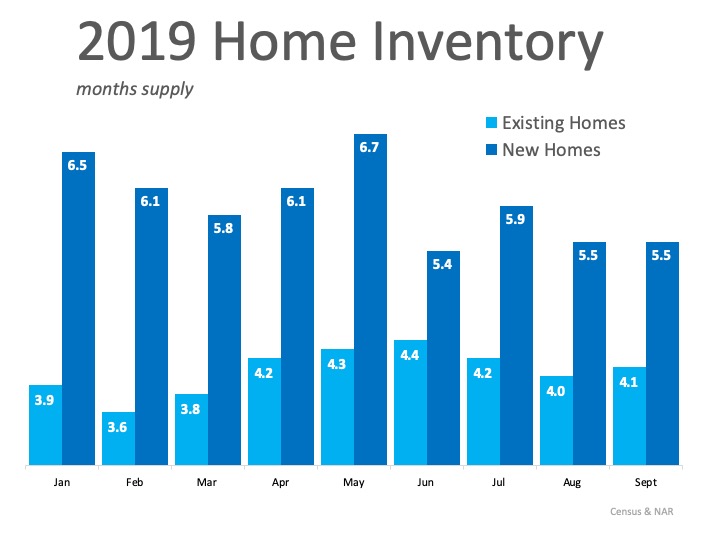
Inventory on the market today is low, especially among existing homes in the entry and middle-level tiers of the market. It is hovering well below the 6-month supply typically found in a more normal market, as shown in the graph below:
Buyers Are Looking Now. Are You Ready to List Your Home? | Simplifying The MarketWith inventory being one of the biggest housing market challenges today, finding a starter home right now isn’t easy. According to the Q3 Housing Trends Report from the National Association of Homebuilders (NAHB), 68% of those searching for a home think their search will get harder or stay about the same over the next 12 months.

The same study reveals,

“In Qtr3’19, buyers actively engaged in the process of buying a home are more likely to have spent at least 3 months searching (58%) than a year earlier (55%).”

 This is certainly no surprise, given the current inventory status. So, what’s the good news? The NAHB continues to say,

“If still unable to find a home in the next few months, the next step for most long-time searchers is to continue looking for the ‘right’ home in the same preferred location (52%). The next step for 35% is to expand their search area and for 16% is to accept a smaller/older home. Only 15% will give up looking.”

What does this mean for homeowners?

 If you’re thinking of selling your home, buyer demand is high – and those looking in your neighborhood aren’t planning on giving up anytime soon. The majority of potential buyers who are still searching for their dream home are eager, willing, and ready to buy, so maybe it’s time to list your house and make your move.

Bottom Line

With buyer demand as high as it is today, and inventory in the entry and middle-tier markets remaining low, it’s never been a better time to move up. Let’s get together to determine if now is your time to sell.

This is Not 2008 All Over Again: The Mortgage Lending Factor

This is Not 2008 All Over Again: The Mortgage Lending Factor | Simplifying The Market

Some are afraid the real estate market may be looking a lot like it did prior to the housing crash in 2008. One of the factors they’re pointing at is the availability of mortgage money.

Recent articles about the availability of low-down payment loans and down payment assistance programs are causing concern that we’re returning to the bad habits of a decade ago. Let’s alleviate the fears about the current mortgage market.

The Mortgage Bankers’ Association releases an index several times a year titled: The Mortgage Credit Availability Index (MCAI). According to their website:

“The MCAI provides the only standardized quantitative index that is solely focused on mortgage credit. The MCAI is…a summary measure which indicates the availability of mortgage credit at a point in time.”

Basically, the index determines how easy it is to get a mortgage. The higher the index, the more available the mortgage credit.

Here is a graph of the MCAI dating back to 2004, when the data first became available:This is Not 2008 All Over Again: The Mortgage Lending Factor | Simplifying The Market As we can see, the index stood at about 400 in 2004. Mortgage credit became more available as the housing market heated up, and then the index passed 850 in 2006. When the real estate market crashed, so did the MCAI (to below 100), as mortgage money became almost impossible to secure.

Thankfully, lending standards have eased since. The index, however, is still below 200, which is half of what it was before things got out of control.

Bottom Line

It is easier to get a mortgage today than it was immediately after the market crash, but it is still difficult. The difference in 2006? At that time, it was difficult not to get a mortgage.

Buyer Demand Growing in Every Region

Buyer Demand Growing in Every Region | Simplifying The Market

Buyers are out in full force this fall, increasing the demand for homebuying in all four regions of the country.

According to the latest ShowingTime Showing Index,

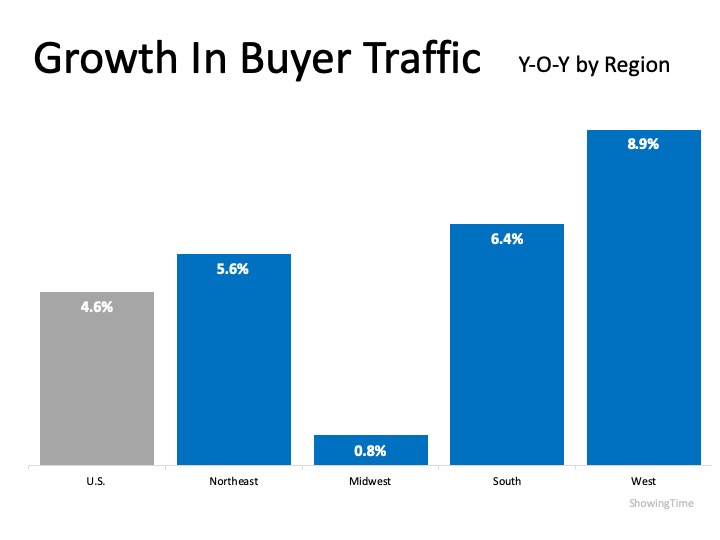
“Home showing activity was up again nationwide with a 4.6 percent rise in traffic, as the traditionally slow fall season began with a marked boost in buyer interest.”

Buyers clearly have the right idea, as mortgage rates have dropped over a full percentage point since the fall of 2018. They’ve hovered in a historically low range since this summer, making the overall cost of homeownership significantly more attractive and affordable.

Here’s the breakdown of how ShowingTime reports current buyer traffic patterns across the country:

“The West Region, which until August had experienced 18 consecutive months of flagging home buyer traffic, lead the four regions in year-over-year improvement with an 8.9 percent increase in buyer activity.

The South followed with a 6.4 percent increase, the largest such improvement in the region since April 2018, with the Northeast Region’s 5.6 percent increase the next largest among the four regions.

The Midwest’s more modest 0.8 percent year-over-year growth rounded out the nation’s promising month.”

Buyer Demand Growing in Every Region | Simplifying The MarketWith ShowingTime reporting “nationwide growth for the second consecutive month, a first since December 2017 – January 2018”, it’s one more reason why selling your house this winter is the way to go. List while buyers are on the market, before competition with other sellers pops up in your neighborhood.

Bottom Line

If you’re thinking of waiting until spring to sell, think again! Let’s get together to discuss listing your house now while buyer traffic is actively surging throughout the country.

Homeownership Rate Remains on the Rise

Homeownership Rate Remains on the Rise | Simplifying The Market

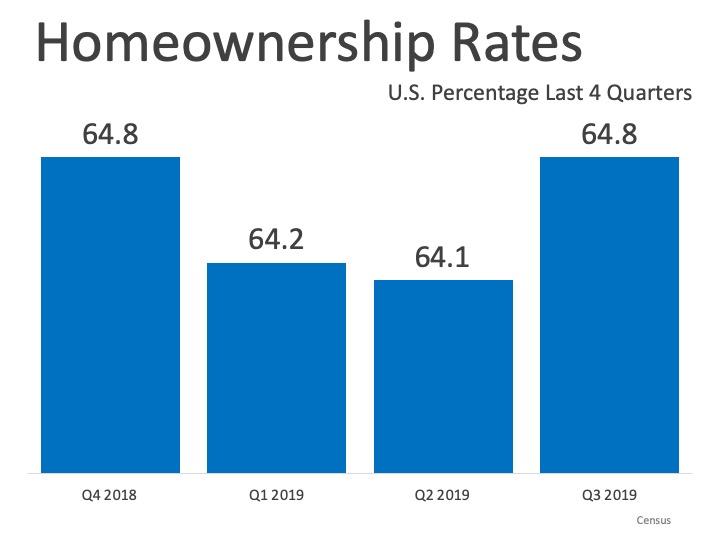
In the third quarter of 2019, the U.S. homeownership rate rose again, signaling another strong indicator of the current housing market.

The U.S. Census Bureau announced,

“The homeownership rate of 64.8 percent was not statistically different from the rate in the third quarter 2018 (64.4 percent), but was 0.7 percentage points higher than the rate in the second quarter 2019 (64.1 percent).”

Homeownership Rate Remains on the Rise | Simplifying The MarketToday there is still a lack of inventory, particularly at the entry and middle-level segments of the market, but that is not stopping buyers from making every effort to pursue homeownership. The many financial and non-financial benefits continue to drive the American Dream and will likely do so for generations to come.

Bottom Line

If you’re thinking of buying a home, let’s get together to make your dream a reality.

The #1 Reason to List Your House in the Winter

The #1 Reason to List Your House in the Winter | Simplifying The Market

Many sellers believe spring is the best time to put their homes on the market because buyer demand traditionally increases at that time of year. What they don’t realize is if every homeowner believes the same thing, then that’s when they’ll have the most competition.

So, what’s the #1 reason to list your house in the winter? Less competition.

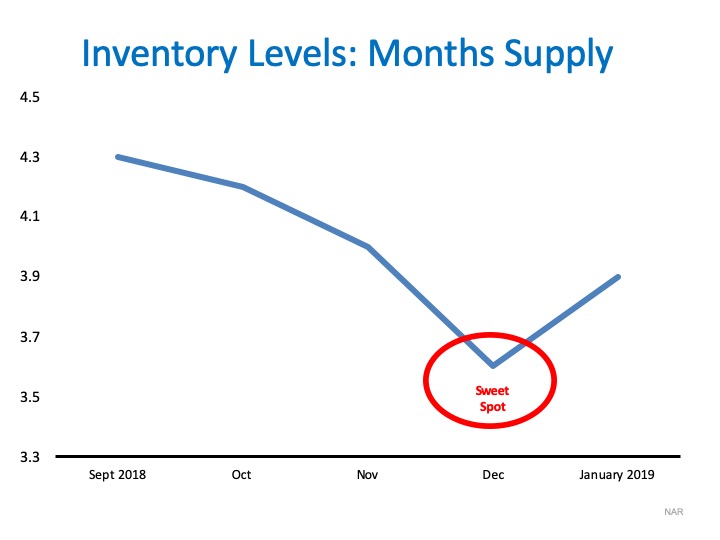
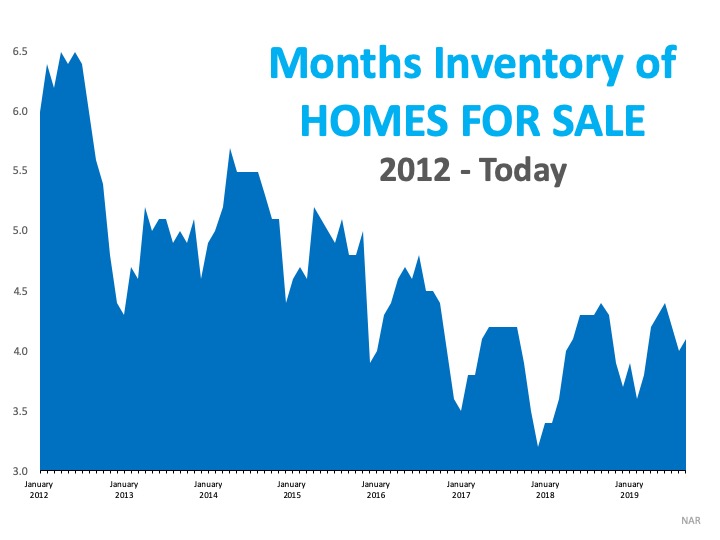
Housing supply traditionally shrinks at this time of year, so the choices buyers have will be limited. The chart below was created using the months supply of listings from the National Association of Realtors.The #1 Reason to List Your House in the Winter | Simplifying The MarketAs you can see, the ‘sweet spot’ to list your house for the most exposure naturally occurs in the late fall and winter months (November – January). 

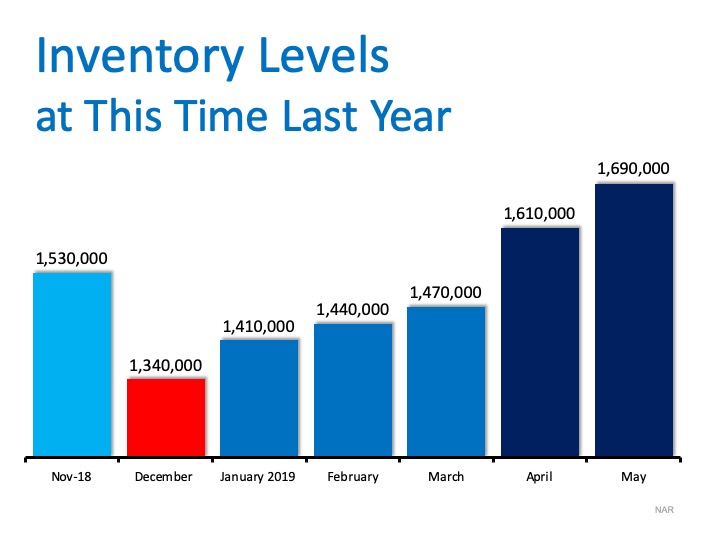
Temperatures aren’t the only thing that heats up in the spring – so do listings!The #1 Reason to List Your House in the Winter | Simplifying The MarketIn 2018, listings increased from December to May. Don’t wait for these listings and the competition that comes with them to come to the market before you decide to list your house.

Added Bonus: Serious Buyers Are Out in the Winter

At this time of year, purchasers who are serious about buying a home will be in the marketplace. You and your family will not be bothered and inconvenienced by mere ‘lookers.’ The lookers are at the mall or online doing their holiday shopping.

 Bottom Line

If you’ve been debating whether or not to sell your house and are curious about market conditions in your area, let’s get together to determine the best time to list your house.

Thinking of Selling Your Home? The Waiting Is The Hardest Part.

Thinking of Selling Your Home? The Waiting Is The Hardest Part. | Simplifying The Market

Tom Petty famously penned the words, “the waiting is the hardest part” in his early 80’s hit song The Waiting, and his thought process can surprisingly also be applied to individuals considering selling their homes today. Traditional thinking would suggest it may be best to wait until the spring to sell when there is a flood of buyers in the market, but right now may in fact be an even better time to list your home.

We can see the overall economy is good: wages are rising, there are near record-low unemployment rates, and mortgage interest rates are still very low too. Over the past 10+ years the housing market has stabilized, so what (if anything) is the biggest challenge in the housing market today?

The answer is simple: it’s inventory.

According to the Existing Home Sales Report by the National Association of Realtors,

“Total housing inventory at the end of September sat at 1.83 million, approximately equal to the amount of existing-homes available for sale in August, but a 2.7% decrease from 1.88 million one year ago. Unsold inventory is at a 4.1-month supply at the current sales pace, up from 4.0 months in August and down from the 4.4-month figure recorded in September 2018.”

What does this mean?

While homes are coming to the market, they aren’t coming fast enough! Right now, across the country there is less than 6 months of overall inventory of homes for sale, putting us in a seller’s market. The challenge is that there are not enough homes for sale to increase the supply needed for the number of people who want to buy, especially in the starter and middle-level markets.

To be in a balanced market (meaning we have enough inventory for the number of buyers in the market), we need to have 6 months of inventory available. Today we are nowhere near that number, and as a matter of fact, the last time we reached that height was August 2012 (as shown in the graph below):Thinking of Selling Your Home? The Waiting Is The Hardest Part. | Simplifying The MarketWhen we look at the inventory challenge today, we can see that now is a great time to sell your house. Truthfully, waiting may end up being the hardest part in the long run. This landscape is a great place for sellers who own homes in the starter and middle-level markets to take the opportunity to sell in a sellers’ market, before inventory catches up with demand. Serious buyers are actively in the market and ready to make a move at this time of year. When inventory is limited at the lower end, like it is today, selling before more homes are listed could mean a significant seller’s advantage to those who are ready to move up. The upper level of the market has much more inventory available to move into, so it’s a win across the board.

Bottom Line

If you’re considering selling your home, don’t wait – now is the time to make your move! Take advantage of the high housing demand and the low inventory of homes for sale at the lower end of the market and use your purchasing power while mortgage rates are low to go after the move-up home of your dreams. Let’s get together to decide if now is the right time for you.

5 Reasons to Consider Living in a Multigenerational Home

5 Reasons to Consider Living in a Multigenerational Home | Simplifying The Market

Did you know that 1 in 6 Americans currently live in a multigenerational household?

According to Generations United, the number of multigenerational households rose from 42.4 million in 2000 to 64 million in 2016. The 2018 Profile of Home Buyers and Sellers from the National Association of Realtors shows that 12% of all buyers have a multigenerational household.

Why Are Many Americans Choosing to Live in a Multigenerational Household?

The benefits to multigenerational living are significant. According to Toll Brothers,

“In recent years, there’s been a steady rise in the number of multigenerational homes in America. Homeowners and their families are discovering new ways to get the most out of home with choices that fit the many facets of their lives.”

The piece continues to explain the top 5 benefits of multigenerational living. Here is the list, and a small excerpt from their article:

1. Shared Expenses

“…Maintaining two households is undeniably costlier and more rigorous than sharing the responsibilities of one. By bringing family members and resources together under one roof, families can collectively address their expenses and allocate finances accordingly.”

2. Shared Responsibilities

“Distributing chores and age-appropriate responsibilities amongst family members is a tremendous way of ensuring that everyone does their part. For younger, more able-bodied members, physical work such as mowing the lawn or moving furniture is a nice trade-off so that the older generation can focus on less physically demanding tasks.”

3. Strengthened Family Bond

“While most families come together on special occasions, multigenerational families have the luxury of seeing each other every day. By living under one roof, these families develop a high level of attachment and closeness.”

4. Ensured Family Safety

“With multiple generations under one roof, a home is rarely ever left unoccupied for long, and living with other family members increases the chances that someone is present to assist elderly family members should they have an accident.”

5. Privacy

“One of the primary trepidations families face when shifting their lifestyle is the fear of losing privacy. With so many heads under one roof, it can feel like there’s no place to turn for solitude. Yet, these floor plans are designed to ensure that every family member can have quiet time… [and] allow for complete separation between the generations within the household.”

Bottom Line

The trend of multigenerational living is growing, and the benefits to families who choose this option are significant. If you’re considering a multigenerational home, let’s get together to discuss the options available in our area.

Depending on the Price, You’re Going to Need Advice

Depending on the Price, You’re Going to Need Advice | Simplifying The Market

To understand today’s complex real estate market, it is critical to have a local, trusted advisor on your side – for more reasons than you may think.

In real estate today, there are essentially three different price points in the market: the starter-home market, the middle-home market, and the premium or luxury market. Each one is unique, and depending on the city, the price point in these categories will vary. For example, a starter or lower-end home in San Francisco, California is much more expensive than almost any other part of the country. Let’s explore what you need to know about each of these tiers.

Starter-Home Market: This market varies by price, and these homes are typically purchased by first-time home buyers or investors looking to flip them for a profit. Across the country, homes in this space currently have less than 6 months of inventory for sale. That means there aren’t enough homes on the lower end of the market for the number of people who want to buy them. A low supply like this generally increases competition, drives bidding wars, and sets up an environment where homes sell above the listing price. According to data from the National Association of Realtors (NAR) on realtor.com,

“The desire for affordability continues to push down the inventory for homes listed for less than $200,000.00.”

Middle-Home Market: This segment is often thought of as the move-up market. Typically, the buyer in this market is moving up to a larger, more custom home with more features, all coming at a higher price. Across the country, this market is looking more balanced than the lower end of the market, meaning it has closer to a 6-month supply of inventory for sale. This market is more neutral, but leaning towards a seller’s market.

Premium & Luxury Home Market: This is the top end of the market with larger homes that have even more custom features and upgrades. Nationwide, this market is growing in the number of homes for sale. In the same realtor.com article, we can see that year-over-year inventory of homes in this tier has grown by 4.7%. Today, there are more homes available in the premium and luxury space, leading to more of a buyer’s market at this end.

Bottom Line

Depending on the segment of the market and the price point you’re looking at, you’re going to need the advice of a true local market expert. Let’s get together to help you navigate the home-buying or selling process in your market.