Category Archives: For Buyers

Auto Added by WPeMatico

Where Are Home Prices Heading in The Next 5 Years?

Where Are the Home Prices Heading in The Next 5 Years? | Simplifying The Market

Today, many real estate conversations center on housing prices and where they may be headed. That is why we like the Home Price Expectation Survey.

Every quarter, Pulsenomics surveys a nationwide panel of over one hundred economists, real estate experts, and investment & market strategists about where they believe prices are headed over the next five years. They then average the projections of all 100+ experts into a single number.

The results of their latest survey:

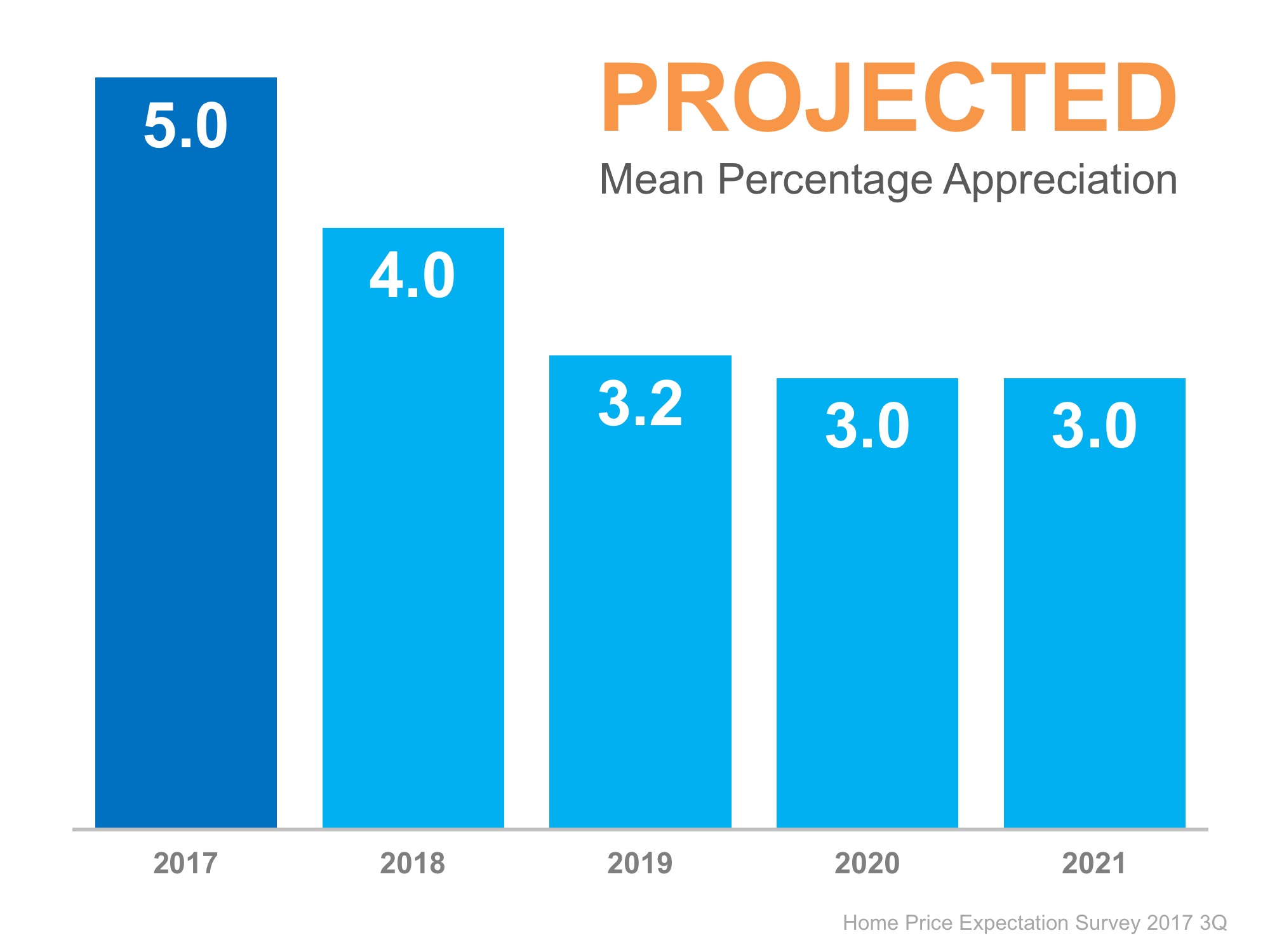
Home values will appreciate by 5.0% over the course of 2017, 4.0% in 2018, 3.2% in 2019, 3.0% in 2020, and 3.0% in 2021. That means the average annual appreciation will be 3.64% over the next 5 years.

Where Are the Home Prices Heading in The Next 5 Years? | Simplifying The Market

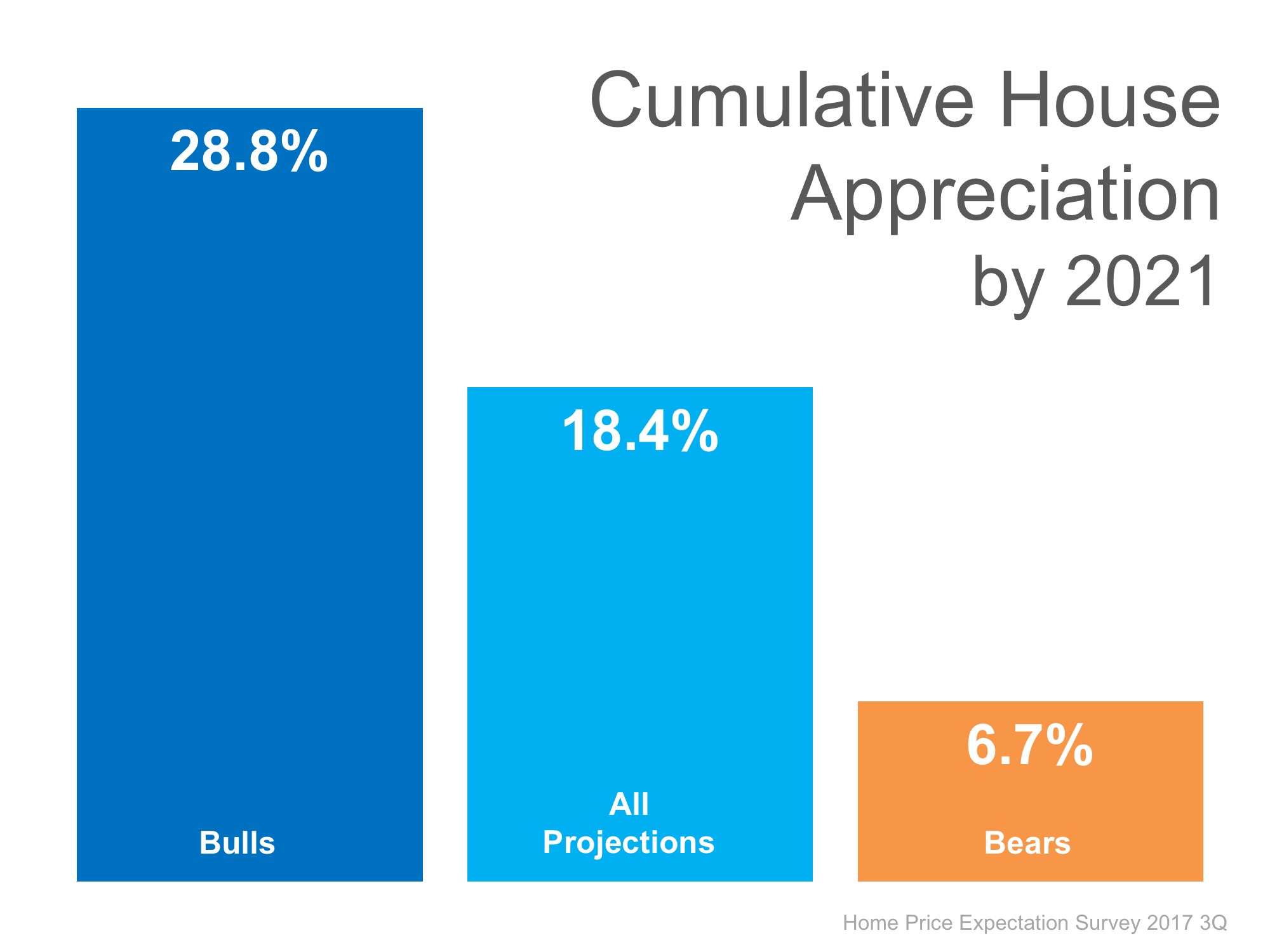
The prediction for cumulative appreciation increased from 17.8% to 18.4% by 2021. The experts making up the most bearish quartile of the survey are projecting a cumulative appreciation of 6.7%.

Where Are the Home Prices Heading in The Next 5 Years? | Simplifying The Market

Bottom Line

Individual opinions make headlines. We believe this survey is a fairer depiction of future values.

Don’t Disqualify Yourself… 52% of Approved Loans Have A FICO® Score Under 750

Don’t Disqualify Yourself… 52% of Approved Loans Have A FICO® Score Under 750 | Simplifying The Market

The results of countless studies have shown that potential home buyers, and even current homeowners, have an inflated view of what is really required to qualify for a mortgage in today’s market.

One such study by the Wharton School of Business at the University of Pennsylvania revealed that many millennials have not yet considered purchasing homes simply because they don’t believe they can qualify for a mortgage.

A recent article about millennials by Realtor.com explained that:

About 72% of aspiring millennial buyers said they’re waiting because they can’t afford to buy…

The article also explained that 29% of millennials believe their credit scores are too low to buy.The problem here is the fact that they think they will be denied a mortgage is keeping them from even attempting to apply.

Ellie Mae’s Vice President Jonas Moe encouraged buyers to know their options before assuming that they won’t qualify for a mortgage:

“Many potential home buyers are ‘disqualifying’ themselves. You don’t need a 750 FICO® Score and a 20% down payment to buy.”

So, what credit score is necessary?

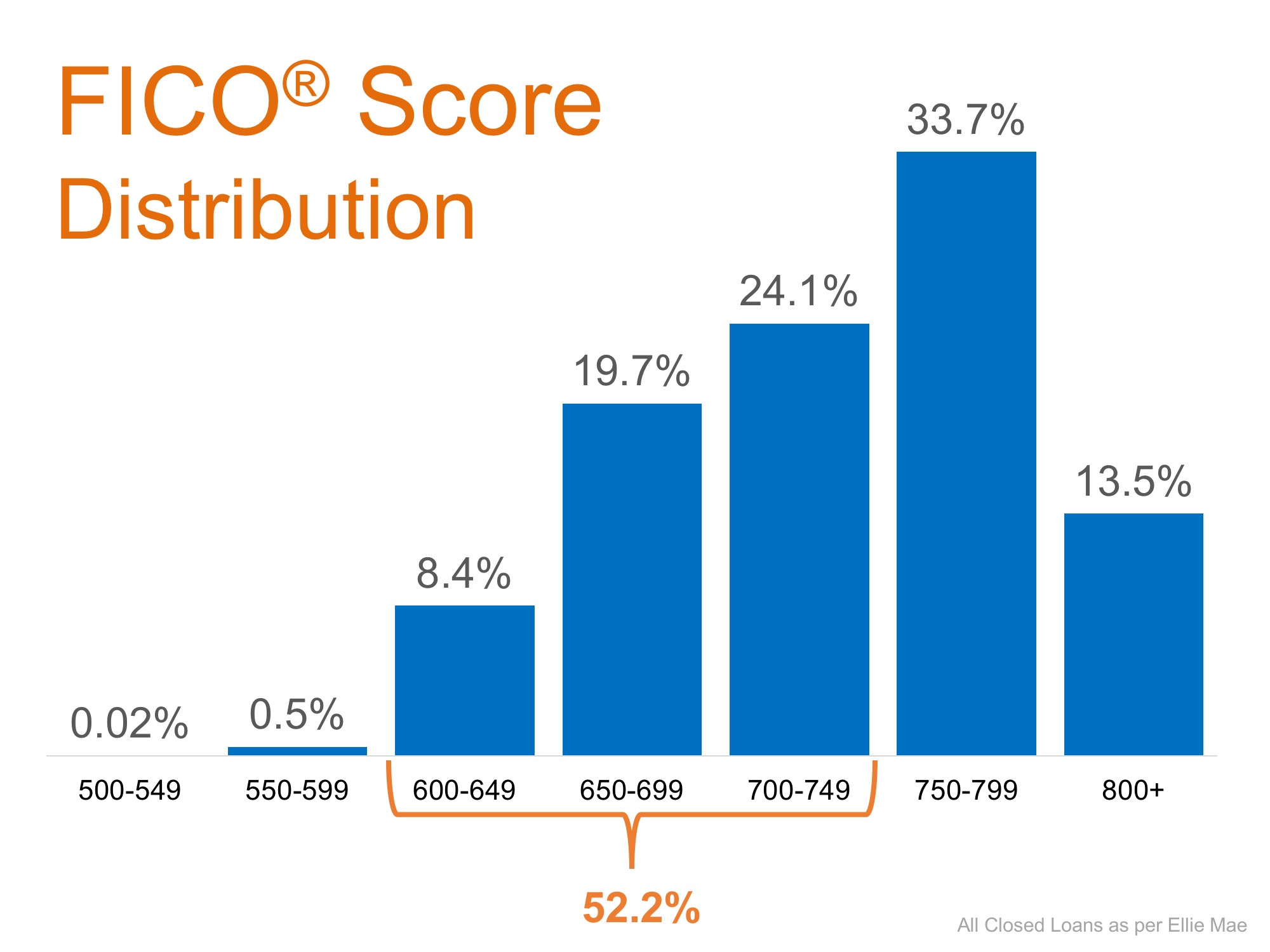
Below is a breakdown of the FICO® Score distribution of all closed (approved) loans in July from Ellie Mae’s latest Origination Report.

Don’t Disqualify Yourself… 52% of Approved Loans Have A FICO® Score Under 750 | Simplifying The Market

Over 52% of all approved loans had a FICO® Score under 750. Many potential home buyers believe that they need a score over 780 to qualify.

Bottom Line

If owning a home of your own has always been your dream and you are ready and willing to buy, or if you are a homeowner who wants to move up, find out if you are able to! Let’s get together to determine if your dreams can become a reality sooner than you thought!

Home Prices Up 6.64% Across the Country! [INFOGRAPHIC]

Home Prices Up 6.64% Across the Country! [INFOGRAPHIC] | Simplifying The Market

Home Prices Up 6.64% Across the Country! [INFOGRAPHIC] | Simplifying The Market

Some Highlights:

  • The Federal Housing Finance Agency (FHFA) recently released their latest Quarterly Home Price Index report.
  • In the report, home prices are compared both regionally and by state.
  • Based on the latest numbers, if you plan on relocating to another state, waiting to move may end up costing you more!
  • Alaska & West Virginia were the only states where home prices are lower than they were last year.

Want to Keep up with the Joneses? Now’s the Time

Want to Keep Up with the Joneses? Now’s the Time | Simplifying The Market

Does your current house fit your needs? Does it seem like everyone else is moving up and moving on to more luxurious surroundings? Are you wondering what it would take to start living your dream life?

Market conditions around the country have presented an opportunity like no other for those who are looking to make the jump to a premium or luxury home.

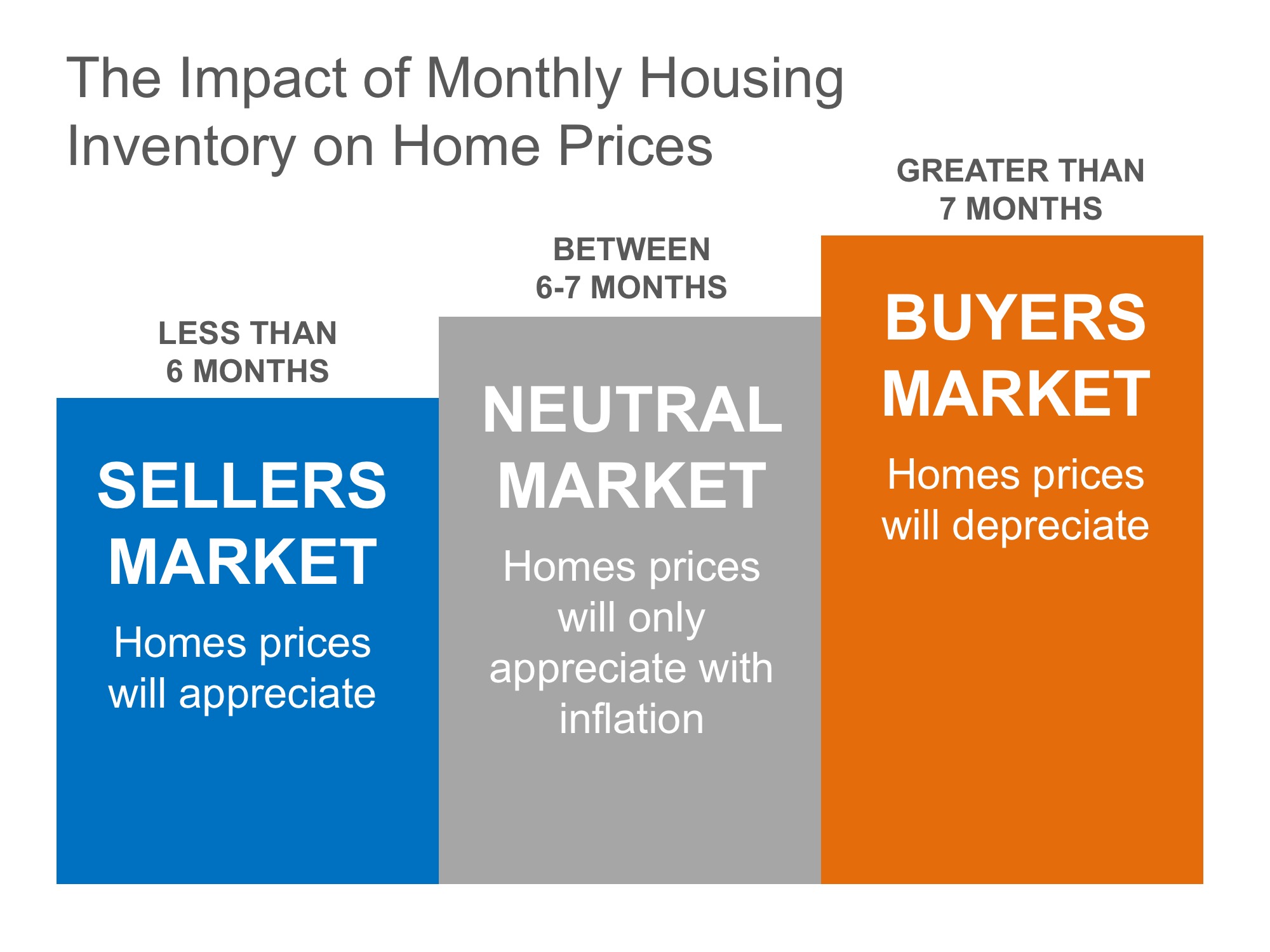
The National Association of Realtors reports that national inventory levels are now at a 4.3-month supply. A normal market, where prices appreciate with inflation, has 6-7-months inventory. The national market has echoed the conditions felt in the starter and trade-up markets as inventory has declined year-over-year for 25 consecutive months.

The chart below shows the relationship between the inventory of homes for sale and prices.

Want to Keep Up with the Joneses? Now’s the Time | Simplifying The Market

According to Trulia’s latest Inventory Report, the inventory of homes for sale in the two lower priced markets has dropped by double digit percentages over the last 12 months (16% for starter and 13% for trade-up homes). While the inventory of homes in the premium home category has dropped by only 4%.

This has created a seller’s market in the lower-priced markets, as 54% of homes were on the market for less than a month in the last Realtors Confidence Index, and a buyer’s market in the luxury market, where homes were on the market for an average of 160 days according to the Institute for Luxury Home Marketing.

Bottom Line

If you are even thinking of listing your home and moving up to a luxury home, let’s get together to evaluate your ability to do so. Homeowners across the country are upgrading their homes, why can’t you? Your dream home is waiting!

More Boomerang Buyers Are about to Enter the Market

More Boomerang Buyers Are about to Enter the Market | Simplifying The Market

We previously informed you about a study conducted by TransUnion titled, “The Bubble, the Burst and Now – What Happened to the Consumer?” The study revealed that 1.5 million homeowners who were negatively impacted by the housing crisis could re-enter the housing market between 2016-2019.

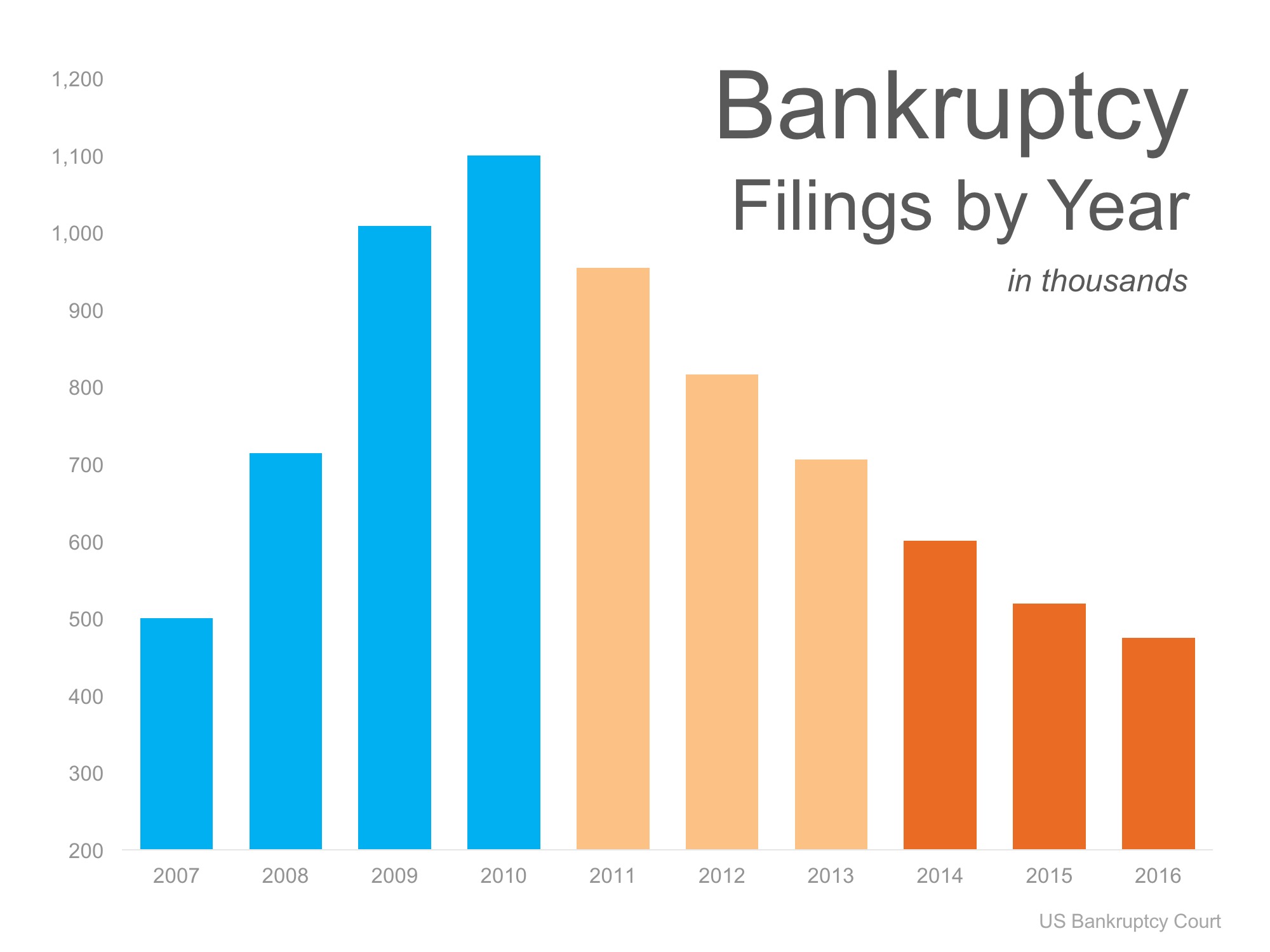
Recently, HousingWire analyzed data from the US Bankruptcy Courts and revealed that 6 million Americans will have their bankruptcies disappear off their credit reports over the next five years and that this could “possibly send a flood of more homebuyers into the housing market.

The chart below shows the total number of bankruptcies filed by year in the US over the last 10 years. The light blue bars represent over 3.3 million people who have already waited the 7 years necessary for their reports to no longer include their bankruptcies.

More Boomerang Buyers Are about to Enter the Market | Simplifying The Market


How would this “send a flood of more homebuyers into the housing market”?

As the article mentioned, in 2010 the number of chapter 7 bankruptcies increased to nearly 1.14 million. Now, 7 years later, they will begin to fade from credit histories, enabling prospective buyers to become homeowners again once their credit scores improve.

As we can see from both reports, the homeownership rate has the opportunity to increase drastically over the next few years with all of these boomerang buyers returning to the market.

Bottom Line

If your family was negatively impacted by the housing bust, here is the light at the end of the tunnel! You may be able to purchase your dream home faster than you think!

58% of Homeowners See a Drop in Home Values Coming

58% of Homeowners See a Drop in Home Values Coming | Simplifying The Market

According to the recently released Modern Homebuyer Survey from ValueInsured, 58 percent of homeowners think there will be a “housing bubble and price correction” within the next 2 years.

After what transpired just ten years ago, we can understand the concern Americans have about the current increase in home prices. However, this market has very little in common with what happened last decade.

The two major causes of the housing crash were:

  1. A vast oversupply of housing inventory caused by home builders building at a pace that far exceeded historical norms.
  2. Lending standards that were so relaxed that unqualified buyers could easily obtain financing thus enabling them to purchase a home.

Today, housing inventory is at a 20-year low with new construction starts well below historic norms and financing a home is anything but simple in the current mortgage environment. The elements that precipitated the housing crash a decade ago do not exist in today’s real estate market.

The current increase in home prices is the result of a standard economic equation: when demand is high and supply is low, prices rise.

If you are one of the 58% of homeowners who are concerned about home values depreciating over the next two years and are hesitant to move up to the home of your dreams, take comfort in the latest Home Price Expectation Survey.

Once a quarter, a nationwide panel of over one hundred economists, real estate experts and investment & market strategists are surveyed and asked to project home values over the next five years. The experts predicted that houses would continue to appreciate through the balance of this year and in 2018, 2019, 2020 and 2021. They do expect lower levels of appreciation during these years than we have experienced over the last five years but do not call for a decrease in values (depreciation) in any of the years mentioned.

Bottom Line

If you currently own a home and are thinking of moving-up to the home your family dreams about, don’t let the fear of another housing bubble get in the way as this housing market in no way resembles the market of a decade ago.

Homeowner’s Net Worth Is Still Greater Than a Renter’s

Homeowner’s Net Worth Is Still Greater Than a Renter’s | Simplifying The Market

Every three years, the Federal Reserve conducts their Survey of Consumer Finances in which they collect data across all economic and social groups. The latest survey, which includes data from 2010-2013, reports that a homeowner’s net worth is 36 times greater than that of a renter ($194,500 vs. $5,400). 

The latest survey data, covering 2014-2016 will be released later this year. In the meantime, Lawrence Yun, the National Association of Realtors’ Chief Economist estimates that the gap has widened even further, to 45 times greater ($225,000 vs. $5,000)! 

Put Your Housing Cost to Work for You

As we’ve said before, simply put, homeownership is a form of ‘forced savings.’ Every time you pay your mortgage, you are contributing to your net worth. Every time you pay your rent, you are contributing to your landlord’s net worth.

The latest National Housing Pulse Survey from NAR reveals that 84% of consumers believe that purchasing a home is a good financial decision. William E. Brown comments:

“Despite the growing concern over affordable housing, this survey makes it clear that a strong majority still believe in homeownership and aspire to own a home of their own. Building equity, wanting a stable and safe environment, and having the freedom to choose their neighborhood remain the top reasons to own a home. 

Bottom Line

If you are interested in finding out if you could put your housing cost to work for you by purchasing a home, let’s get together and evaluate your ability to buy today!

What State Gives You the Most ‘Bang for Your Buck’? [INFOGRAPHIC]

What State Gives You the Most ‘Bang for Your Buck’? [INFOGRAPHIC] | Simplifying The Market

What State Gives You the Most ‘Bang for Your Buck’? [INFOGRAPHIC] | Simplifying The Market

Some Highlights:

  • Thinking of moving across the country? How far will your money take you?
  • The majority of states in the Midwest and South offer a lower cost of living compared to Northeast and Western states.
  • The ‘Biggest Bang for your Buck’ comes in Mississippi where, compared to the national average, you can actually purchase $116.01 worth of goods for $100.
  • For more information regarding the methodology used to create the map, visit the Tax Foundation.

Millennial Homeownership Rate Increases

Millennial Homeownership Rate Increases | Simplifying The Market

Recent headlines exclaimed the homeownership rate, as reported by the Census Bureau, rose again in the second quarter of 2017. What didn’t get much attention in the reports is that the homeownership rate for American households under the age of 35 increased a full percentage point from last quarter’s 34.3% to 35.3%. Millennials proved to have the highest increase of any age group.

This came as a surprise to some considering Millennials have come to be known as the “renter” generation. However, a new study by First American, 6 Trends Poised to Reshape Homeownership Demand, revealed reasons why homeownership numbers will continue to increase for Millennials.

Millennials are the most educated generation in the U.S.

Why does that matter? First American explains:

“Our model shows that, all other factors being equal, the likelihood of homeownership increases by 3 percent for those that earn a bachelor’s degree over those with a high school degree. The likelihood of homeownership jumps another 3 percent for those that earn a graduate degree.”

The more educated, the better the likelihood for homeownership. And, as we mentioned: Millennials are the most educated generation in the U.S.

Homes & marriage go together

Marriage is a key determinate in homeownership. According to an analysis by First American, the homeownership rate is 30% higher among married couples compared to non-married households.

Millennials have put off marriage in the pursuit of higher education. As this group ages, more and more will marry and purchase a home.

Parents buy houses

According to the study:

“The homeownership rate is 1.7% higher for households with one or two children compared to households with no children, and it is 5.4 percent higher for households with three or more children.”

The report goes on to say that as Millennials grow older there may be an increase in not just marriage but also in married couples with children. That will probably also create a “corresponding” increase in homeownership demand.

Wages and the economy

The study goes on to explain that recent gains in income growth and a strengthening economy will also help all generations (including Millennials) be more willing and able to purchase a new home.

Bottom Line

We guess the time has come to announce – Here come the Millennials!!

Be Careful Not to Get Caught in The Rental Trap!

Be Careful Not to Get Caught in The Rental Trap! | Simplifying The Market

There are many benefits to homeownership. One of the top benefits is being able to protect yourself from rising rents by locking in your housing cost for the life of your mortgage.

Don’t Become Trapped 

A recent article by ConsumerAffairs addressed the continuous rise in rents, stating:

“The cost of putting a roof over your head continues to go up. Not only are home prices still rising, but the cost of rent rose 0.5% in June.”

Additionally, in the Joint Center for Housing Studies at Harvard University’s 2017 State of the Nation’s Housing Report, it was revealed that,

“Despite a slight improvement from 2014, fully one-third of US households paid more than 30 percent of their incomes for housing in 2015. Renters continue to be more likely to face cost burdens…the number of cost-burdened renters (21 million) considerably outstrips the number of cost-burdened owners (18 million) even though nearly two-thirds of US households own their homes.”

These households struggle to save for a rainy day and pay other bills, including groceries and healthcare.

It’s Cheaper to Buy Than Rent 

As we have previously mentioned, the results of the latest Rent vs. Buy Report from Trulia shows that homeownership remains cheaper than renting with a traditional 30-year fixed rate mortgage in the 100 largest metro areas in the United States.

The updated numbers show that the range is an average of 3.5% less expensive in San Jose (CA), all the way up to 50.1% less expensive in Baton Rouge (LA), and 33.1% nationwide!

Know Your Options

Perhaps you have already saved enough to buy your first home. A nationwide survey of about 24,000 renters found that 80% of millennial renters plan to eventually buy a house, but 72% cite affordability as their primary obstacle. Aside from affordability, one in three millennial renters have concerns about their credit scores, and another 53% said that a down payment is an obstacle.

Many first-time homebuyers who believe that they need a large down payment may be holding themselves back from their dream homes. As we have reported before, in many areas of the country, a first-time home buyer can save for a 3% down payment in less than two years. You may have already saved enough!

Bottom Line

Don’t get caught in the trap that so many renters are currently in. If you are ready and willing to buy a home, find out if you are able. Let’s get together to determine if you can qualify for a mortgage now!